In-Home Hair Styling Explained: Your Salon Results Guide
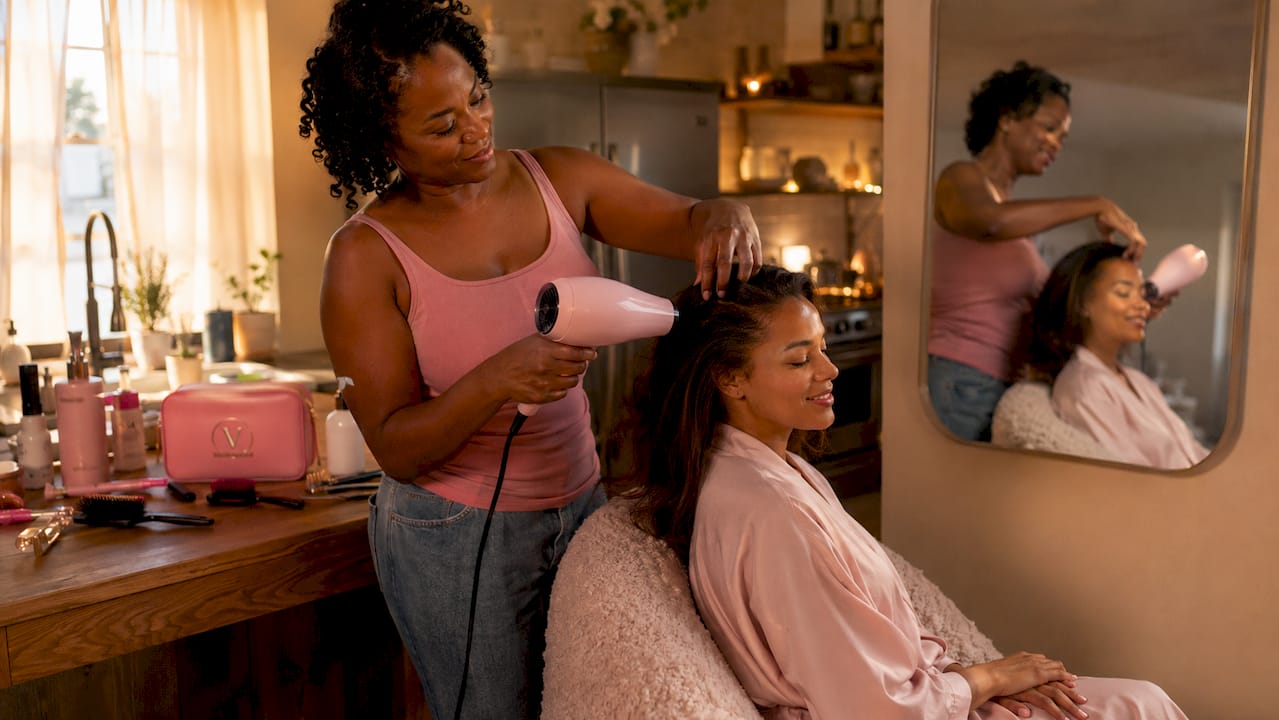
In-home hairstyling is the practice of performing professional haircuts, color, and styling services in a private home setting using specialized tools and techniques. It delivers salon-quality results without the commute, the wait, or the markup. Whether you are handling a quick trim, a full color refresh, or a blowout before an event, the right preparation makes the difference between a result you love and one you regret. Tools like professional blow dryers, flat irons, and sectioning clips are the foundation. Add the right products and a clear process, and your bathroom becomes a legitimate beauty space.
What is in-home hairstyling and how does it work?
In-home hairstyling covers three core services: haircuts, color application, and heat styling. Each requires a different skill level and tool set, but all three share the same principle. Preparation determines the outcome. You do not need a cosmetology license to achieve great results at home. You need the right setup, quality tools, and a clear process.
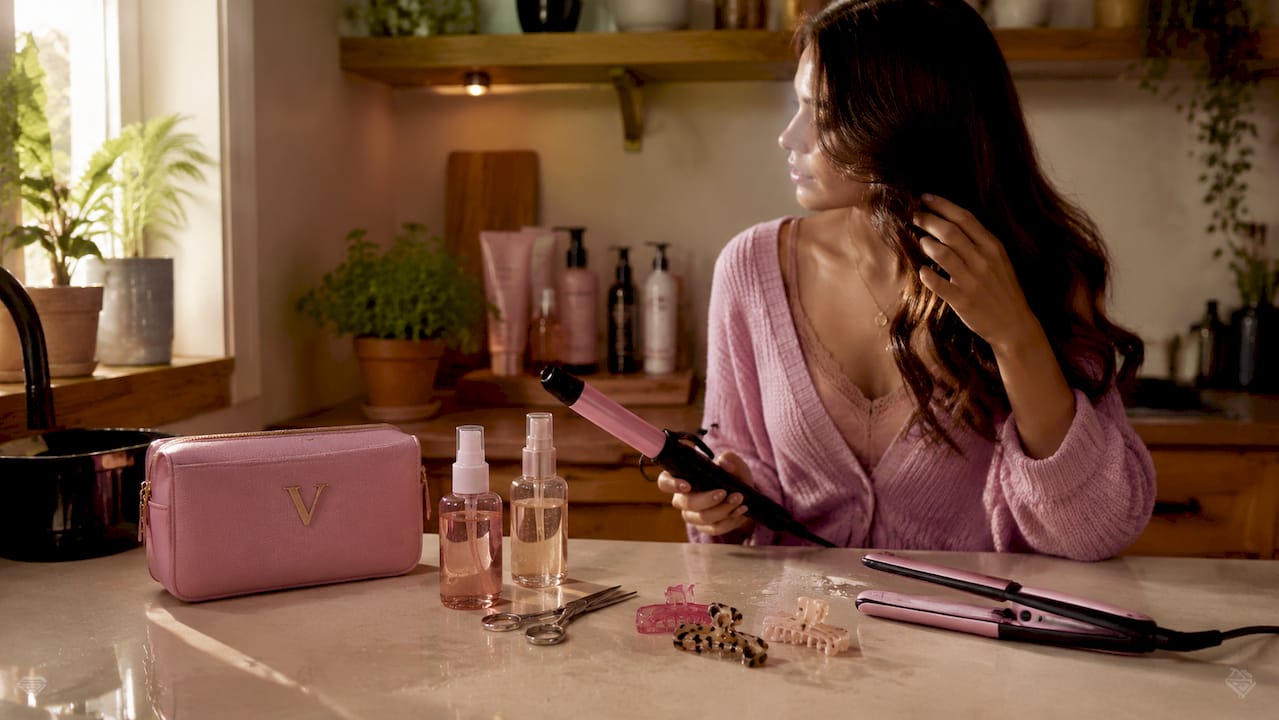
The two main paths are DIY and mobile professional services. DIY means you handle everything yourself. Mobile professional services mean a licensed stylist comes to your door. Mobile beauty platforms like Velourabeautyondemand now connect clients with vetted professionals who bring the full salon experience directly to your home.
How do in-home haircut services compare to salon visits?
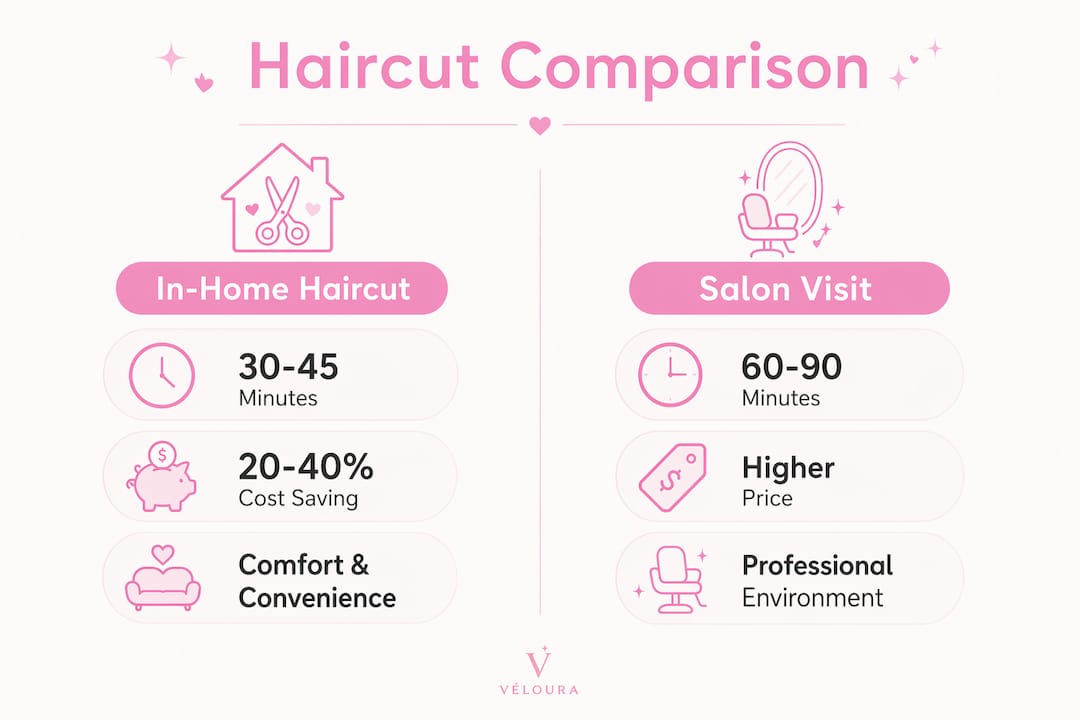
The difference between an in-home haircut service and a traditional salon visit comes down to time, cost, and comfort.
In-home haircut sessions typically run 30–45 minutes. Salon visits often stretch longer once you factor in travel, waiting, and checkout. That time difference adds up fast for anyone with a packed schedule.
Cost is the other major factor. Mobile stylists charge 20–40% less than brick-and-mortar salons because they carry no rent or reception overhead. Typical in-home haircut pricing runs $30–$55, compared to $45–$70 at a salon. Tipping remains standard at 15–20% regardless of where the service happens.
Salon vs. in-home haircut: a quick comparison
| Factor | In-home haircut | Salon visit |
|---|---|---|
| Average session time | 30–45 minutes | 60–90 minutes with travel |
| Typical cost | $30–$55 | $45–$70 |
| Wait time | None | Variable |
| Personal attention | One-on-one | Shared stylist attention |
| Setup required | Chair, lighting, floor cover | None |
Setting up your space correctly matters. A well-lit area with a stable chair near an electrical outlet and a towel on the floor keeps the process clean and comfortable. Natural light or a ring light gives the clearest view of your work.
In-home haircuts also appeal to clients with mobility challenges, new moms, and anyone who finds crowded salons stressful. The one-on-one environment means the stylist focuses entirely on you.
Pro Tip: Place a large mirror at eye level and a smaller hand mirror behind you. Checking the back of your head during a cut prevents uneven lines that are hard to fix later.
What tools and products do you need for at-home hairstyling?
The right tools separate a polished result from a frustrating one. Professional-grade styling tools including blow dryers, flat irons, and curling irons are the core of any home kit.
Heat styling tools
- Blow dryer: A professional model with at least 1,875 watts dries hair faster and reduces heat exposure time. Use the concentrator nozzle for a smooth finish.
- Flat iron: Ceramic or tourmaline plates distribute heat evenly. A 1-inch plate works for most hair lengths.
- Curling iron: Barrel size determines curl type. A 1.25-inch barrel creates loose waves; a 0.75-inch barrel produces tight curls.
Styling products
Serums, pomades, foams, and creams each serve a specific purpose. Serums add shine and reduce frizz on dry hair. Pomades define and hold without stiffness. Foams add volume at the root before blow drying. Creams moisturize and smooth textured or coarse hair during styling.
Heat protection is non-negotiable. Apply a heat protectant spray or cream before any tool touches your hair. It forms a barrier that reduces moisture loss and breakage from repeated heat exposure.
Pro Tip: Clean your flat iron and curling iron plates with a damp cloth after every use. Product buildup transfers to your hair and causes uneven heat distribution over time.
How do you color your hair at home without common mistakes?
At-home hair coloring is a process that rewards patience and precise timing rather than advanced skill. A well-executed coloring process follows a clear sequence, and skipping any step is where most mistakes happen.
Step-by-step at-home hair color process
- Do an allergy test 48 hours before. Mix a small amount of dye and apply it behind your ear. Redness or itching means stop.
- Do a strand test. Apply color to a small hidden section to check the result before committing to your full head. Professional stylists call this step non-negotiable, and beginners skip it most often.
- Section your hair into four quadrants. Use sectioning clips to divide hair from ear to ear and front to back. This keeps application organized.
- Apply color to roots last. Start at the mid-lengths and ends, then work back to the roots in the final 10–15 minutes. Roots process faster because of scalp heat. Applying them last prevents hot roots, which are darker bands at the crown.
- Time your processing carefully. Permanent color needs 30–45 minutes. Set a timer and do not guess.
- Emulsify before rinsing. Add a small amount of water to your hair and massage for 2–3 minutes before rinsing fully. This emulsification step distributes color evenly, enhances shine, and prevents patchiness.
- Rinse with cool water. Hot water opens the cuticle and lets color escape faster.
Common mistakes to avoid
- Skipping the strand test and discovering an unexpected result on your full head
- Applying color to dirty hair when the instructions specify clean hair, or vice versa
- Over-processing by ignoring the timing instructions on the box
- Using box color over previously chemically treated hair without a professional consultation
Pro Tip: Wear an old button-down shirt during color application. Pulling a shirt over your head after coloring transfers dye to your hairline and neck.
Refresh timing for different color types
Permanent color roots need refreshing every 6–8 weeks. Demi-permanent color blends gray up to 50% and fades over 4–6 weeks, making it a lower-commitment option for first-timers.
How do you maintain salon-quality results between appointments?
Consistency in your aftercare routine determines how long your color and style last. The work does not stop when you put the tools down.
Color longevity depends on avoiding shampoo for 24–72 hours after coloring. Washing too soon strips the dye before it fully sets into the hair shaft. After that window, use a sulfate-free shampoo to slow fading.
Weekly conditioning is the other pillar of color maintenance. A moisturizing mask or deep conditioner used once a week rebuilds the hair’s moisture barrier, which coloring depletes. This keeps hair soft, shiny, and less prone to breakage.
- Trim every 8–12 weeks to remove split ends before they travel up the shaft and cause more damage.
- Avoid layering too many products. One styling product per session is usually enough. Stacking multiple products causes buildup that dulls your hair.
- Adjust your technique for your hair type. Fine hair needs lighter products and lower heat. Thick or coarse hair tolerates higher heat and heavier creams.
- Monitor your results honestly. If your color looks brassy or your style falls flat within hours, the issue is usually product choice or heat temperature, not technique.
Pro Tip: Rinse your hair with cold water at the end of every shower, even on non-wash days. Cold water closes the cuticle and adds noticeable shine with zero effort.
Key takeaways
At-home hairstyling delivers salon-quality results when you combine the right tools, precise timing, and consistent aftercare.
| Point | Details |
|---|---|
| Cost savings are real | In-home haircut services cost $30–$55, which is 20–40% less than most salon visits. |
| Timing drives color results | Process permanent color for 30–45 minutes and apply roots last to prevent hot roots. |
| Emulsification matters | Massaging hair with water before rinsing distributes color evenly and boosts shine. |
| Tools require maintenance | Clean heat styling tools after every use to prevent product buildup on your hair. |
| Aftercare protects your investment | Skip shampoo for 24–72 hours post-color and use a weekly conditioning mask. |
What I have learned from watching people style their hair at home
Most people who struggle with at-home hairstyling are not missing skill. They are missing patience. The single most common mistake I see is rushing the process. Someone skips the strand test because they are excited to see the result. Someone pulls the flat iron through their hair too fast because they are running late. The result is always the same: uneven color, frizz, or damage that takes weeks to repair.
The second thing I have noticed is that people underestimate the value of good tools. A $15 flat iron from a discount store creates hot spots that fry hair unevenly. A professional-grade tool with ceramic plates costs more upfront but protects your hair and delivers consistent results. That investment pays for itself within a few months of skipping salon visits.
The third insight is this: in-home hairstyling is not about replicating everything a salon does. It is about mastering the two or three things you do most often. A great blowout, a clean trim, a reliable color refresh. Get those right, and you will rarely need to book a salon appointment for routine maintenance. Save the salon for the big changes.
— VÉLOURA
Skip the DIY stress and book a pro through Velourabeautyondemand
Sometimes you want the results without the process. Velourabeautyondemand connects you with licensed, vetted beauty professionals who come directly to your door in Los Angeles, New York City, and Miami. No commute. No waiting room. Just expert service on your schedule.
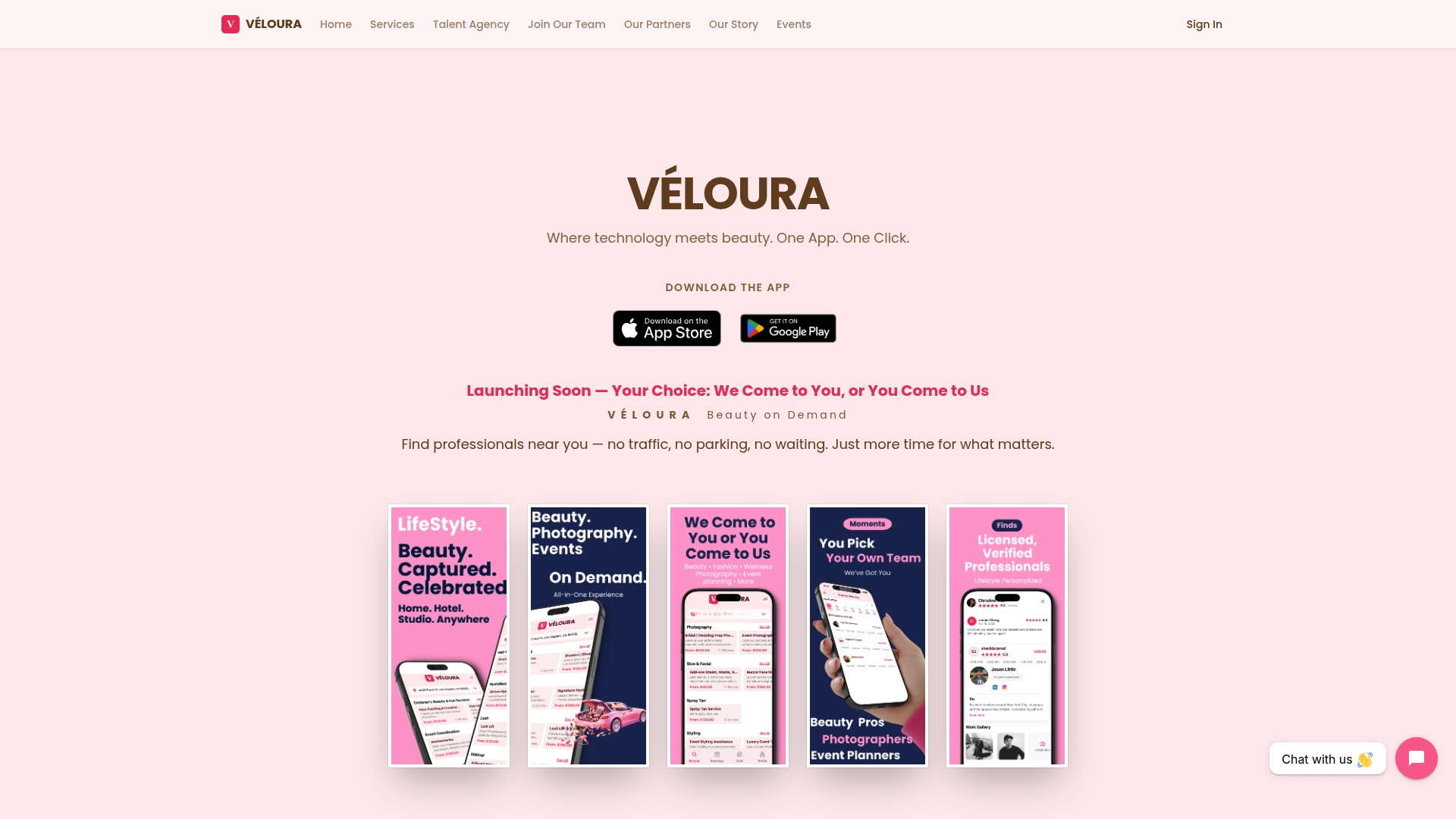
Whether you need a blowout, highlights, balayage, or a clean trim, you can book beauty services near you through the Velourabeautyondemand app in minutes. Every professional on the platform is licensed and reviewed. Pricing is transparent, and the on-demand beauty app handles booking, payment, and reviews in one place. Your next great hair day is one tap away.
FAQ
How long does an in-home haircut service take?
In-home haircut sessions typically run 30–45 minutes. That is significantly faster than a full salon visit once travel and wait time are included.
How much does a mobile hair stylist cost?
Mobile stylists generally charge $30–$55 for a haircut, which is 20–40% less than salon pricing due to lower overhead costs.
How often should I refresh my hair color at home?
Permanent color roots need refreshing every 6–8 weeks. Demi-permanent color fades over 4–6 weeks and is a good option if you want a lower-commitment routine.
What is the emulsification step in hair coloring?
Emulsification means adding a small amount of water to your hair and massaging for 2–3 minutes before rinsing out the dye. This step distributes color evenly and adds shine.
Do I need to do a strand test before coloring at home?
Yes. A strand test on a small hidden section of hair shows you the exact result before you apply color to your full head. Skipping it is the most common cause of unexpected color outcomes.
Recommended

Comments ()