In-Home Beauty Services for Elderly: Real Benefits
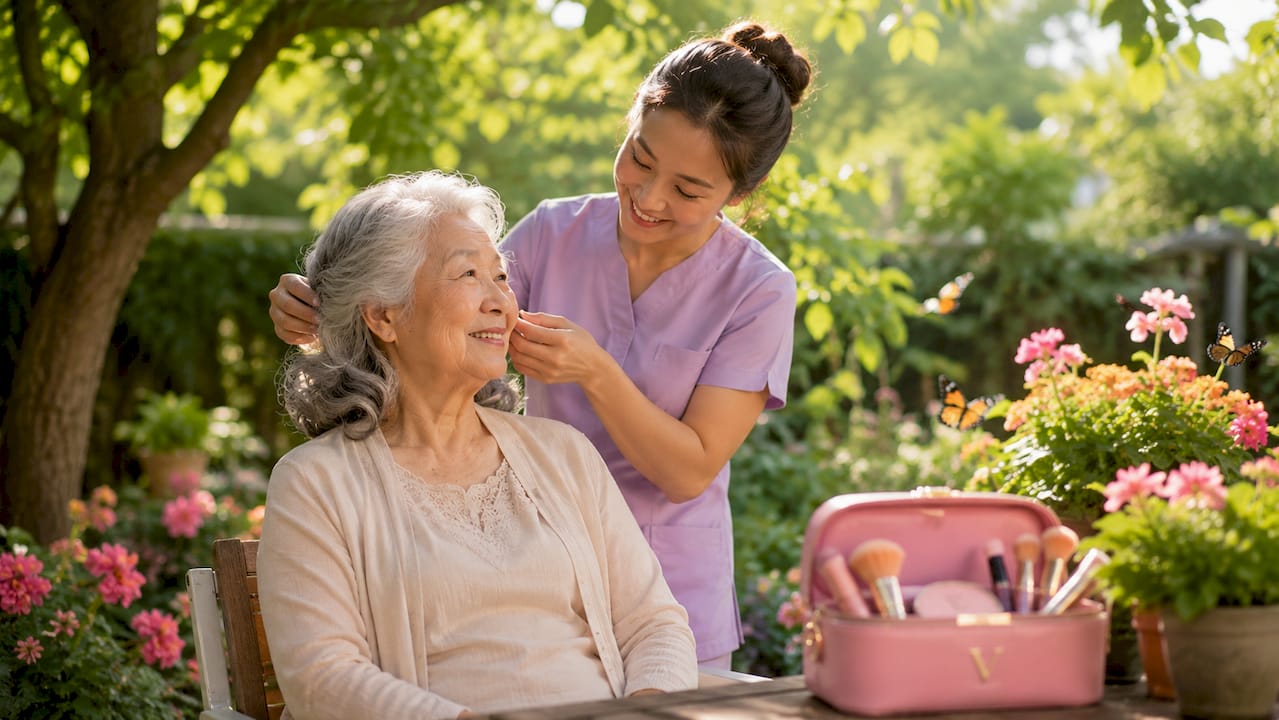
In-home beauty services for elderly individuals are defined as professional grooming and personal care treatments delivered directly to a senior’s home by licensed, vetted beauty professionals. The in-home beauty services elderly benefits go far beyond a fresh haircut or polished nails. They remove travel barriers, reduce fall and illness risks, restore dignity, and deliver measurable gains in mood, cognitive engagement, and self-esteem. For family members and caregivers, these services also provide genuine emotional relief, knowing your loved one feels seen, cared for, and comfortable in their own space.
1. How in-home beauty services improve convenience and safety for seniors
The single biggest advantage of at-home beauty care is the elimination of travel. For elderly individuals with limited mobility, arthritis, or balance issues, a trip to a salon involves physical effort, logistical coordination, and real risk. Staying home removes exposure to infectious environments and eliminates the hazard of navigating unfamiliar spaces, which is where most senior falls occur.
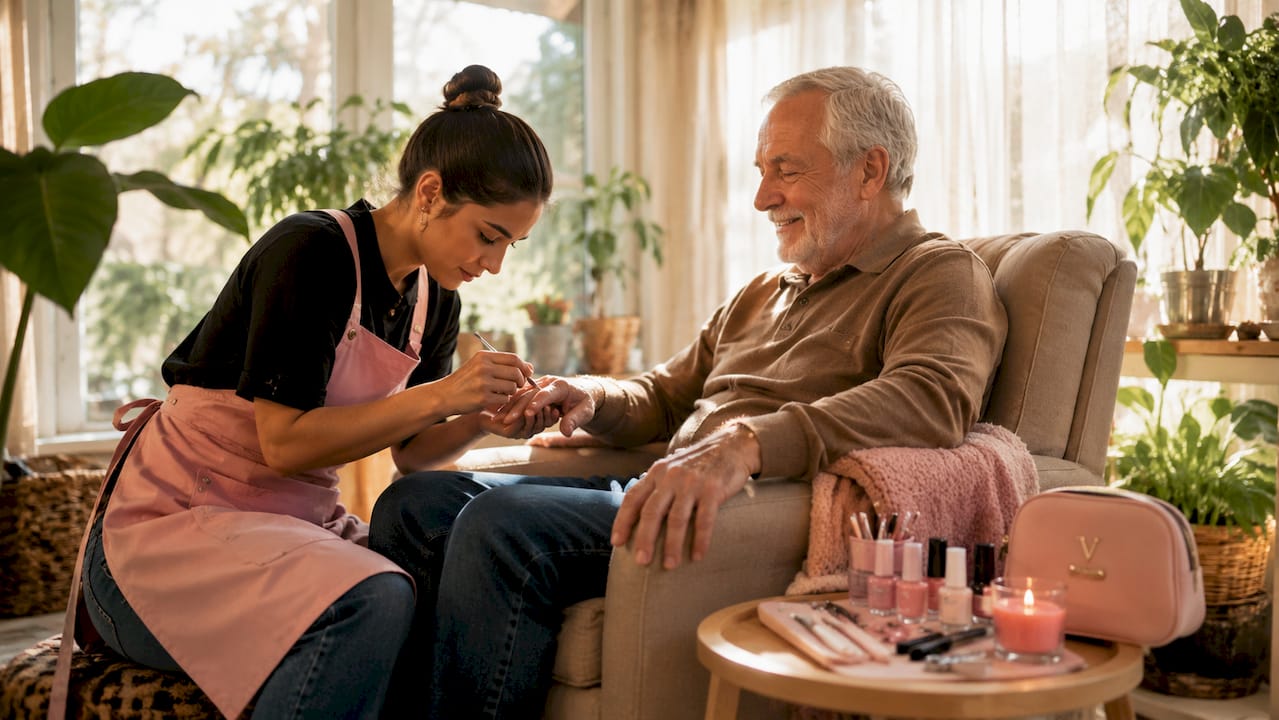
Scheduling flexibility matters just as much. A licensed professional can arrive at a time that fits around medication schedules, therapy appointments, and natural energy peaks. Most seniors feel sharpest in the mid-morning. Booking a service then, rather than rushing to a 3 p.m. salon slot, makes the entire experience calmer and more enjoyable.
The familiar home setting also reduces anxiety. Seniors with dementia or cognitive decline respond better to routines in known environments. A stylist arriving at the kitchen table creates far less distress than a loud, unfamiliar salon.
Key safety and convenience advantages include:
- No transportation coordination required for family members
- Reduced exposure to colds, flu, and other contagious illnesses
- Lower risk of falls on wet salon floors or unfamiliar stairs
- Flexible timing that respects the senior’s daily rhythm
- One-on-one attention from a professional focused solely on them
Pro Tip: When booking, share the senior’s peak energy window with the provider. A 45-minute service at 10 a.m. will feel completely different from the same service at 4 p.m. for most elderly clients.
2. Personalized and gentle care designed for elderly clients
Standard salon services are not designed for fragile skin, limited range of motion, or cognitive sensitivity. Care beauty programs train professionals using simulated aging techniques, including weighted vests that mimic the physical limitations of an 80-year-old, so they understand firsthand what their clients experience. That kind of empathy changes how a professional handles a wrist, positions a chair, or adjusts the pressure of a scalp massage.
Gentle techniques matter at every step. Elderly skin is thinner, drier, and more prone to bruising. A trained provider uses fragrance-free products, avoids heavy chemicals, and adapts application methods to minimize discomfort. Soft manicures, mild facials, and low-tension styling replace the aggressive treatments common in standard salons.
Personalization also extends to emotional and cognitive states. A senior with early-stage dementia may not communicate discomfort clearly. Professionals trained in elderly care watch for nonverbal cues and adjust accordingly. This level of attention simply does not exist in a busy commercial salon.
Services that work especially well for elderly clients include:
- Gentle scalp massages and low-heat blowouts
- Soft gel manicures using non-toxic, low-odor formulas
- Mild hydrating facials suited for mature, sensitive skin
- Light makeup application that honors personal style preferences
- Therapeutic hand and foot care with moisturizing treatments
Pro Tip: Ask any provider you consider whether they have completed elderly care or sensitivity training. Professionals who have trained with programs like those run by the Japan Health Therapy Association bring a measurably different level of care.
3. Emotional and psychological benefits that go deeper than appearance
The emotional impact of home beauty care for seniors is well-documented and often underestimated. Incorporating beauty routines into daily life in senior care settings reduces dementia symptoms and isolation while increasing overall satisfaction. A fresh blowout or a clean manicure signals to the brain that the day has purpose and structure.
Self-confidence follows directly. Many seniors, particularly those who spent decades maintaining a specific personal style, feel a quiet loss when grooming becomes difficult. Restoring that routine, even partially, reconnects them to their identity. That connection is not cosmetic. It is psychological.
Social engagement improves too. A senior who feels well-groomed is more likely to accept a lunch invitation, join a family video call, or engage with neighbors. The ripple effect of one beauty appointment can extend across an entire week.
“After her first in-home manicure, my mother called three people to tell them about her nails. She hadn’t made a social call in months.” — Family caregiver, Los Angeles
The caregiver benefits here are real as well. Mobile beauty services create a genuine win for both seniors and the people who care for them, restoring dignity to the senior while giving caregivers emotional relief and confidence that their loved one is being well cared for.
Additional psychological benefits observed in elderly clients include:
- Reduced feelings of invisibility and social withdrawal
- Improved mood that persists for days after a session
- Stronger sense of personal autonomy and self-reliance
- Decreased anxiety in seniors with cognitive decline
- Renewed interest in personal appearance and daily routines
4. Comparison of popular in-home beauty services for elderly care
Choosing the right services depends on the senior’s physical condition, personal preferences, and care goals. The table below compares the most common options across key factors.
| Service | Best for | Key considerations |
|---|---|---|
| Hair styling and blowout | Seniors with limited salon mobility | Use low heat; avoid tight styles that stress the scalp |
| Soft gel manicure | Cognitive engagement and mood | Choose non-toxic, low-odor formulas for sensitive clients |
| Hydrating facial | Dry or mature skin care | Avoid active acids; prioritize gentle, fragrance-free products |
| Light makeup application | Self-esteem and social occasions | Maintaining makeup habits supports cognitive health and social integration |
| Therapeutic hand and foot massage | Physical comfort and relaxation | Documented to improve satisfaction and well-being in seniors |
When comparing in-home makeup services for elderly clients, the key differentiator is not the product used. It is the provider’s training and patience. A 30-minute makeup session with a trained elderly care specialist produces a completely different experience than the same service from a generalist.
Gifting in-home beauty to an elderly parent is one of the most practical and meaningful gifts a family member can give. It requires no assembly, no travel coordination, and no guesswork about sizing. It delivers a real, tangible experience that most seniors would not book for themselves.
Factors to evaluate when selecting a provider:
- Verified license and insurance in your state
- Documented experience or training with elderly or mobility-limited clients
- Clear hygiene protocols, including sanitized tools and clean linens
- Flexible cancellation policies that accommodate health changes
- Transparent pricing with no hidden fees
5. How to book in-home beauty services for an elderly loved one
Booking home beauty care for a senior is straightforward when you follow a clear process. Here is a step-by-step guide to getting it right the first time.
- Assess the senior’s needs and preferences. Ask what services they enjoyed before mobility became a challenge. A lifelong nail salon regular will respond differently than someone who simply wants a comfortable haircut.
- Research providers with elderly care experience. Look for platforms or individual professionals who list senior care or mobility-limited clients in their service description. Platforms like Velourabeautyondemand connect clients with vetted professionals who arrive fully equipped.
- Confirm the booking details. Share the senior’s address, any mobility aids in use, preferred timing, and any known skin sensitivities or allergies. The more context you provide, the better the provider can prepare.
- Coordinate with existing care schedules. Avoid booking during medication windows, physical therapy sessions, or times when the senior typically naps. A well-timed appointment feels like a treat. A poorly timed one feels like an interruption.
- Prepare the space. Clear a comfortable chair near good natural light. Have a small table available for the provider’s tools. If the senior uses a wheelchair, confirm the provider is comfortable working in that context.
- Follow up after the first session. Ask the senior how they felt during and after. Use that feedback to refine the service type, timing, or provider for the next booking.
Regular scheduling amplifies every benefit listed in this article. A monthly manicure becomes a routine the senior looks forward to. That anticipation alone has measurable effects on mood and engagement.
6. Why care beauty is a recognized field, not just a luxury
The term “care beauty” is the recognized industry standard for beauty services adapted to elderly and mobility-limited clients. It is distinct from standard salon work in both technique and intent. Care beauty programs are designed to honor seniors’ autonomy and comfort, not simply to apply products. The Japan Health Therapy Association runs more than 100 workshops annually on therapeutic hand care and beauty for seniors. That scale reflects how seriously the professional beauty industry takes this specialization.
The distinction matters when you are choosing a provider. A generalist stylist may be technically skilled but unprepared for the specific needs of an 88-year-old with limited grip strength or a client who becomes confused mid-session. A care beauty specialist has trained for exactly those situations.
Therapeutic hand and foot massages during beauty sessions have been documented to produce genuine physical pleasure and satisfaction in elderly clients, including a 91-year-old woman and an 88-year-old man who both noted the tangible comfort of the experience. That is not a luxury outcome. That is a health outcome.
Key takeaways
In-home beauty services deliver measurable physical, emotional, and cognitive benefits to elderly clients while reducing caregiver stress and logistical burden.
| Point | Details |
|---|---|
| Safety and convenience | Eliminating travel reduces fall risk, illness exposure, and physical strain for elderly clients. |
| Personalized care | Trained care beauty professionals adapt techniques for fragile skin, limited mobility, and cognitive sensitivity. |
| Emotional and cognitive gains | Regular beauty routines reduce dementia symptoms, isolation, and low self-esteem in seniors. |
| Gifting and booking | In-home beauty is a practical, meaningful gift that requires no travel and delivers lasting emotional impact. |
| Provider selection | Prioritize licensed professionals with documented elderly care or care beauty training over generalist stylists. |
What we’ve seen that most articles won’t tell you
Most conversations about home beauty care for seniors focus on convenience. That framing undersells the real story. After working with clients across Los Angeles, New York City, and Miami, the pattern we see consistently is this: the first appointment is about the service. Every appointment after that is about identity.
Seniors who maintain grooming routines are not being vain. They are holding onto a version of themselves that still exists. When a 90-year-old woman asks for the same shade of lipstick she has worn since 1975, she is not making a beauty request. She is making a statement about who she is. A skilled care beauty professional understands that. A generalist does not.
Caregivers often tell us they notice a shift in their loved one’s mood that lasts well beyond the appointment itself. The senior sits up straighter. They make phone calls. They mention the appointment to visitors. That is not a coincidence. Maintaining personal beauty habits positively affects cognitive health and social connectivity in ways that extend far past the session itself.
The uncomfortable truth is that many families wait too long to introduce these services. They assume the senior won’t care, or that it feels frivolous given other care priorities. The evidence says otherwise. Start early. Make it regular. The return on that investment, in mood, engagement, and quality of life, is real.
— VÉLOURA
Bring professional beauty care to your loved one’s door
Your parent or loved one deserves to feel their best, without a single car ride or waiting room.
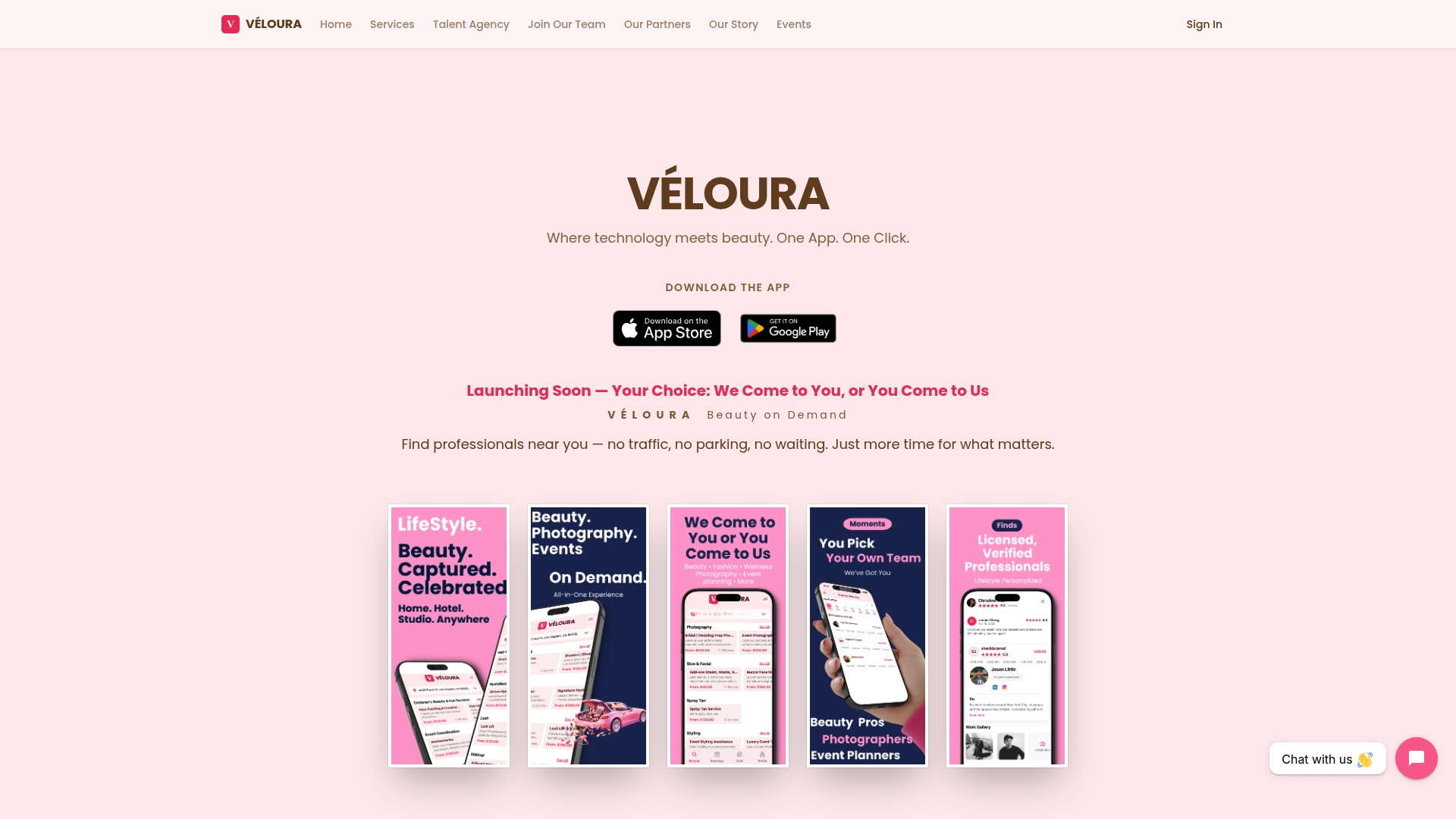
Velourabeautyondemand connects you with licensed, vetted beauty professionals who come directly to your loved one’s home. Services include gentle manicures, hydrating facials, hair styling, and light makeup, all delivered with the patience and care that elderly clients deserve. Booking takes minutes. The impact lasts for days. Whether you are arranging a one-time gift or setting up a regular care routine, book a professional through Velourabeautyondemand and give your loved one a moment of genuine comfort and joy.
FAQ
What are the main benefits of in-home beauty services for the elderly?
In-home beauty services remove travel barriers, reduce fall and illness risk, and deliver personalized care in a familiar environment. They also improve mood, reduce isolation, and support cognitive health through routine and identity-affirming grooming.
How do I choose a provider with elderly care experience?
Look for professionals who list senior or mobility-limited clients in their credentials, have completed care beauty training, and follow clear hygiene protocols. Platforms like Velourabeautyondemand vet their professionals before they accept bookings.
Can in-home beauty services help seniors with dementia?
Yes. Beauty routines in care settings reduce dementia symptoms and isolation while increasing satisfaction. Familiar grooming rituals provide cognitive anchors that support engagement and calm.
Is gifting in-home beauty services to an elderly parent a good idea?
It is one of the most practical and personal gifts available. It requires no travel, no assembly, and no guesswork. It delivers a real experience that most seniors would not arrange for themselves but genuinely appreciate.
How often should elderly clients book in-home beauty services?
Monthly appointments are a strong baseline for most seniors. Regular scheduling creates a routine the senior anticipates, which amplifies the mood and engagement benefits beyond what a single session can deliver.
Recommended

Comments ()