An accessible beauty service is defined as any personal care or cosmetic treatment designed to be usable by people of all abilities, including those with physical disabilities, sensory differences, or mobility limitations. The industry term "adaptive beauty" refers specifically to specialized tools and rituals that empower independence. Over 70 million U.S. adults live with a disability, making inclusive beauty one of the most urgent and underserved areas in personal care. VÉLOURA Beauty On Demand is built around the idea that great beauty service should reach every client, wherever they are.
What is an accessible beauty service, and why does it matter?
Accessible beauty service means removing the physical, sensory, and digital barriers that prevent people with disabilities from receiving standard personal care. The concept covers two distinct categories. "Accessible" refers to the physical and digital infrastructure of a service, such as ramp access, wide doorways, and usable websites. "Adaptive" refers to specialized tools and rituals, such as silicone-grip brushes, magnetic closures, and ergonomic packaging, that help clients with limited dexterity care for themselves independently.
The distinction matters because a salon can have a ramp and still fail a wheelchair user at the shampoo basin. True accessibility requires both layers working together. When they do, beauty becomes something everyone can access with dignity, not just those who fit a narrow physical profile.
Accessible design benefits people with temporary and permanent disabilities alike. A broken wrist, post-surgery recovery, or age-related arthritis can all create the same need for adaptive tools or in-home services. Disability is the only identity group anyone can join at any time, which makes inclusive beauty a universal concern, not a niche one.
What barriers do people with disabilities face in accessing beauty services?
The barriers are more common than most people realize. 68% of disabled respondents report encountering barriers specifically in hairdressers, barbers, and beauty salons. That figure represents the majority of disabled clients, not a small minority.
Physical barriers inside salons
The most common physical barriers include:
- Narrow doorways that block wheelchair entry or turning
- Shampoo basins fixed at heights that cannot accommodate wheelchair users
- Insufficient turning space between styling chairs
- No adjustable-height equipment for clients who cannot transfer out of their chair
- Lack of accessible restrooms within the salon space
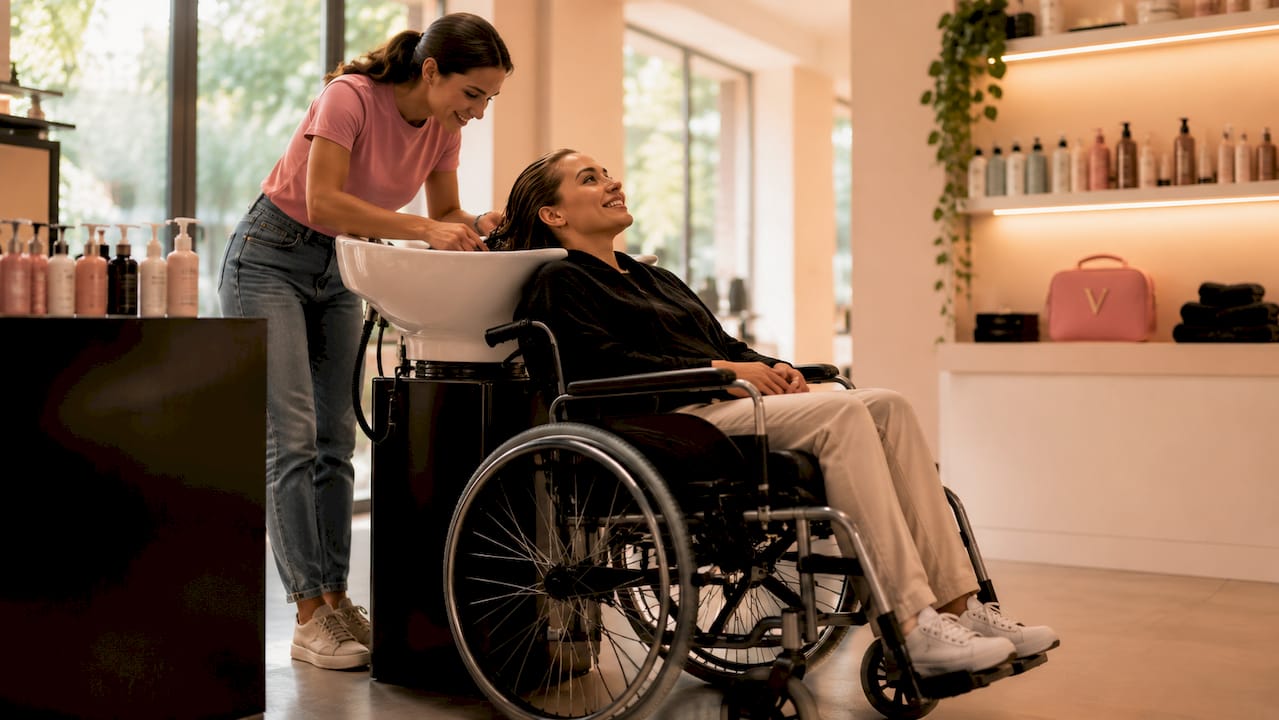
Many salons claim basic accessibility because they have a ramp at the entrance. Salons often lack the internal maneuvering space and adjustable equipment that a wheelchair user actually needs once inside. A ramp at the door means nothing if the shampoo basin is the wrong height.
Sensory and digital barriers
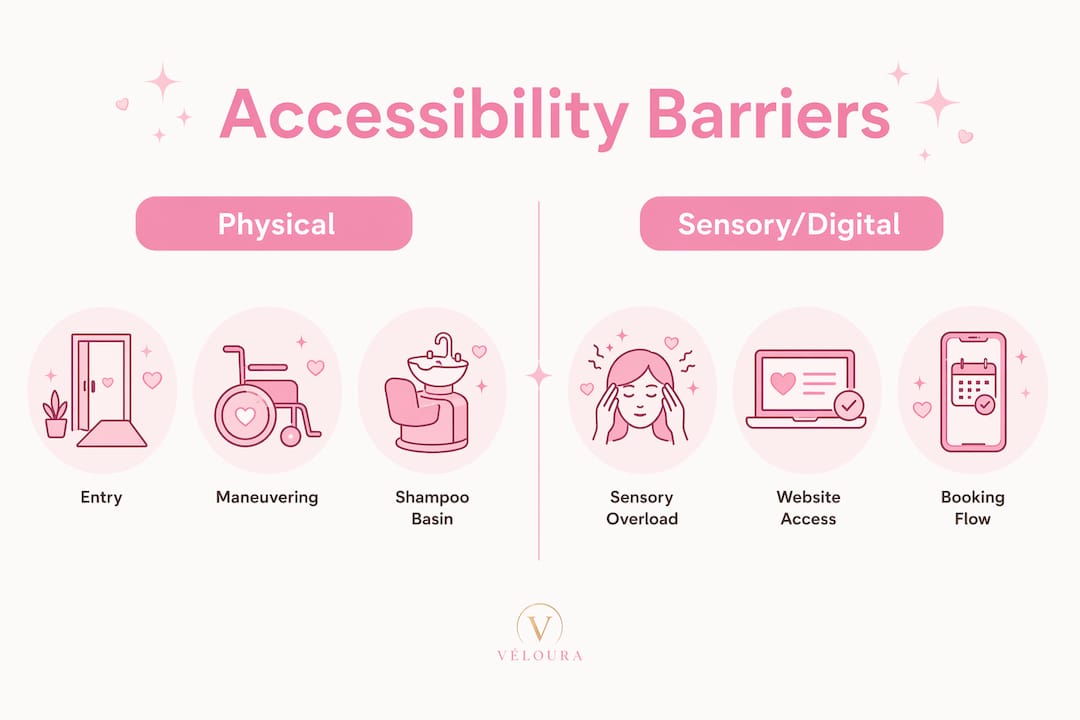
Sensory overload is a real barrier for clients with autism, anxiety disorders, or certain chronic conditions. Loud music, strong chemical smells, and crowded waiting areas can make a standard salon visit genuinely distressing. Requesting disability-aware timeslots, which are quieter, lower-traffic appointment windows, directly reduces this kind of stress.
Digital barriers compound the problem. 75% of disabled customers have walked away from a business due to poor accessibility. A separate finding shows that 52% of disabled consumers cannot complete beauty product purchases online because of inaccessible websites. That means more than half of disabled shoppers are blocked before they even book an appointment.
Pro Tip: Before booking any salon, check whether their website works with a screen reader. If the site is hard to navigate digitally, the in-person experience is unlikely to be better planned.
How are accessible and adaptive beauty services evolving?
The beauty industry is moving beyond basic compliance toward proactive inclusion. The shift is visible in product design, technology, and service delivery. Adaptive beauty design prioritizes dignity by creating stylish, functional products that empower independence without stigma. The goal is not a "special needs" product line. It is mainstream beauty that works for everyone.
Adaptive tools changing the market
Several product categories are growing specifically to address ability-related needs:
- Silicone-grip brush handles for clients with limited hand strength
- Magnetic closures on compacts and palettes for one-handed use
- Pump-top and squeeze-tube packaging that eliminates the need to twist or pry
- Easy-open packaging that benefits arthritis sufferers, older adults, and anyone seeking convenience
These tools do not look clinical. They look like premium beauty products, which matters enormously for the dignity of the people using them.
Technology expanding access
Augmented reality (AR) virtual try-on tools allow clients with mobility limitations to test hair color, makeup shades, and nail looks from home, without visiting a physical location. AI-powered booking platforms are improving digital accessibility by offering screen-reader-compatible interfaces and simplified checkout flows. The future of on-demand beauty points toward technology closing the gap between what clients need and what the industry currently delivers.
Neurodivergence and age are now part of the accessibility conversation alongside physical disability. A service designed for a client with sensory sensitivities, for example, often works better for older adults and new mothers too. Inclusive design, when done well, improves the experience for everyone.
Pro Tip: Look for beauty platforms that list specific accessibility features in their booking flow, not just a generic "accessible" label. Specifics like "adjustable chair available" or "quiet appointment option" signal a provider who has actually thought this through.
What practical options exist for finding accessible beauty services at home?
In-home and mobile beauty services are the most direct solution for clients who face barriers in traditional salon settings. When a licensed professional comes to you, the physical environment is one you already control. There is no inaccessible doorway, no fixed shampoo basin, and no crowded waiting room.
Here is how to find and evaluate accessible beauty services at home:
- Search for mobile beauty platforms that connect you with licensed, vetted professionals who travel to your location. VÉLOURA Beauty On Demand operates exactly this model across Los Angeles, New York City, and Miami.
- Confirm the provider's experience with adaptive techniques before booking. Ask directly whether they have worked with clients who use wheelchairs or have limited mobility.
- Specify your environment when booking. Let the provider know about your space, your chair, and any equipment you use. A good professional will prepare accordingly.
- Request a longer appointment window if you need extra time for transfers, positioning, or breaks. Most mobile providers can accommodate this with advance notice.
- Check for ADA-compliant booking platforms that work with assistive technology. The booking process itself should be accessible, not just the service.
In-home beauty services for clients with limited mobility or age-related needs represent one of the fastest-growing segments in personal care. The convenience factor appeals to everyone, but for clients with disabilities, it is not a luxury. It is access.
Pro Tip: When booking a wheelchair accessible beauty appointment through any platform, send a brief message to the provider before the session. Describe your setup and any preferences. Providers who respond with specific questions, rather than a generic "no problem," are the ones who will actually deliver.
How can you ensure a truly accessible beauty experience?
Whether you are booking for yourself or a loved one, asking the right questions before the appointment saves frustration later. Most salons that fall short on accessibility do so not out of indifference but because no one has asked them to think it through.
Proactive transparency about accessibility details, like floor plans and equipment specs, helps clients feel confident before they arrive. Ask for it directly.
Questions to ask any salon or provider:
- What is the width of your entrance doorway and interior aisles?
- Is your shampoo basin height adjustable, or can services be performed in a client's own wheelchair?
- Do you offer disability-aware timeslots with reduced noise and fewer clients?
- Can a caregiver or support person accompany me during the appointment?
- Is your booking website compatible with screen readers or voice navigation?
For beauty professionals, the standard to aim for goes beyond ADA compliance. ADA sets a legal floor, not a ceiling. Genuinely accessible service means training staff to ask clients about their needs rather than assuming, offering flexible positioning options, and being willing to adapt the service environment on the spot.
Disability-aware timeslots reduce sensory and environmental barriers by scheduling appointments during quieter, less stressful periods. This approach serves neurodivergent clients, immunocompromised clients, and anyone who finds a busy salon environment difficult to manage.
Key Takeaways
Accessible beauty service is the most direct path to inclusive personal care, and in-home or mobile delivery removes the most common barriers entirely.
| Point | Details |
|---|---|
| Definition of accessible beauty | Accessible beauty removes physical, sensory, and digital barriers so all clients can receive personal care. |
| Scale of the need | Over 70 million U.S. adults live with a disability, making inclusive beauty a mainstream concern. |
| Two-layer approach | True accessibility requires both physical infrastructure and adaptive tools working together. |
| In-home services solve the most barriers | Mobile beauty eliminates inaccessible venues by bringing licensed professionals to the client's own space. |
| Ask specific questions | Vague "accessible" labels mean little. Request details on doorway width, basin height, and quiet appointment options. |
Accessible beauty is not a trend. It is the standard we should have set years ago.
At VÉLOURA Beauty On Demand, we have seen firsthand what happens when a client who has struggled to access a salon for years receives a professional beauty service in their own home for the first time. The reaction is not just relief. It is something closer to reclaiming a part of life that felt out of reach.
The beauty industry spent years expanding its definition of inclusivity to cover skin tone, hair texture, and gender expression. Those were necessary steps. But ability was left out of that conversation for too long. A client who uses a wheelchair, lives with chronic pain, or has sensory sensitivities deserves the same quality of care as anyone else. Not a modified version of it. The same.
What concerns me about the current state of the industry is the gap between intention and execution. A salon can genuinely want to be accessible and still fail a client because no one asked the right questions during the design phase. The 68% barrier rate in beauty settings is not a reflection of bad intentions. It is a reflection of a system that was not designed with disabled clients in mind from the start.
The solution is not complicated. It starts with asking clients what they need, then building the service around that answer. Mobile and in-home beauty delivery is the clearest proof that this works. When the professional comes to you, the client's environment becomes the salon. That single shift removes most of the barriers that make traditional settings inaccessible.
The role of beauty booking platforms in 2026 and beyond is to make this the default, not the exception. Accessibility should be a filter option, not a footnote.
— VÉLOURA
VÉLOURA Beauty On Demand brings beauty to you
For clients who face barriers in traditional salon settings, VÉLOURA Beauty On Demand offers a direct solution. Licensed, vetted beauty professionals travel to your home, office, or hotel in Los Angeles, New York City, and Miami. You choose the time, the space, and the services.
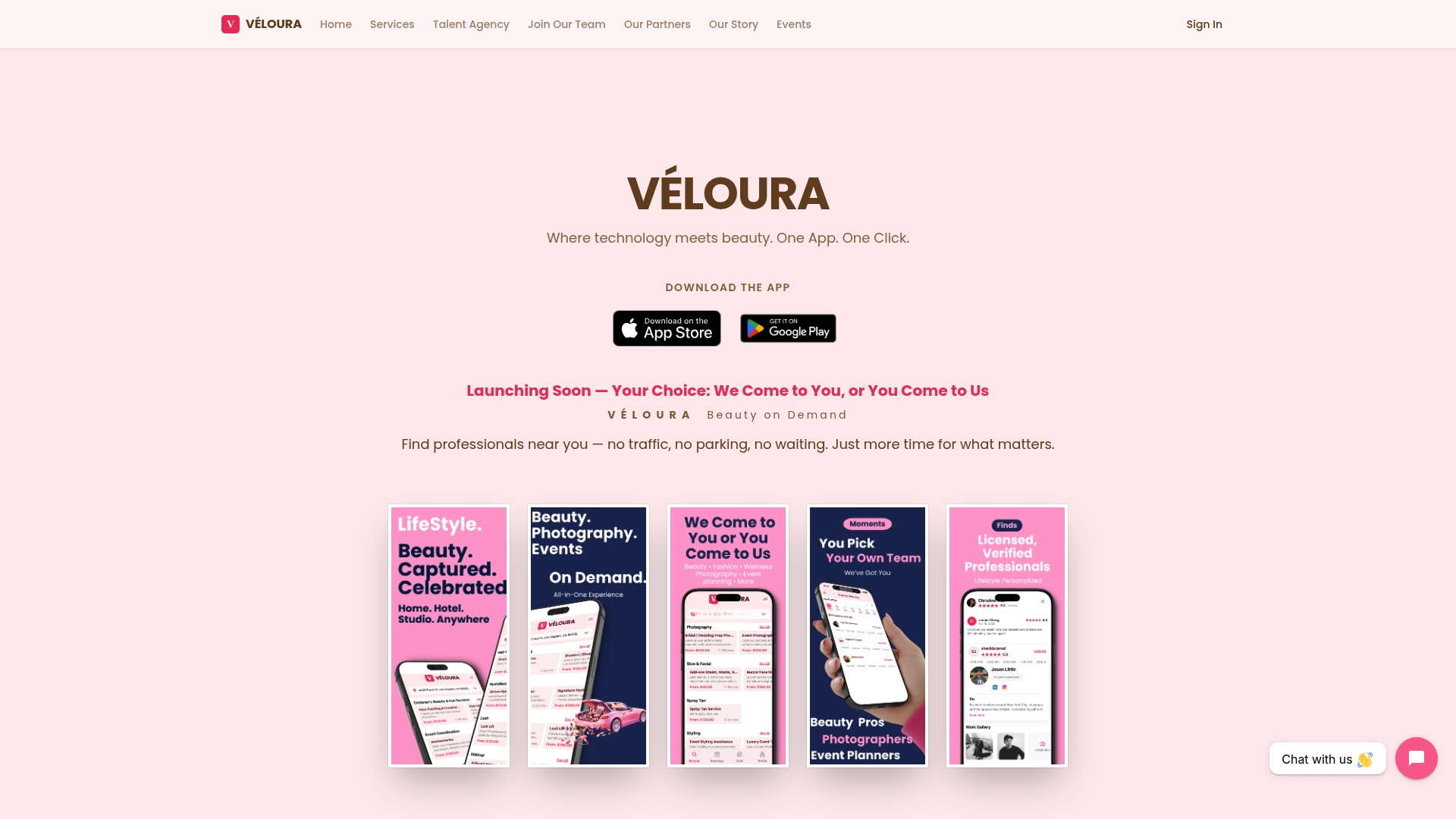
Book hair, makeup, nails, lash extensions, or skincare through the VÉLOURA app. No commute. No waiting room. No environment you did not choose. For clients with mobility limitations, sensory sensitivities, or simply a preference for care on their own terms, home beauty services through VÉLOURA deliver professional results in a space that already works for you. Find a provider near you and book your first appointment today.
FAQ
What is the definition of accessible beauty service?
An accessible beauty service is any personal care or cosmetic treatment designed to be usable by people of all abilities, removing physical, sensory, and digital barriers. The term covers both facility access and adaptive tools that support independent use.
What is the difference between accessible and adaptive beauty?
Accessible beauty refers to physical and digital infrastructure, such as ramp access and screen-reader-compatible websites. Adaptive beauty refers to specialized tools and techniques, such as ergonomic packaging and silicone-grip brushes, that help clients with limited dexterity care for themselves.
How do I find an accessible beauty service at home?
Search for mobile beauty platforms that send licensed professionals to your location, then confirm the provider's experience with adaptive techniques before booking. VÉLOURA Beauty On Demand connects clients with vetted professionals who travel to homes, offices, and hotels.
What should I ask before a wheelchair accessible beauty appointment?
Ask about doorway width, shampoo basin height and adjustability, whether services can be performed in your own wheelchair, and whether a caregiver can accompany you. Specific answers signal a provider who has prepared for your needs.
Why are disability-aware timeslots important in beauty services?
Disability-aware timeslots schedule appointments during quieter, lower-traffic periods, reducing sensory overload for neurodivergent clients and those with immune-compromising conditions. They are one of the simplest accommodations a salon can offer and one of the most effective.