To verify a makeup artist, do five things before you pay: check their license status on your state board's website where one applies, confirm the portfolio is their own unfiltered work, read their reviews for signs they are real, ask how they sanitize, and get the terms in writing. It takes about 20 minutes. It protects your skin, your photos and your deposit.
This matters most when the stakes are high: a wedding morning, a TV interview, a hotel room before a big meeting. You can't redo any of those. Here is the exact process, the questions to ask, and the warning signs that mean you should walk away.
TL;DR
- Search your state board of cosmetology's online license lookup, and check status, expiration date and any disciplinary action.
- Ask for unfiltered, close-up photos in natural light. One flattering angle is not a portfolio.
- Read reviews for real voices. Repetitive, generic praise is a warning sign.
- Ask about single-use applicators, tool sanitizing between clients and insurance.
- Get rates, trial, travel and cancellation terms in a signed contract. Refusal to sign is a major red flag.
Table of Contents
- Step 1: Confirm who they are and whether they are licensed
- Step 2: Check that the portfolio is really theirs
- Step 3: Read reviews like an investigator
- Step 4: Ask about products, sanitation and hygiene
- Step 5: Confirm the service fits your event and location
- Step 6: Get the terms in writing
- Red flags that mean walk away
- The VÉLOURA view: why verification should be built in
- Book a vetted pro near you
- A 10-minute verification script you can copy
- FAQ
- Sources
Step 1: Confirm who they are and whether they are licensed
Start with identity. Get the artist's full legal name, business name and the license number if they have one. Then check it yourself. Never rely on a certificate photo they send you, and never rely on a social profile.
In the U.S., most state boards of cosmetology or similar agencies run an online lookup that shows a professional's license status, expiration date and any reported discipline, according to a consumer guide on checking licensed makeup artists. The North Carolina board, for example, offers a public license verification page where you search by licensee. Your state will have its own version. Search "[your state] board of cosmetology license lookup" and use the official government site.
A few things to keep in mind:
- Rules differ by state. Some states license cosmetologists, estheticians and nail technicians separately, and what counts as a required license for makeup-only work varies. If a license applies, the lookup tells you. If you can't find the artist, ask which license they hold and under what name.
- Match the license type to the service. A hair license does not cover facials or lash work, and the reverse is true too. If you are booking a bundle, such as hair, makeup and lashes, ask what each person is licensed to do.
- Ask to see the license in person. A licensed professional can usually show you a displayed license certificate. Then compare the name on it to the name on your booking.
We wrote a quick walkthrough for the broader process in how to verify a licensed mobile cosmetologist in 30 seconds. It works for any mobile beauty pro, not just makeup.
Training and experience
License status is a floor, not a ceiling. Ask where they trained, how long they have worked, and how often they do the kind of job you need. Bridal, camera-ready and mature-skin makeup are different skills. One makeup school's guide warns that relying solely on self-taught skills from social media tutorials can mean gaps in formal training and core techniques. That doesn't make every self-taught artist a risk. It means you should ask what they know about skin prep, color correction and sanitation, and listen to how specifically they answer.
Step 2: Check that the portfolio is really theirs
A beautiful feed proves the artist owns a phone, a ring light and an editing app. It doesn't prove what your face will look like at 7 a.m.
Use these checks:
- Ask for unfiltered close-ups. One bridal makeup artist advises requesting unfiltered close-up photos in natural daylight or ambient indoor light, and looking at several angles and a range of looks.
- Look for consistency. A makeup artist in Australia suggests checking for consistent skin texture, neutral lighting and framing across before-and-after photos. A single flattering angle or digitally smoothed skin is a red flag.
- Look for range. Do you see different skin tones, ages, face shapes and eye shapes? Someone who only shows one type of client may not be able to handle yours.
- Ask about the photos. Which ones are theirs? Was it a shoot, a wedding or a class? A real artist remembers the day and can describe the products and the look.
- Request a recent photo from an actual job. Candid wedding or event photos taken by guests or the photographer show how the makeup held up.
If they say no to unedited images, take that as an answer.
Step 3: Read reviews like an investigator
Reviews are useful only when they come from real people. The FTC advises consumers to check whether the language sounds legitimate and comes from real people, and notes that awkward language or repetitive, generic praise can signal fabricated reviews.
Practical checks:
- Look for detail. "Perfect, highly recommend!" repeated forty times tells you little. "She finished my mother's makeup in 25 minutes and it survived a humid outdoor ceremony" tells you plenty.
- Check across platforms. Compare the artist's website, their maps listing, and any marketplace profile. Mismatched names or very different ratings deserve a question.
- Read the middle ratings. Three- and four-star reviews often describe lateness, rushing or communication problems.
- Ask for references. Request two recent clients you can contact, or at least a recent event they worked. A confident professional will have them.
- Note how they handle criticism. A calm, specific reply to a bad review is a good sign.
Step 4: Ask about products, sanitation and hygiene
Makeup goes on your eyes, lips and broken or sensitive skin. Hygiene is a safety issue, not a courtesy. The questions below come from professional makeup artists interviewed by Business Insider and from FDA guidance.
Ask:
- "Do you use single-use applicators?" Disposable mascara wands, lip brushes and sponges should be fresh for each client.
- "How do you sanitize between clients?" Brushes, palettes and tools should be cleaned, not just wiped.
- "Do you apply cream products straight from the container?" The right answer is no. Product should be scooped with a clean spatula or onto a palette. Applying directly from the pot can spread infection.
- "Do you share products between clients?" The FDA's consumer advice is not to share makeup. A professional kit is different from a personal one only when tools are properly cleaned and products handled hygienically.
- "How old are your eye products?" The FDA notes that manufacturers typically recommend discarding eye cosmetics such as mascara two to four months after purchase, and that you should never add saliva or water to them, since that introduces bacteria.
Watch while they set up. Clean brushes, a tidy kit and hand sanitizing before they touch your face are all easy to spot. A good mobile pro will also work with clean surfaces wherever they set up, whether that is your kitchen table or a hotel desk. For a similar visual test on nail services, our mobile manicure hygiene checklist covers what you can spot in five minutes.
Allergies, sensitive skin and the product line
Tell the artist about allergies and past reactions before the day. Ask which brands they use and whether they can read you the ingredient list for anything you are worried about. Cosmetic products in the U.S. are not required by law to be FDA-approved before sale, other than color additives, and the FDA relies on consumer reports of adverse events. In practice, that puts more weight on the artist's care and on your own prep.
If you have reactive skin, do a patch test on your inner arm or behind your ear well before the event. A guide on choosing clean makeup for sensitive skin with a 48-hour patch test is a good place to learn how the test works. Anyone with a history of serious reactions, eye conditions or recent skin procedures should check with their dermatologist or doctor first. Then tell the artist what they said.

Step 5: Confirm the service fits your event and location
A great artist for studio shoots may not be right for a hotel room with poor lighting and a 90-minute window. Confirm:
- Availability and timeline. The date, start time, how long each person takes, and how many people they can do before your deadline.
- On-site capability. Can they work at your home, office or hotel? What do they need: a chair, a mirror, a power outlet, natural light near a window? Our guide to bringing a makeup artist to your hotel room has a setup checklist.
- Experience with your occasion. A TV appearance needs a different finish than a wedding. See our calm, camera-ready guide to makeup for a TV interview for what to ask.
- A trial. Ask if one is offered. For a wedding, it is the best test you have.
- A backup plan. What happens if the artist is sick or stuck in traffic on the day? Do they have a trusted substitute?
Step 6: Get the terms in writing
A professional puts the details in writing. Ask what is included in the rates, whether a trial is offered and what the cancellation policy is. Then read the contract. One makeup education guide says that refusing to sign a contract is a major red flag.
Here is what your agreement should spell out:
| Item | What to confirm |
|---|---|
| Services | Exact looks, number of people, any lashes, touch-ups or hair included |
| Price | Total cost, deposit, balance, and when each is due |
| Travel | Fee, parking, and any early-morning surcharge |
| Timing | Arrival time, setup time, and finish time |
| Trial | Whether it is offered, its cost, and whether it is credited to the booking |
| Cancellation | Deadlines, refund rules, and what happens if the artist cancels |
| Insurance | Whether they carry liability insurance |
| Payment method | Card, app or cash, with a receipt |
On pricing, the same guide puts the average U.S. cost of a professional makeup artist at $150 to $180, though fees vary with the service. Treat that as a rough reference, not a quote. Travel is where surprises appear, so read our five questions to ask about beauty travel fees. If you are planning gratuity, see our guide to tipping wedding makeup artists.
Red flags that mean walk away
Professionals interviewed by Business Insider, along with the makeup education and portfolio guides above, point to the same warning signs:
- No contract, or a refusal to sign one.
- No liability insurance.
- A portfolio that relies on filters or smoothed skin, or an artist who won't share unedited, natural-light examples.
- Dirty brushes, shared mascara wands, or cream products applied straight from the container.
- A license you can't verify, or a name that doesn't match the one on the certificate.
- Vague answers about products, training or what is included.
- Pressure to pay in full by transfer or cash with no receipt.
- Reviews that all sound alike.
One red flag is a reason to ask more questions. Three is a reason to book someone else.
The VÉLOURA view: why verification should be built in
We built VÉLOURA on a simple idea: beauty should come to you, and trust should come with it. When a stranger is about to work on your face in your home or hotel room, you shouldn't have to do detective work alone.
That is why we focus on licensed, background-checked professionals, and why we recruit, screen and support the people on our platform instead of just listing anyone with an app login. Our professionals keep 80% of every booking, which means they can invest in the quality kit, clean tools and training that make a visit feel safe.
Even so, we encourage every client to ask the questions in this guide. A good professional welcomes them. Booking through the app means scheduling, secure payments and service details are in one place, so you are not chasing a DM thread the night before your event.
VÉLOURA Beauty On Demand
Book a vetted pro near you
If you would rather start from a pool of licensed, background-checked professionals, we can help. Our mobile makeup artists come to your home, office or hotel, and you can book and pay through the app. Wedding party? See our bridal beauty services. Looking for hair, nails or skincare as well? Browse all VÉLOURA services.
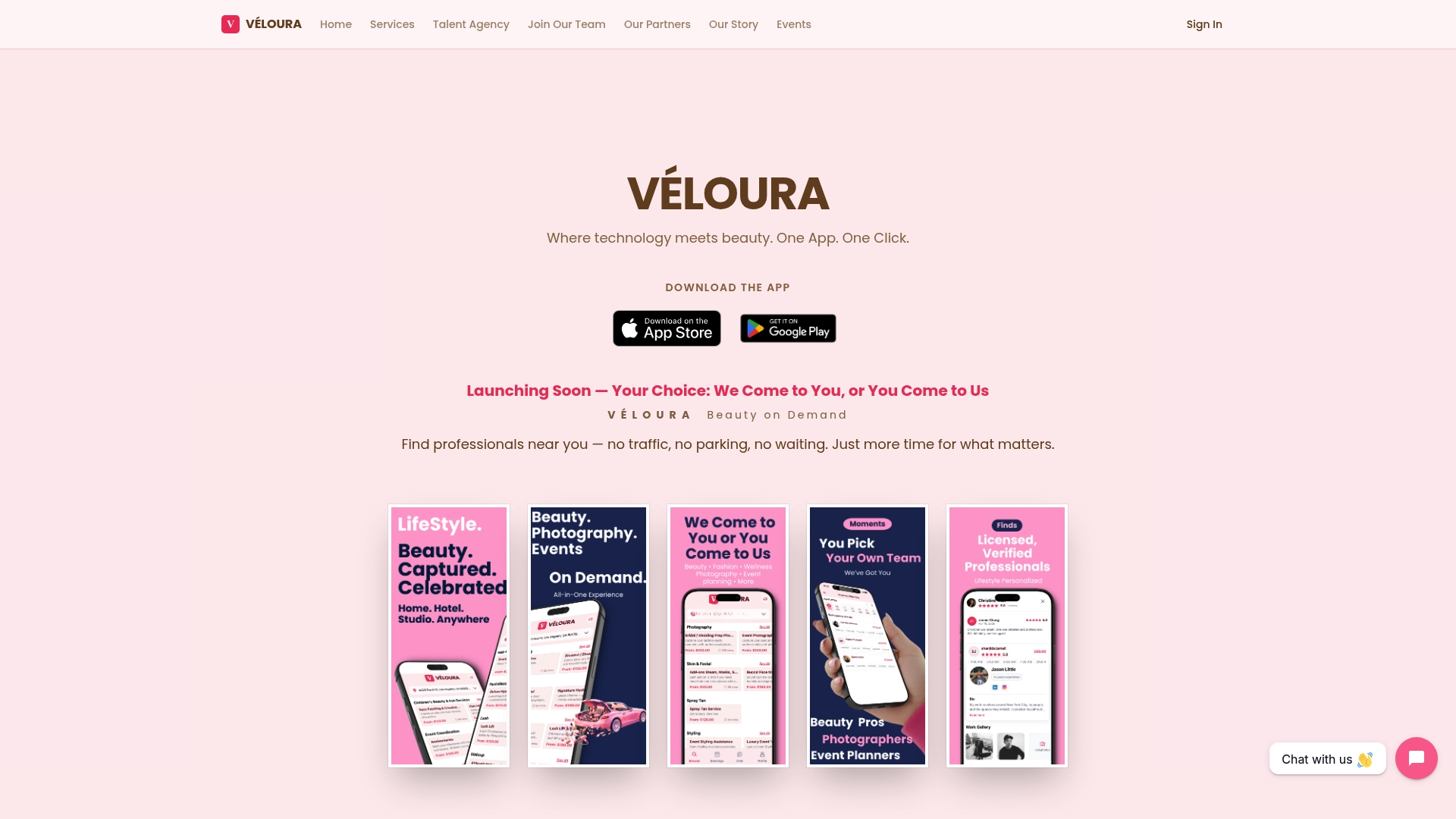
We serve Los Angeles and Miami, and you can read about hiring for events in our guide to mobile makeup for work events. Professionals who want to join can learn more about becoming a VÉLOURA makeup artist.
A 10-minute verification script you can copy
Short on time? Send this message to any artist before you book:
- "Please send your full legal name and license number, or tell me which license applies to your services."
- "Can you share unfiltered close-ups from a recent job in natural light?"
- "Do you use single-use applicators and sanitize tools between clients?"
- "Do you carry liability insurance?"
- "Can you send a written agreement with rates, travel fees, trial and cancellation terms?"
- "Can you work at my location, and what do you need set up?"
Then look up the license, read the reviews and compare the answers to what you see in the portfolio. Artists who answer quickly, clearly and without defensiveness are usually the ones who run their business the same way.
FAQ
Do all makeup artists need a license in the U.S.?
Not necessarily. Licensing is set by each state, and what counts as regulated work varies. Check your state board of cosmetology's website, or call them, to find out what applies to the service you want. If the artist does hold a license, verify it on the board's lookup rather than trusting a photo.
How do I check if a makeup artist's license is real?
Search your state board's online license verification tool by name or license number. It should show the license type, status, expiration date and any disciplinary action. Make sure the name matches the person who will arrive at your door.
Can I tell if a portfolio is edited?
Often, yes. Ask for unfiltered close-ups in natural light and compare skin texture, lighting and framing across photos. Perfectly smooth skin in every shot, or one angle repeated, is a sign of heavy editing.
What should I do if an artist won't sign a contract?
Book someone else. A written agreement protects both of you by fixing the price, timing, trial and cancellation terms. Refusing to put those details in writing is a major red flag.
Is it safe to share makeup between clients?
The FDA advises against sharing makeup. A professional should use single-use applicators, sanitize tools between clients and never apply cream products directly from a container to your skin.
Sources
- How to Check if Someone is a Licensed Makeup Artist?
- NC Board of Cosmetic Art Examiners license verification
- Hiring a Makeup Artist: Everything You Need To Know
- How to Judge a Bridal Makeup Portfolio
- Makeup Artist Before and After: How to Judge What You'll Get
- FTC Consumer Alert on reading online reviews
- Red Flags to Look Out for When Getting Makeup Done (Business Insider)
- Using Cosmetics Safely (FDA)
- Eye Cosmetic Safety (FDA)
- 48 Hour Patch Test: Pick Clean Makeup for Sensitive Skin