A licensed beauty professional is an individual authorized by the state to perform specialized beauty services such as hair styling, skincare, and nail care in a safe, regulated manner. The role of licensed beauty professional goes far beyond holding a certificate. It means operating within a legally defined scope of practice, maintaining sanitation standards, carrying liability insurance, and protecting client health at every appointment. The professional beauty market is valued at $248 billion, and the demand for qualified, vetted professionals has never been higher. Platforms like Velourabeautyondemand are built on one non-negotiable foundation: every professional they connect you with holds a valid state license.
What does the role of licensed beauty professional actually require?
A licensed beauty professional is defined by the training, examinations, and state board approval required before they can legally charge for services. The license is not a formality. It is a legal authorization that determines exactly which services a professional can and cannot perform.
Cosmetologists generally complete between 1,000 and 1,600 training hours covering hair, skin, and nails. Estheticians complete 260 to 1,500 hours with a focus on skin care services. That range reflects state-by-state variation, but the pattern is consistent: more hours mean broader scope.
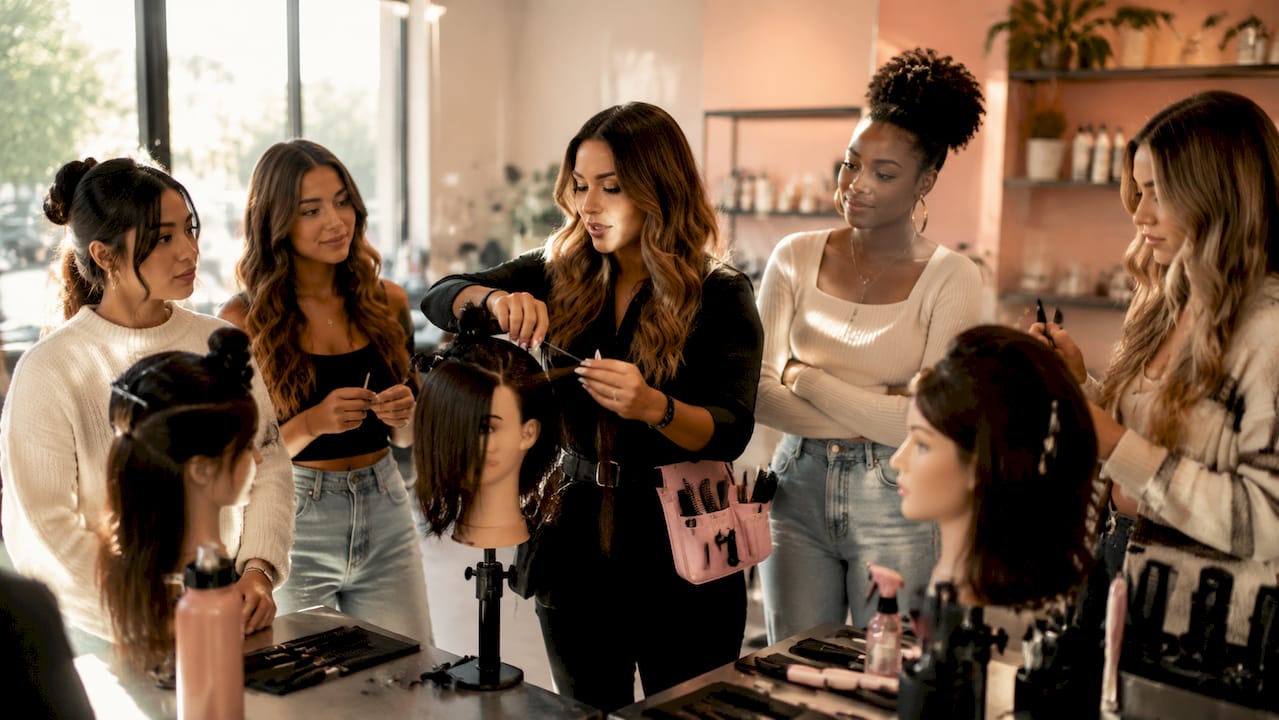
After completing their program, candidates must pass a written and practical examination administered or approved by their state board. Each state sets its own passing standards. Failing either portion means no license, regardless of how many hours were completed.
Here is what each major license type covers:
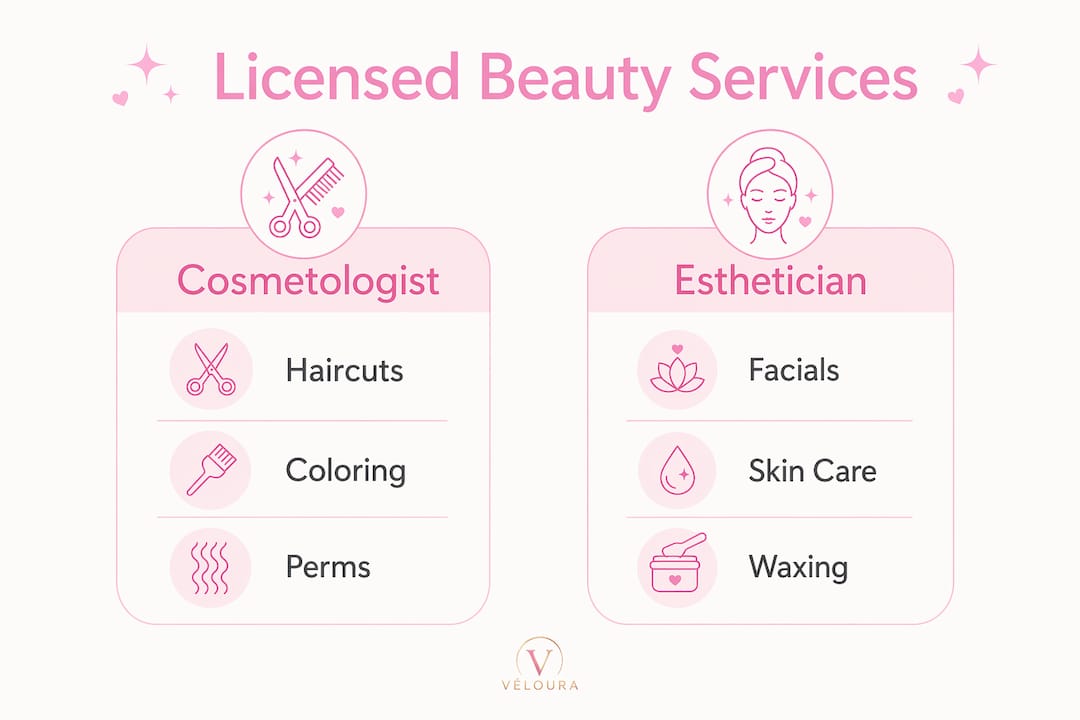
- Cosmetology license: Hair cutting, coloring, chemical treatments, basic skin care, and nail services
- Esthetics license: Facials, waxing, chemical exfoliation, and skin analysis
- Nail technician license: Manicures, pedicures, gel nails, and nail enhancements
- Barbering license: Shaving, beard grooming, and hair cutting for all clients
Most states also require continuing education for license renewal. This keeps professionals current on sanitation protocols, new techniques, and regulatory updates. A license that lapses is a license that prohibits practice.
Pro Tip: Ask your beauty professional when their license was last renewed. A current license means they have completed ongoing education requirements, not just initial training.
What services do licensed beauty professionals provide?
The services a licensed professional can legally offer depend entirely on their license type. Clients often assume all beauty professionals do the same work. They do not.
| License Type | Core Services | Key Restrictions |
|---|---|---|
| Cosmetologist | Hair cuts, color, perms, basic facials, nails | Cannot diagnose skin conditions |
| Esthetician | Facials, waxing, peels, lash services | Cannot perform injectables or medical procedures |
| Nail Technician | Manicures, gel nails, full sets, nail art | Cannot treat nail infections or fungal conditions |
| Barber | Haircuts, shaves, beard trims | Scope varies by state |
Estheticians specialize in the skin. A licensed mobile esthetician performing a facial is trained to assess your skin type, identify contraindications like active breakouts or rosacea, and adjust the treatment accordingly. Licensed professionals recognize contraindications such as skin disorders or infection signs, which protects public health without crossing into medical practice.
The legal line between cosmetic and medical services is firm. Licensed professionals cannot diagnose or treat medical conditions as part of their practice. Crossing that line risks severe legal consequences, including felony charges. A cosmetologist who notices a suspicious mole refers you to a dermatologist. That referral is part of the job.
The role of a licensed mobile cosmetologist adds a layer of complexity. They bring the full scope of cosmetology services to your home or office, which means managing sanitation, product transport, and client safety outside a controlled salon environment.
Why do sanitation, insurance, and client safety matter so much?
Sanitation is not optional. State boards mandate specific infection control protocols for every licensed professional, covering tool sterilization, surface disinfection, and single-use item policies. These rules exist because beauty services involve direct skin contact, which creates real risk of infection if standards slip.
Licensed professionals must carry professional liability insurance, which costs roughly $300–$800 annually. That insurance protects you as the client if something goes wrong, covering injury or negligence claims that could otherwise leave you with no recourse.
Here is what you should verify before booking any beauty professional:
- Confirm their license is active. Most state boards have a free online lookup tool. A valid license number is public record.
- Ask about their insurance. Any professional operating independently should carry liability coverage.
- Check their sanitation practices. For mobile services, ask how they sterilize tools between clients.
- Read reviews that mention professionalism. Client feedback often reveals whether a pro follows proper protocols.
- Verify any specialty claims. Titles like "medical esthetician" are often marketing terms without legal standing in most states.
Providing beauty services without a valid license is illegal in all U.S. states. Penalties include fines up to $500, license revocation, and possible criminal charges. That legal framework exists to protect you, not to create bureaucracy.
Pro Tip: Search your state's cosmetology board website and enter the professional's name or license number before your first appointment. It takes 60 seconds and confirms you are in safe hands.
How has the role evolved with mobile and independent practice?
The licensed beauty expert's responsibilities have expanded well beyond technical skill. Mobile and independent professionals now manage comprehensive client experiences including business operations, compliance tracking, and sanitation in non-traditional settings. A mobile nail technician is also a small business owner, a compliance officer, and a customer experience manager.
The regulatory picture for mobile services is more complex than most clients realize. A professional license authorizes the individual, but operating mobile or home-based services often requires separate facility or vehicle permits subject to health department regulations covering water and waste management. The license in their wallet is necessary but not sufficient.
What this means for you as a client:
- A legitimate mobile professional holds both a personal license and any required local operating permits
- Their pricing reflects real overhead costs including insurance, sanitation supplies, licensing fees, and taxes
- The convenience of an in-home appointment does not reduce the professional standard you should expect
Independent professionals factor in overhead costs like insurance, sanitation supplies, licensing fees, and taxes that clients often overlook when evaluating service value. When a mobile professional charges a premium, that price reflects genuine business costs, not just convenience.
The future of on-demand beauty is built on professionals who master both the craft and the compliance side of independent practice. The best ones treat every home visit with the same rigor they would apply in a licensed salon.
Key Takeaways
A licensed beauty professional's core value is the combination of state-authorized training, defined scope of practice, and mandatory safety standards that protect every client they serve.
| Point | Details |
|---|---|
| Licensing is a legal requirement | Performing beauty services without a valid state license is illegal and carries criminal penalties. |
| Training hours define scope | Cosmetologists complete 1,000–1,600 hours; estheticians complete 260–1,500 hours, each covering distinct service categories. |
| Scope of practice has hard limits | Licensed professionals cannot diagnose or treat medical conditions, regardless of their experience or specialty title. |
| Insurance protects you | Professional liability insurance, costing $300–$800 annually, is a baseline protection clients should confirm before booking. |
| Mobile practice adds complexity | Mobile professionals need both a personal license and separate facility or vehicle permits to operate legally. |
VÉLOURA's take on what licensure really means for clients
The conversation around licensed beauty professionals tends to focus on credentials as a checkbox. I think that misses the point entirely. A license is not a piece of paper. It is evidence that someone spent hundreds of hours learning how to keep you safe, passed a rigorous state exam, and agreed to operate within a defined legal boundary.
What I have seen working in the on-demand beauty space is that the professionals who take their licensure seriously are the ones who also take your experience seriously. They sterilize their tools without being asked. They recognize when a skin condition means they should refer you out rather than push through a service. They carry insurance because they understand the stakes.
The 2026 market is also pushing professionals into territory that requires more than technical skill. Emerging legal challenges now focus on maintaining strict boundaries between cosmetic and medical services. The rise of titles like "medical esthetician" sounds impressive but often has no legal backing in most states. Clients who understand this are better protected.
My honest advice: treat the license verification step as non-negotiable. It takes less than two minutes and tells you everything about whether a professional respects the standards that protect you. The beauty industry has never been more accessible, and that is a good thing. But accessibility without accountability is where things go wrong.
— VÉLOURA
Vetted professionals, delivered to your door
Every professional on Velourabeautyondemand holds a verified state license and meets the insurance and sanitation standards that protect you at every appointment. No guesswork about credentials. No uncertainty about whether the person arriving at your door is qualified.

Whether you need a blowout before a meeting, lash extensions for a wedding, or a facial on your schedule, Velourabeautyondemand connects you with licensed beauty professionals near you who have been vetted for compliance, not just skill. Browse the full range of on-demand beauty services available in Los Angeles, New York City, and Miami. Book in minutes. A qualified professional arrives at your door. No commute. No waiting room.
FAQ
What is a licensed beauty professional?
A licensed beauty professional is a person authorized by their state board to perform specific beauty services such as hair styling, skincare, or nail care after completing required training hours and passing a state examination.
What is the difference between a cosmetologist and an esthetician?
Cosmetologists hold a broader license covering hair, basic skin care, and nails, while estheticians specialize exclusively in skin care services like facials, waxing, and chemical exfoliation.
Can a licensed esthetician perform medical treatments?
No. Licensed estheticians cannot diagnose or treat medical conditions, and titles like "medical esthetician" are generally marketing terms without legal recognition in most U.S. states.
Do mobile beauty professionals need extra permits?
Yes. A personal license authorizes the individual, but mobile or home-based services typically require separate facility or vehicle permits from local health departments to operate legally.
How do I verify a beauty professional's license?
Search your state's cosmetology or barbering board website and enter the professional's name or license number. Most state boards offer a free, public license lookup tool.