Senior hair color at home is a simple, effective way to maintain vibrant, natural-looking hair without a salon visit. Modern at-home hair color has advanced significantly, with formulas now using lower pH ingredients like ammonium carbonate and glycine-based peroxide activators that condition hair while neutralizing free radicals. The result is softer, shinier hair after coloring, not before. For seniors with aging hair that is finer or more sensitive than it once was, these advances matter. Choosing the right product and following a careful process protects your hair and gives you results you can feel proud of.
What do seniors need for successful at-home hair coloring?
The right tools and products make the difference between a frustrating experience and a great result. Seniors benefit most from gentle formulas designed to protect aging hair while delivering full gray coverage.
Products to look for
- Semi-permanent dye: Fades gradually over 4–8 weeks and contains no ammonia. Best for seniors new to at-home color or those with sensitive scalps.
- Gentle permanent dye: Delivers longer-lasting gray coverage. Look for formulas enriched with keratin, argan oil, and ginseng root extract, which minimize damage and add moisture.
- Color gloss or reviver: A tinted conditioning treatment used between full dye sessions to refresh tone and add shine.
Tools and safety items
| Item | Purpose |
|---|---|
| Latex or nitrile gloves | Protect hands from staining and chemical contact |
| Applicator brush or comb | Distribute dye evenly through hair |
| Old towel or cape | Protect clothing and shoulders |
| Petroleum jelly | Apply along hairline to prevent skin staining |
| Timer | Track processing time accurately |
| Patch test kit (included in most boxes) | Test for allergic reactions 48 hours before use |
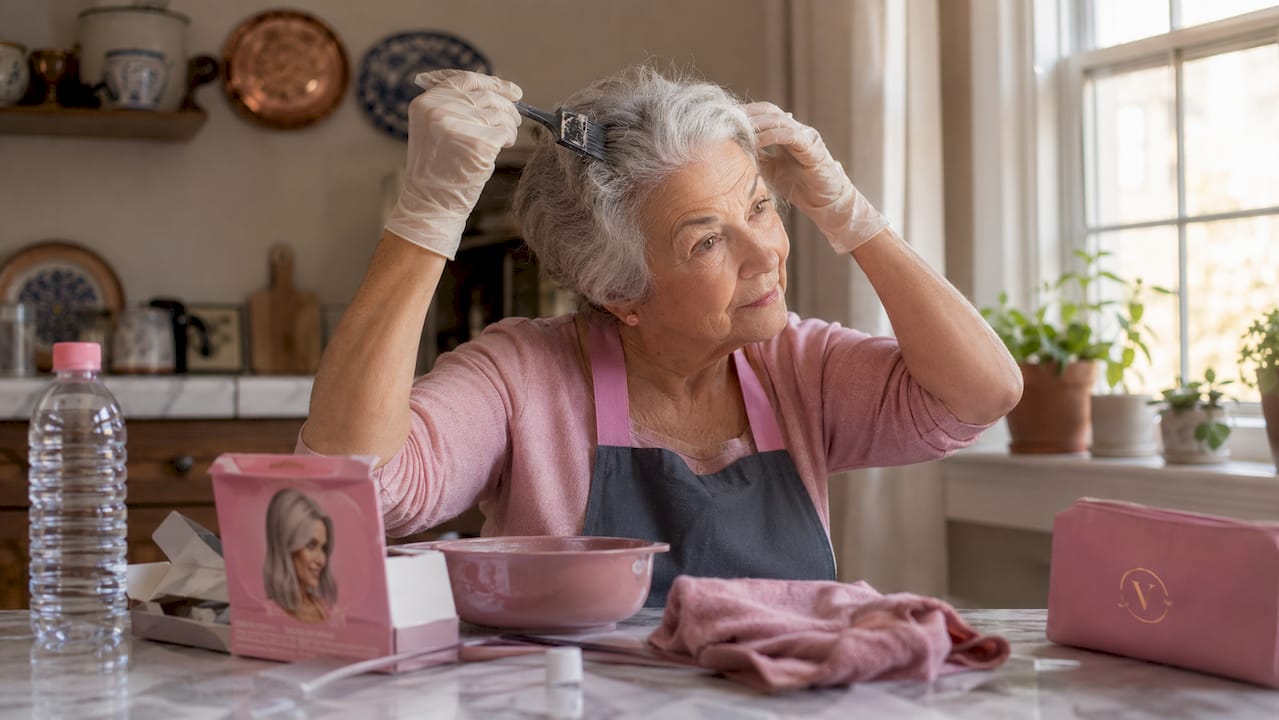
Staying within two shades of your natural hair color produces the most natural look and causes the least damage. Dramatic color changes require stronger formulas that aging hair handles poorly.
Pro Tip: Read the full product instructions before you open a single bottle. Seniors with thinner or more porous hair often need to reduce processing time by 5–10 minutes to avoid over-processing.
How to prepare your hair and workspace before coloring
Preparation is where most at-home color jobs succeed or fail. Skipping these steps leads to uneven results, scalp irritation, and wasted product.
Step-by-step preparation
- Do the patch test first. Apply a small amount of mixed dye behind your ear or on your inner elbow. Wait 48 hours before applying to check for redness, itching, or swelling. Senior skin is thinner and more reactive, making this step non-negotiable.
- Skip the shampoo. Do not wash your hair the day you plan to color. Natural oils protect the scalp from irritation and help the dye adhere more evenly.
- Set up your workspace. Choose a well-lit bathroom or kitchen with good ventilation. Lay old newspapers or a plastic bag on the counter and floor. Good lighting helps you see every section of hair clearly.
- Dress appropriately. Wear an old shirt or a coloring cape. Dye stains fabric permanently.
- Apply petroleum jelly. Run a thin line along your hairline, ears, and the back of your neck. This prevents skin staining without affecting the dye.
- Gather everything before you mix. Once you combine the color and developer, the clock starts. Have your gloves on, your timer ready, and your applicator in hand.
Pro Tip: Work in a room with a mirror at eye level if possible. Trying to color hair while looking into a low or tilted mirror causes uneven application, especially at the back of the head.
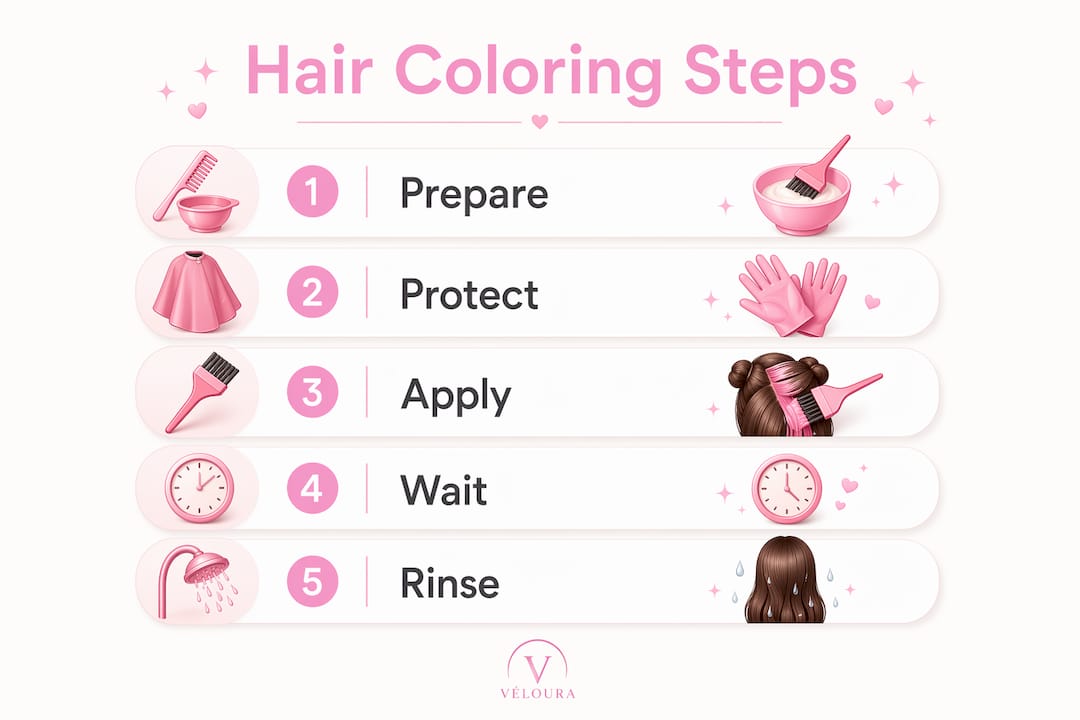
How to apply hair color safely and effectively at home
Modern at-home color kits can achieve full gray coverage in as little as 10 to 35 minutes. That speed means you spend less time with chemicals on your scalp, which is a real benefit for seniors with sensitive skin.
Application steps
- Mix the formula. Follow the product instructions exactly. Shake the bottle or mix the components as directed.
- Section your hair. Divide hair into four sections using clips. Start at the crown, where gray is usually most visible.
- Apply to roots first. Use the applicator brush or comb to work dye into the roots section by section. Roots need the most processing time.
- Work toward the ends. After covering the roots, smooth remaining dye through the mid-lengths and ends. Do not scrub or tug. Gentle strokes protect fragile hair.
- Set your timer. Follow the recommended processing time on the box. Check your hair at the minimum time listed before committing to the full duration.
- Rinse thoroughly. Use lukewarm water, not hot. Hot water opens the hair cuticle and causes color to fade faster. Rinse until the water runs completely clear.
- Apply the included conditioner. Most kits include a post-color conditioning treatment. Leave it on for the full recommended time. This step restores moisture and closes the cuticle.
Common mistakes to avoid
- Over-processing: Leaving dye on longer than recommended does not improve coverage. It damages hair and irritates the scalp.
- Skipping the conditioner: The conditioning step is not optional. It directly affects how soft and shiny your hair feels after coloring.
- Applying to wet hair: Wet hair dilutes the formula and produces uneven, patchy results.
- Choosing a shade too dark: Very dark shades on gray hair can look harsh. A medium or natural shade gives a softer, more flattering result.
Pro Tip: If you have trouble reaching the back of your head, ask a family member or friend to help with that section. Getting even coverage at the nape of the neck is the hardest part of any at-home color job.
How do you maintain color and troubleshoot common issues?
Coloring your hair is only half the work. How you care for it afterward determines how long the color lasts and how healthy your hair stays.
"Hair care is not just about appearance. For seniors, maintaining a grooming routine supports self-identity and mental well-being, helping them feel more like themselves every day."
Maintenance tips that actually work
- Use color-safe shampoo and conditioner. Regular shampoos strip color faster. Sulfate-free formulas extend the life of your color by several weeks.
- Wash hair less frequently. Every wash fades color slightly. Two to three washes per week is enough for most seniors.
- Avoid heat tools when possible. Heatless styling methods protect thinning senior hair from breakage and prevent color from fading prematurely. Air drying is the gentlest option.
- Use a color gloss between sessions. A tinted gloss applied every 3–4 weeks refreshes tone and adds shine without the commitment of a full dye.
- Brush gently. Use a wide-tooth comb or a soft-bristle brush. Aggressive brushing breaks fragile hair, especially when it is wet.
When to call in a professional
Uneven color, significant scalp irritation, or noticeably thinning hair are all signs that a professional touch is worth considering. Mobile in-home beauty services for seniors have grown in popularity precisely because they remove the stress of travel while delivering salon-quality results at home. For seniors with fragile or significantly thinning hair, a licensed stylist visiting your home reduces the risk of breakage and scalp damage that DIY application can cause.
Pro Tip: If your color looks brassy or fades to orange within two weeks, your hair is likely too porous. A protein treatment applied before your next color session will help the dye hold longer.
Key Takeaways
Seniors can color their hair safely at home by choosing gentle formulas, performing a patch test 48 hours in advance, and following a careful application process that protects aging hair.
| Point | Details |
|---|---|
| Choose the right formula | Look for keratin, argan oil, and low-pH ingredients that protect aging hair during coloring. |
| Always patch test first | Apply dye behind your ear 48 hours before use to catch allergic reactions early. |
| Skip the pre-color wash | Unwashed hair retains natural oils that protect the scalp and improve color adhesion. |
| Stay within two shades | Coloring close to your natural shade produces the most flattering and least damaging result. |
| Maintain with gentle care | Use sulfate-free shampoo, minimize heat, and apply a color gloss between sessions to extend vibrancy. |
What we have learned from working with seniors on hair color
At VÉLOURA Beauty On Demand, we see a pattern that surprises a lot of people. Seniors who hesitate to color their hair at home are not afraid of the process. They are afraid of getting it wrong and damaging hair that is already more fragile than it used to be. That fear is completely reasonable.
What we have found is that the biggest barrier is not the product. It is the setup. Seniors who take 20 minutes to prepare their workspace, read the instructions fully, and do the patch test almost always get a result they are happy with. The ones who rush the prep and skip the test are the ones who call us afterward.
Hair color is not vanity. Maintaining a grooming routine is directly tied to how seniors feel about themselves day to day. Feeling put together is not a luxury. It is part of staying well. If at-home coloring gives you that, it is worth doing carefully and confidently.
For seniors with very fine or thinning hair, the honest advice is this: a licensed professional visiting your home is not giving up. It is choosing the right tool for the job. You deserve a result that looks great and keeps your hair healthy.
— VÉLOURA
Professional hair color at home, without the salon trip
You do not have to choose between great color and staying comfortable at home. VÉLOURA Beauty On Demand connects you with licensed, vetted stylists who come directly to your door, whether you are in Los Angeles, New York City, or Miami.

No driving. No waiting rooms. No standing under harsh salon lighting. A licensed professional brings everything needed for a full color service, including the expertise to handle aging or thinning hair with care. VÉLOURA handles booking, payment, and reviews so the experience is simple from start to finish. Find beauty services near you and book a licensed stylist who comes to you. See the full range of available hair services and choose what fits your schedule and your hair goals.
FAQ
Can seniors safely dye their hair at home?
Yes. Seniors can color their hair at home safely by choosing gentle, low-ammonia formulas and performing a patch test 48 hours before application. Seniors with significantly thinning or fragile hair benefit most from professional in-home services.
What is the best hair dye for seniors?
The best at-home hair dye for seniors contains conditioning ingredients like keratin and argan oil, uses a low-pH developer, and offers full gray coverage without ammonia. Semi-permanent formulas are the gentlest starting point for seniors new to at-home color.
How long does at-home hair color take for seniors?
Modern at-home color kits achieve full gray coverage in 10–35 minutes depending on the formula. Seniors should check their hair at the minimum processing time to avoid over-processing fragile hair.
How do I keep my color from fading quickly?
Use a sulfate-free shampoo, wash hair two to three times per week, and apply a color gloss every 3–4 weeks. Avoiding heat tools and rinsing with lukewarm water also extends color life significantly.
When should a senior consider a professional instead of DIY color?
A senior should consider a licensed professional when experiencing scalp irritation, noticeable hair thinning, or consistently uneven results at home. Mobile beauty services bring a licensed stylist directly to your home, removing the need to travel.