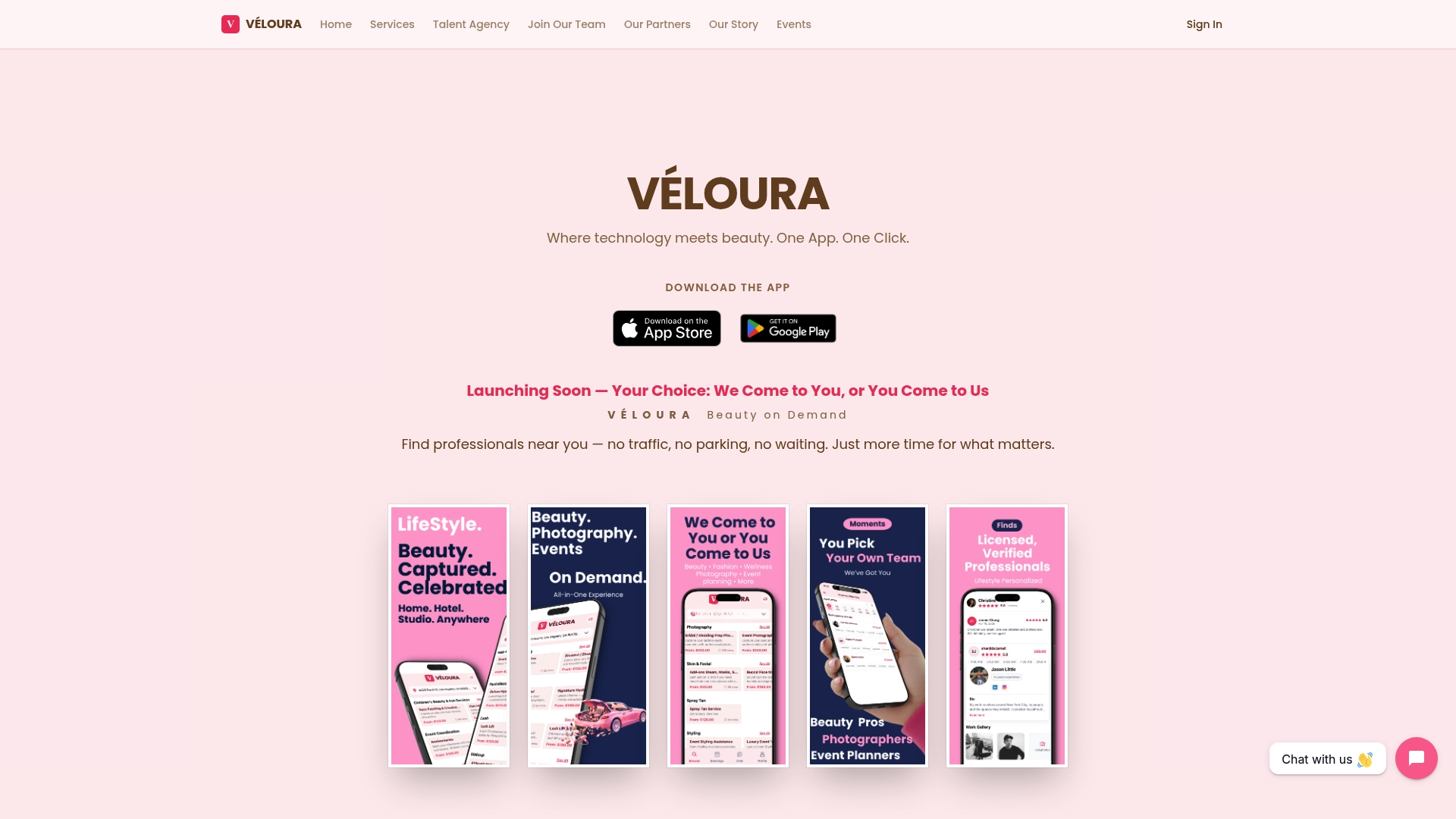
A secure beauty app does three things: it keeps your card number away from the person doing your hair, it charges you only for the booking you made, and it gives you a clear path if something goes wrong. You can check all three in a couple of minutes, before you ever tap "Pay." That matters most when a stylist is coming to your home, office or hotel room, because you are trusting both the professional and the payment flow. At VÉLOURA, bookings, scheduling and payments live in one app, so the whole visit is handled in one place.
TL;DR
- Booking and paying inside one app keeps your card details with the payment system, not with the individual professional.
- Look for the basics: a secure connection, card details that are never shown in full, two-factor sign-in and a clear cancellation policy.
- Digital wallets such as Apple Pay swap your card number for a one-time token, which adds a layer when you pay.
- Credit cards carry strong federal dispute rights. Report a wrong charge within 60 days of the statement.
- Paying outside the app, by cash app or bank transfer, removes the protections you booked for.
Table of Contents
- Why payment security matters more for mobile beauty
- How a secure booking app protects your card details
- A five-minute check before you pay
- Why paying inside the app beats paying on the side
- Wallets, cards and what each one protects
- What the professional can and cannot see
- Deposits, cancellations and refunds
- If a charge looks wrong
- Special situations
- Book with confidence
- FAQ
- Sources
Why payment security matters more for mobile beauty
In a salon, you pay at a front desk. With a mobile visit, the "front desk" is your phone. You may be booking from an airport, a hotel lobby or the couch, often the night before an early meeting or a wedding morning. Speed is the point, and speed is when people skip checks.
There is a second difference. A mobile professional is an independent worker, not a cashier with a terminal. If payment happens through a text, a direct message or a transfer to a personal account, there is no record, no receipt flow and no easy way to reverse a mistake. Keeping payment inside the booking app solves most of that at once.
This is true for every client we serve: the executive who books a blowout before a presentation, the guest who needs makeup in a hotel room, a bridal party sharing one schedule, or a daughter booking an in-home manicure for her mother. The checks below take the same few minutes for each of them.
How a secure booking app protects your card details
You do not need to be a security expert. You need to know what the good version looks like.
The card industry's rulebook
The payment card industry has a security standard called PCI DSS. According to the PCI Security Standards Council, it applies to every organization that stores, processes or transmits cardholder data. Among its requirements: cardholder data must be encrypted when it travels over open networks, stored card numbers must be made unreadable and masked (at most the first six and last four digits shown), and the security code on the back of your card must never be stored after the payment is authorized.

In plain terms, a well-built app should never show your full card number back to you, and nobody on the other side of the booking should be able to read it.
Card handling stays with the payment processor
Modern booking software usually does not handle your card itself. Stripe's guide to booking systems explains that reliable platforms pass card handling to the processor's servers, send data over encrypted HTTPS connections, offer two-factor authentication and monitor for vulnerabilities. For you, that means the beauty professional who arrives at your door sees your booking, not your card.
What this looks like on your screen
- A padlock or secure indicator when you pay on a web page, and a payment sheet that comes from your phone's wallet or a standard card form in an app.
- Your saved card shown only as the brand and last four digits.
- A receipt in the app or by email straight after payment, with the service, date and amount.
- Sign-in protection, such as a code sent to your phone, on top of a password.
A five-minute check before you pay
Use this list the first time you book in any beauty app. Once you have done it, repeat bookings take seconds.
- Confirm the total before you tap. The service, any travel or location detail, and the final amount should be visible on one screen. If you cannot see what you will be charged, stop.
- Read the cancellation and rescheduling terms. Beauty appointments are time-bound, and a professional who holds a slot for you is giving up other work. Our guide to the mobile beauty cancellation policy and the 24 to 48 hour rule shows how timing usually affects fees, so you know your options before you book.
- Turn on two-factor sign-in. Your account holds your saved card, your home address and your appointment times. A password alone is a thin lock for all of that.
- Use a strong, unique password. A password manager does this for you.
- Pay on a private connection. Hotel and airport Wi-Fi are fine for browsing. For entering a card, use your phone's cellular data or a connection you trust, especially when you travel.
- Check the app's source. Download from the official app store listing and make sure the name matches the brand you meant to book.
- Keep the conversation and the payment in the app. This is the most important step, and the next section explains why.
Why paying inside the app beats paying on the side
It can be tempting to settle up by transfer after a great session, or to be asked to pay a professional directly to "skip the fee." Don't. When you pay through the app, there is a record of the booking, the amount and the date. That record is what makes a correction possible if something goes wrong.
Peer-to-peer payment apps work differently. AARP's guidance on them notes that these services typically lack the consumer protections credit cards have, and that transfers are fast and usually hard to reverse, much like handing over cash. Payments you authorize yourself, even if the money ends up with a scammer, are usually not reimbursable.
That is a good reason to treat any request to move a payment off the platform as a red flag, whoever is asking. A professional on VÉLOURA keeps 80% of every booking, so the platform is built to pay them fairly for work done through the app. There is no reason for either side to step outside it.
Wallets, cards and what each one protects
Most beauty apps let you pay with a card or a digital wallet. Here is how the common choices differ for you as the client.
| Payment method | What happens to your card number | Dispute path |
|---|---|---|
| Credit card | Handled by the payment system, shown as last four digits | Strong federal billing-error rights |
| Debit card | Same handling, but money leaves your bank account right away | Rights apply, with tighter reporting windows |
| Digital wallet (Apple Pay, Google Pay) | Replaced by a token in the transaction | Follows the underlying card |
| Cash or direct transfer to a person | Not applicable | No app record, little to fall back on |
Wallets add something specific. Apple explains that Apple Pay replaces your card number with a digital token and a one-time cryptogram for each transaction, and verifies you with biometrics or a passcode. If you travel often, a wallet means your real card number is not typed into a different form every time you book a hotel-room visit in a new city.
For most people, a credit card or a wallet linked to one is the best fit for in-person services. The reason is simple: a credit card is the easiest to dispute.
If you pay for a recurring plan
Some beauty products and services bill on a schedule. Before you enter a card for anything recurring, read how renewal, pausing and cancelling work. A subscription beauty service guide lays out how these plans are structured, which helps you spot a renewal date before it surprises you. A one-time booking for a manicure or a bridal trial is different: you pay for a visit, not a membership.
What the professional can and cannot see
A mobile visit needs some information. The professional has to know where to go, when, and what service you booked. Everything beyond that should stay private.
- They need: your first name, the service, the address or hotel and room instructions, the time window, and any preferences you add, such as shade, style, or accessibility needs.
- They do not need: your card number, your bank details or your billing address.
Because our professionals are licensed and background-checked, and bookings run through the app, you can share the details a visit needs and keep the rest of your information in your account. For a parent being booked by a caregiver, this split is useful: the person arranging and paying can manage the booking, while the person receiving the service just opens the door.
Deposits, cancellations and refunds
A booking app often charges at the time you book, or places a hold, because a professional is reserving real time for you. Two habits keep this painless.
- Read the terms on the booking screen, not afterward. The window for free changes matters most for event days, when a late change affects a whole group.
- Use in-app rescheduling. It keeps the record clean. A request made by text can be missed.
For group bookings, such as a wedding party that needs hair and makeup on one shared schedule, agree on who pays before the day. One person booking for everyone gives the group a single receipt and one place to check times. Our flexible beauty booking guide explains how scheduling can be adjusted around a busy day.
If a charge looks wrong
Most of the time a strange charge is a hold that drops off, a duplicate that corrects itself, or a booking someone in your group made. Start in the app: open your booking history and compare the amount, date and service to your receipt. If it still looks wrong, act quickly, because dispute rights run on deadlines.
The Consumer Financial Protection Bureau, the federal agency that oversees consumer finance, advises that you contact your bank or card issuer immediately when you spot unauthorized activity or learn that card data was exposed. Its guidance says:
- Credit cards: you are not responsible if only the account number was stolen. If a card is lost or stolen, your liability may be up to $50.
- Debit cards: report unauthorized transactions within 60 days after the statement is available. For a lost or stolen card, reporting within two business days limits your liability to $50.
- Credit card disputes: these are generally investigated within two billing cycles.
If your card number may have been exposed, ask your issuer to cancel and replace the card. Keep your screenshots and receipts. When you contact your issuer, tell them the date, the amount and the booking you do recognize.
If the problem is with the visit itself rather than the charge, tell us through the app first with the booking details, so the record stays in one place.
Special situations
Hotel and Airbnb stays
Travelers book from unfamiliar places and often on someone else's Wi-Fi. Use cellular data or a wallet, and confirm the address and room details inside the booking, not by message. Our guide to mobile beauty services for travelers covers the rest of the trip logistics.
Booking for a parent
If you manage appointments for a parent with limited mobility, set up the booking from your own account and card, and add notes for the professional about comfort, mobility and preferences. Your parent does not need to share any financial information. The guide to how beauty apps serve mobility needs explains how this works for families.
Last-minute bookings
Urgency is where mistakes happen. If you need same-day hair or makeup, the same rules apply: pay inside the app, check the total, and stay off unfamiliar links that promise faster service.
A short safety add-on
Payment is half of trust. The other half is the visit. Our safety checklist for mobile beauty visits covers what to confirm before a professional arrives.
Our view on secure payments
We built VÉLOURA on one idea: beauty should come to you, and nothing about getting it should make you uneasy. That includes paying.
Our app brings booking, real-time scheduling, secure payments and AI talent matching into one flow. You choose a service, see who is coming, and pay in the same place. No cash handed over at the door. No chasing a number in a message thread.
We also think about the people on the other side. Our professionals are licensed and background-checked, and they keep 80% of every booking. When payment runs through the platform, they are paid reliably and you are protected by a record. Everyone is better off when the money stays where the booking is.
Our standard for you is simple: you should always know what you are paying, who you are paying and what happens if plans change.
VÉLOURA Beauty On Demand
Book with confidence
If you are ready to put these checks to use, VÉLOURA brings licensed, background-checked professionals to your home, office or hotel, with booking and payment in one app. Browse hair, makeup, bridal, hotel and senior beauty services, or go straight to mobile makeup artist services for your next event.
For nails and skincare, see our nail services and skincare and facials pages.
FAQ
Are beauty booking apps safe to pay through?
A well-built app keeps card handling with its payment system, uses encrypted connections and shows only masked card details. That is what the card industry's PCI DSS standard expects of anyone who handles card data. Add two-factor sign-in and a credit card or wallet, and you have a solid setup.
Should I pay my stylist directly in cash or by transfer?
Pay inside the app. In-app payment creates a record of the booking and amount. Transfers to a person are usually fast and hard to reverse, which is why they offer fewer protections than a credit card.
What if I see a charge I do not recognize?
Check your booking history in the app first. If it still looks wrong, contact your card issuer right away. The CFPB says debit card users should report unauthorized transactions within 60 days after the statement is available, and credit card users are not responsible when only the account number was stolen.
Is Apple Pay safer than typing in my card?
Apple Pay replaces your card number with a token and a one-time code for each transaction, and it confirms you with biometrics or a passcode. That means your real number is not entered into each new booking form. It still follows the rules of the card behind it.
Can the beauty professional see my card number?
They should not need to. A professional needs your name, service, time and location. Payment details stay with the app and its payment system.
Sources
- PCI DSS Quick Reference Guide, PCI Security Standards Council
- Booking system with payment: A guide for businesses, Stripe
- Watch accounts closely when card data is hacked, Consumer Financial Protection Bureau
- How to Avoid Scams on Zelle, Venmo and Other P2P Apps, AARP
- Fraud Protection for Merchants, Apple Pay