Book a professional for your photoshoot hair and makeup whenever the budget allows. Pros tune formulas to your lighting and keep your look consistent from the first shot to the last. If you're going the DIY route, the one rule that changes everything is this: control shine, define your features more than usual, and use flash-safe formulas. Everything else in prepping for a shoot flows from that single principle.
TL;DR:
- Professional hair and makeup for photoshoots use camera-tested, flash-safe formulas that control shine and enhance features without creating flashback or exaggerated textures.
- A professional can ensure consistent looks across long shoots or multiple outfits, especially important for close-up headshots, weddings, or commercial campaigns.
- Test your makeup under harsh lighting like a phone flashlight beforehand; if it looks chalky or shiny, it will likely appear worse under studio strobes.
- For hair, opt for loose curls or waves with soft volume and avoid heavy hairspray to maintain natural movement and prevent a stiff appearance.
- Scheduling hair and makeup appointments two to three hours before the shoot and doing skin treatments well in advance helps ensure a relaxed experience and optimal results.
Table of Contents
- What Is Photoshoot Hair and Makeup, Exactly?
- Why Hire a Hair and Makeup Pro for a Photoshoot
- Camera-Ready Makeup Tips for Every Skin Type
- Styling Hair for Photos That Hold Up All Day
- When Should You Schedule Hair and Makeup Before a Shoot?
- The On-Set Touchup Kit That Saves a Shoot
- How to Choose the Right Hair and Makeup Pro
- Why This Guide Reflects Real On-Set Practice
- Book Photoshoot Hair and Makeup Without the Salon Trip
- Sources
- FAQ
What Is Photoshoot Hair and Makeup, Exactly?
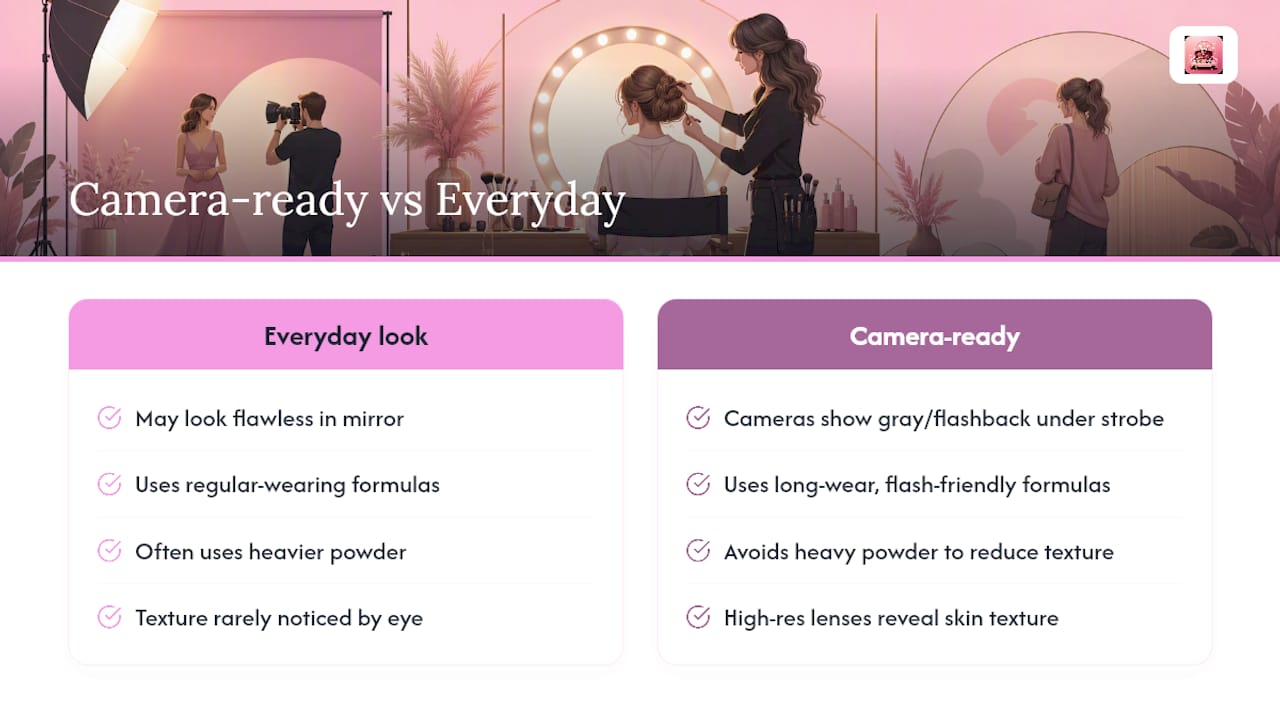
Photoshoot hair and makeup is a distinct discipline from your everyday routine or even a special-occasion look. The industry term for it is "camera-ready" styling, and it exists because cameras see skin, texture, and color differently than the human eye does. A foundation that looks flawless in your bathroom mirror can turn gray under strobe lighting or bounce light back into the lens, an effect called flashback. Camera-ready makeup uses longer-wearing, flash-friendly formulas and deliberately avoids heavy powder, because high-resolution lenses pick up texture that a naked eye would never notice.
Hair works the same way. What reads as "enough" volume in person often disappears in a photo, especially from certain angles or under harsh lighting. That's why photoshoot hairstyle ideas tend to favor shape and movement over the flat, sleek looks that photograph beautifully on Instagram but read as lifeless on set.
Why Hire a Hair and Makeup Pro for a Photoshoot
A professional makeup artist for a photoshoot isn't just applying products faster than you would. They're adjusting texture, shine, and definition specifically for how your camera or your photographer's strobes will capture skin, a skill set that makeup artists with photography backgrounds develop through firsthand experience with both sides of the lens. The goal is a look that photographs cleanly and retouches well, not a heavier "going out" face.
Pros also solve the continuity problem. If your shoot runs for hours or across multiple outfit changes, a professional keeps your look consistent so photos taken at 10 a.m. don't look mismatched with ones from 2 p.m.
Booking a pro tends to pay off most in a few scenarios:
- Headshots, where flaws are magnified at close range
- Weddings, where hours of wear and emotional moments demand durability
- Commercial or brand shoots, where retouchers need clean, even texture to work with
Pro Tip: Stylists who work on film and photo sets often aim for results so natural they're essentially invisible under close inspection. The best professional photoshoot makeup doesn't look like makeup. It looks like your best skin on your best day.
There's an underrated benefit, too: composure. Sitting in a stylist's chair before a shoot gives you a moment to settle your nerves, and that calm often shows up in your expression more than any product does.
Camera-Ready Makeup Tips for Every Skin Type
Getting photoshoot makeup right comes down to a handful of decisions made before you ever pick up a brush.
Start with your base. Flash-safe foundations avoid excess silica and mineral particles that reflect light back at the camera, which is the main cause of flashback in photos. Semi-matte finishes generally photograph better than fully dewy ones. Too much highlighter or glow can look greasy under studio lighting, while a completely matte face can look flat and aging, especially on mature skin, which benefits from a little strategic luminosity around the eyes and cheekbones instead of all over.
Definition matters more on camera than it does in daily life. Brows, lash lines, and lip edges tend to blur slightly under studio lighting, so filling brows a shade darker than usual, adding a coat or two of mascara, and lining lips just inside the natural edge all help features hold their shape in the final image. For HD and 4K video work, blend even more carefully at the jawline and hairline, where visible lines of demarcation show up brutally on high-resolution footage.
- Use setting powder sparingly, only where you actually get oily (usually the T-zone)
- Carry blotting papers rather than reapplying powder throughout the day
- Pack a small concealer and lip color for quick touch-ups between shots
Pro Tip: Test your makeup under a phone flashlight before the shoot. If it looks chalky or shiny in that harsh light, it will look worse under studio strobes.
Styling Hair for Photos That Hold Up All Day
Photoshoot hair tips almost always come back to one trade-off: rigid hold versus movement. A hairstyle that's shellacked into place might survive a windy afternoon, but it also reads as stiff and unnatural in photos. Loose, brushed-out curls or waves with soft volume tend to photograph better than anything sprayed into total stillness, because they catch light and shift naturally between shots.
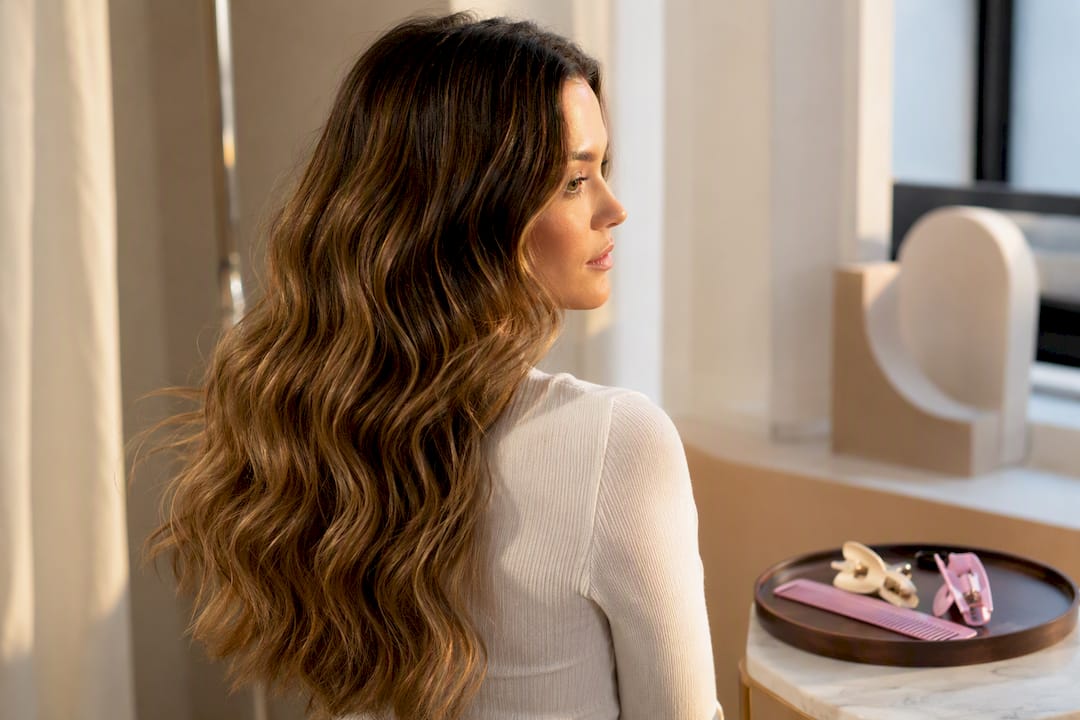
Flyaways are the enemy of clean photos, but heavy hairspray isn't the fix. Lightly misting a clean toothbrush or spoolie with hairspray and smoothing it along the hairline gives you control without the crunchy look. A drop of serum on your palms, run over the surface of the style, does the same job for daytime frizz.
If your curls fall flat mid-shoot, a light water mist followed by finger-scrunching brings shape back faster than a curling iron reset. For anyone using clip-in extensions, check that the wefts are still hidden and re-secure any that have loosened. Root touch-up powder in a matching shade covers regrowth in seconds and reads as seamless on camera.
- Brush out curls slightly rather than leaving them tight and springy
- Keep a small mirror handy to check the back and sides between angles
- Avoid last-minute deep conditioning treatments that leave hair limp
Pro Tip: Ask your stylist to build volume at the roots rather than the ends. Root lift survives motion and repositioning far better than curled tips do.
When Should You Schedule Hair and Makeup Before a Shoot?
Timing separates a relaxed shoot from a rushed one. Photographers commonly recommend setting aside two to three hours for hair and makeup before the actual shoot begins, which gives your artist room to fix anything without cutting into shoot time.
- Four or more weeks out: schedule any skin treatments, facials, or peels you want to try, never closer to the date.
- One to two weeks out: do a trial run for hair and makeup, especially for weddings or major campaigns, so nothing is a surprise on the day.
- 48 to 72 hours before: avoid new skincare products, sun exposure, or drastic haircuts and color changes. Skin needs time to calm down after any aesthetic treatment, and hair needs a few washes to settle into a fresh cut.
- Day of: hydrate well, wear a button-down or zip-up top that won't disturb your hair or makeup on removal, and arrive with clean, dry hair unless your artist tells you otherwise.
Pack a labeled touch-up kit and build in a buffer between hair and makeup finishing and your call time. Rushing the last ten minutes is where most last-minute mistakes happen.
The On-Set Touchup Kit That Saves a Shoot
When something goes wrong mid-shoot, the fix has to be fast and it has to target what the camera will actually notice. Professional on-set triage follows a specific order: remove shine first, since it's the most visible issue in any photo, then fix continuity errors like a hair piece that's shifted or makeup that's worn unevenly, then move to eyes and lips last.
A compact kit built around that order covers almost every emergency:
| Kit Item | Fixes |
|---|---|
| Blotting papers | Shine on forehead, nose, chin |
| Mini translucent powder | Targeted oil control without cakiness |
| Compact concealer | Under-eye shadows, blemishes |
| Disposable mascara wands | Lash refresh without cross-contamination |
| Small lip palette | Color touch-ups between setups |
| Travel hairspray | Flyaways and stray pieces |
| Dry shampoo | Root oil and volume refresh |
| Clean toothbrush | Precise flyaway control |
| Nitrile gloves and alcohol wipes | Hygiene between touch-ups |
Disposable applicators aren't optional extras. They're how professional kits stay sanitary across a full day of touch-ups, and they belong in any home version of this kit too.
How to Choose the Right Hair and Makeup Pro
Not every talented artist is the right fit for your specific shoot. Start with the portfolio. Look past the retouched hero shots and ask to see unretouched images, ideally in lighting similar to what you'll be shooting in, and with subjects whose skin tone, age, or hair texture matches yours.
Ask direct questions before booking:
- Do you use flash-safe or camera-tested product lines?
- What's your touch-up policy during a shoot?
- How much setup time do you need before the first shot?
- What happens if I need to reschedule or the artist cancels?
Red flags are usually easy to spot once you know to look. No visible sanitation practices, wildly inconsistent pricing between quotes, or an inability to produce any references or reviews should send you looking elsewhere. A good professional photoshoot makeup artist welcomes these questions rather than deflecting them.
Why This Guide Reflects Real On-Set Practice
This guide draws on how licensed, vetted professionals actually work on location, not generic beauty advice recycled from unrelated contexts. VÉLOURA Beauty On Demand connects clients with background-checked hair, makeup, and styling professionals who bring photoshoot-tested techniques directly to a home, studio, or hotel room. The triage order and kit priorities here reflect what working artists carry and use under real time pressure, on real sets, for real shoots.
— VÉLOURA Beauty On Demand
Book Photoshoot Hair and Makeup Without the Salon Trip
Skip the studio commute and the guesswork. Beauty On Demand services send licensed, background-checked artists directly to your home, hotel, or studio, so your hair and makeup trial, your day-of application, and any mid-shoot touch-ups can happen on your schedule instead of a salon's.
For headshots, brand photography, or a wedding day timeline, a mobile artist means no lost hours in transit and no rushing between appointments across town. You get a dedicated professional focused on your shoot alone, using flash-safe products suited to your specific lighting setup, whether that's a studio strobe or natural window light. Explore mobile makeup artist services or mobile hair styling to see what's available near you, and if you're shooting in one of our core markets, check availability through the Los Angeles booking page or the Miami services page. Book your trial today and walk into your shoot already camera-ready.
Sources
For more on camera-ready formulas, see Natty Contrera's guide to camera-ready makeup. For on-set touch-up practices, read Doris Lew's on-set touchup guide. Also see our headshot makeup guide.
- The difference between everyday makeup and camera-ready makeup — Natty Contrera
- Fast On-Set Touchups: What Every Production Needs — Doris Lew
- MakeUpLA — Bradford Rogne
FAQ
Should I get my makeup done for a photoshoot?
Yes, if the budget allows. A professional adjusts formulas for your specific lighting and keeps your look consistent across the entire shoot, which is difficult to replicate doing your own makeup.
How much does a one-hour photoshoot cost for hair and makeup?
Pricing varies widely by location, artist experience, and whether hair and makeup are booked together or separately. Check a detailed photoshoot makeup pricing guide for current ranges by service type.
What should I avoid before a photoshoot?
Avoid new skincare treatments, peels, heavy tanning, or drastic haircuts and color changes within 48 to 72 hours of your shoot, since skin and hair both need time to settle after any change.
How should I style my hair for a photoshoot?
Favor movement-friendly volume and soft shape over rigid, heavily sprayed styles, since brushed-out curls and waves catch light and photograph more naturally than stiff, flat hair.