The best makeup for mature skin is hydrating, light-reflective, and buildable in thin layers, not heavy, matte, or powdery. Start with a well-prepped, moisturized face, choose cream-based or serum-infused formulas, and blend with fingertips or a damp sponge instead of stacking on product. Skip full-matte finishes and glitter altogether. They cling to fine lines and dry patches instead of skimming over them.
TL;DR:
- Hydrating, light-reflective foundations with hyaluronic acid and glycerin outperform matte, powdery formulas by blurring fine lines and preventing settling into dry patches.
- Applying foundation with a brush, then blending with a damp sponge, in thin layers over well-prepared skin minimizes creasing and enhances a natural-looking finish.
- Use cream blush and eyeshadow in neutral, skin-adjacent tones to create lift and dimension, avoiding powder textures that sit on surface texture and dry out over time.
- Minimal, targeted powder application only on oily zones preserves glow and prevents the foundation from looking cakey or flattening the skin's texture.
- Opt for professional makeup application for events or when mobility or experience limits achieving a seamless, hydrating look at home.
Table of Contents
- Makeup for Aging Skin: The Fast Shopping Checklist
- How to Prep Mature Skin so Makeup Glides on and Stays Put
- How to Choose a Foundation for Mature Skin
- Application Techniques That Prevent Makeup From Settling Into Lines
- Color and Placement That Flatter Mature Features
- Common Makeup Mistakes on Mature Skin, and How to Fix Them Fast
- VÉLOURA's Perspective: When It's Worth Booking a Pro
- Book a Pro to Apply Your Mature-Skin Makeup, or Do It Yourself
- Sources
- FAQ
Makeup for Aging Skin: The Fast Shopping Checklist
You don't need a bag full of products to get this right. You need the right four or five, chosen for texture first and coverage second. Here's what belongs in your kit before you touch a single brush.
Tinted moisturizer or serum foundation. For everyday wear, a sheer, hydrating base beats a full-coverage one almost every time. Editorial testers consistently favor tinted moisturizers for mature skin because they even out tone without drawing attention to texture. If your skin looks better on good sleep than in full foundation, this is your everyday answer.
Buildable liquid foundation for events. Weddings, portraits, and photographed occasions call for more coverage than a tinted moisturizer gives you. The key word is "buildable." A hydrating, medium-coverage liquid that you can layer where needed works far better than a heavy foundation applied all at once. Test panels of mature testers rated hydrating, sheer-to-medium formulas highest precisely because they don't settle into lines the way heavier bases do.
Cream blush and cream eyeshadow. Powder color sits on top of texture and can look dry by midday. Cream formulas melt into skin and catch light instead of flattening it.
Hydrating primer and a lightweight setting powder, used sparingly. Primer is not optional on mature skin. It fills in fine lines before foundation goes on, which is half the battle. Setting powder still has a place, but only in small amounts, only where you actually get oily, and never swept across the whole face.
Here's your starter list at a glance:
- Tinted moisturizer or serum foundation for daily coverage
- One buildable liquid foundation with a hydrating base for events
- Cream blush in a shade close to your natural flush
- Cream eyeshadow in a neutral, skin-adjacent tone
- Hydrating, silicone-based primer
- A translucent, finely milled setting powder for targeted use only
That's it. Five or six products, chosen for what they're made of rather than what brand made them, will outperform a twelve-step routine built on the wrong textures.
How to Prep Mature Skin so Makeup Glides on and Stays Put
Skin prep isn't a warmup act before the "real" makeup starts. On mature skin, it's most of the job. Foundation applied over dry, unprepped skin will find every line and settle right into it, no matter how good the formula is.
Follow this order, and don't rush the middle steps:
- Cleanse. A gentle, non-stripping cleanser sets the stage. Skip anything that leaves skin feeling tight.
- Hydrating serum. Look for hyaluronic acid on the label. It draws water into the skin's surface and plumps fine lines from underneath, which is exactly what you want before foundation goes on top.
- Moisturizer. Glycerin, ceramides, and squalane are the ingredients doing the real work here. Glycerin holds moisture at the surface, ceramides reinforce the skin's barrier, and squalane adds a light, non-greasy layer of slip that helps foundation glide instead of drag.
- Eye cream. The under-eye area is thinner and drier than the rest of the face, and it shows every bit of that dryness under concealer. Don't skip this step even if you're in a hurry.
- Primer. A hydrating, silicone-based primer smooths the surface further and gives foundation something even to grip.
- SPF, if it's daytime. Non-negotiable, but choose a formula that layers well under makeup instead of pilling.
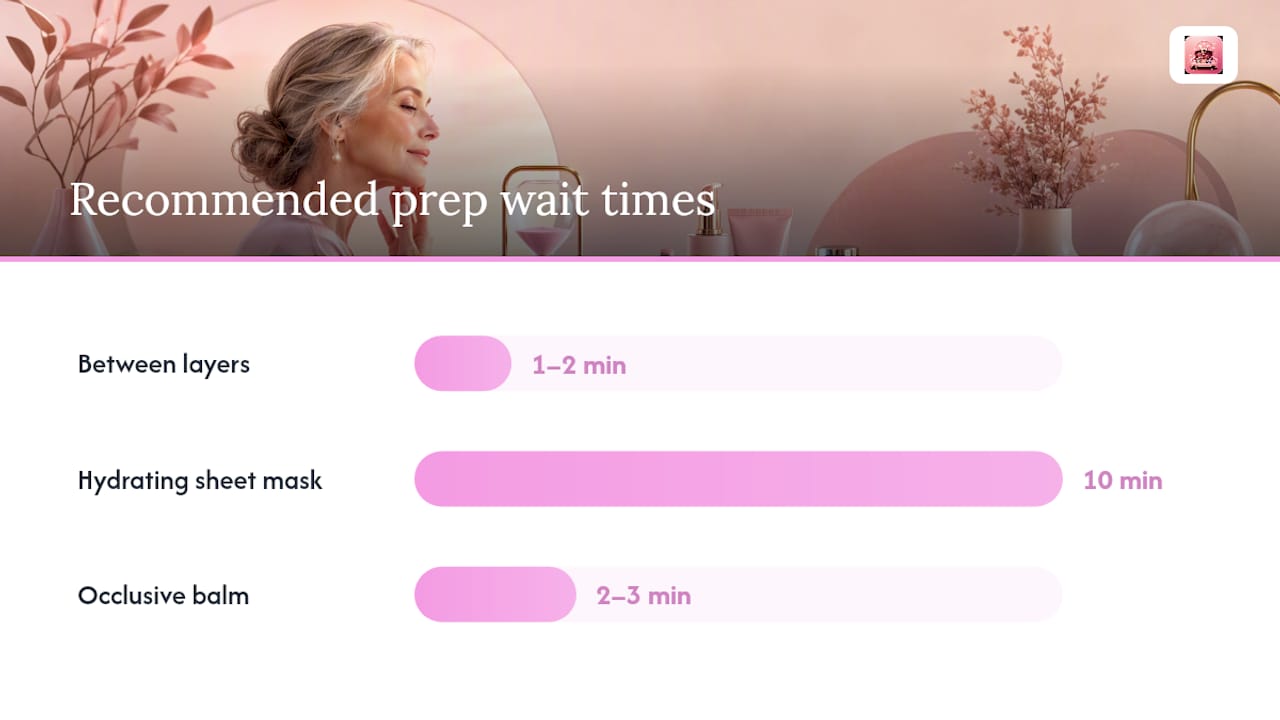
Timing matters more than most people realize. Give each layer roughly a minute or two to absorb before moving to the next step. Foundation applied over serum that hasn't sunk in yet will slide and separate within the hour.
Pro Tip: Do a quick "tack test" before you start your face. Press a clean finger to your cheek. If it feels tacky or sticky, wait another minute or two. If it feels dry and slippery, you've either under-moisturized or the product hasn't set. Foundation goes on best over skin that feels smooth and slightly cushioned, not wet and not dry.
For event days when you're short on time, a hydrating sheet mask for ten minutes does more for your base than any amount of extra primer. If skin is especially parched that day, a thin swipe of occlusive balm on the driest patches, left on for two or three minutes and then blotted, buys you a smoother canvas without the greasy slide. A regular at-home skincare routine makes this kind of quick-fix prep far less necessary in the first place.
How to Choose a Foundation for Mature Skin
Choosing the right base comes down to two questions: what's the formula made of, and what finish does it leave behind? Get those two right, and shade matching becomes the easy part.
Hydrating, light-diffusing formulas outperform heavy, full-matte coverage on mature skin for a simple reason. Many use soft-focus pigments and specific silicones that scatter light across the skin's surface rather than sitting flat, which blurs the look of fine lines and texture instead of pooling inside them. Editorial roundups consistently point to hyaluronic acid and glycerin blended directly into foundation formulas as the reason certain bases blur texture without clinging to dry patches.
What to look for on the label:
- Hyaluronic acid, glycerin, or squalane listed in the first half of the ingredient list, signaling the formula is hydration forward
- "Dewy," "luminous," or "radiant" finish on the packaging, not "matte" or "full coverage, no shine"
- Cream, stick, or liquid textures over powder foundations, which tend to sit on top of dry patches
What to avoid:
- Formulas high on the ingredient list in denatured alcohol, which dries skin fast and can make foundation look chalky within hours
- Chunky mica or heavy shimmer particles, which catch in fine lines instead of blurring them
- Foundations labeled specifically for "oil control" or "16 hour wear" without a hydrating counterpart, which usually skew matte and drying
Your natural skin type still matters. Dry mature skin generally does best with liquid or cream foundations built around oils and emollients. Normal skin has more flexibility and can wear serum foundations or slightly more matte formulas without much trouble. Oily mature skin, which is more common than people expect after 50, still benefits from hydrating formulas. The fix for shine isn't a drier foundation, it's targeted powder placed only where needed, which the next section covers.
Shade testing deserves patience. Test on your jawline in daylight, not a store's overhead lighting, and wait ten to fifteen minutes before deciding. Many foundations oxidize slightly as they meet the skin's natural oils, turning a shade or two darker or warmer than they looked straight out of the bottle. A shade that looks perfect wet on your hand can look orange by lunchtime on your face.
Application Techniques That Prevent Makeup From Settling Into Lines
Technique matters as much as product choice, arguably more. The same foundation applied two different ways can look either seamless or cakey, depending entirely on tools and motion.
- Start with a brush on the larger planes of the face. Cheeks, forehead, and chin take foundation well from a brush, which distributes product evenly before you get anywhere near delicate areas.
- Buff with a damp sponge to meld the product into skin. Makeup artists interviewed by beauty editors describe this two-step method, brush first, then a damp sponge, as the difference between foundation that looks painted on and foundation that looks like skin.
- Apply in thin layers, and only build where you actually need it. Redness around the nose, a blemish on the chin, these get a second thin pass. The rest of the face usually doesn't need it.
- Blend from the center of the face outward. This follows the natural direction of fine lines and prevents product from bunching into creases around the mouth and eyes.
- For under-eye concealer, use less than feels intuitive. Pat a small amount with a fingertip, which warms the product and helps it melt into skin rather than sitting as a visible layer. Fingertip application diffuses the edges of cream products in a way brushes often can't replicate.
- Set only where you get oily or where concealer needs to last, not the entire face. A tiny amount of translucent powder, pressed on with a puff rather than swept with a brush, keeps concealer in place without flattening the skin around it.
- Finish with a light mist or a dot of illuminating cream on the high points of the face. Cheekbones, the bridge of the nose, the center of the chin. This restores dimension that powder can flatten out.
Pro Tip: Mix a drop or two of face oil or hydrating serum directly into your foundation before applying it, especially for events where you need more coverage than usual. It adds slip, which makes the foundation easier to blend and keeps it from grabbing onto dry patches as the day goes on. Professional makeup artists use this trick constantly for camera-ready coverage that still moves like skin.
Selective setting is the detail most people skip and shouldn't. Targeted, minimal powder in high-traffic zones, the T-zone, under the eyes if you're prone to oil there, preserves the glow everywhere else on the face while still preventing transfer or midday shine. Powdering the whole face "just to be safe" is the single fastest way to erase everything the hydrating formula underneath was doing for you. If you're prepping for a photographed event, the same layering and blending principles apply directly to headshot-ready makeup, where the camera picks up texture even more than a mirror does.
Color and Placement That Flatter Mature Features
Where you put color, and what it's made of, changes how lifted and rested your whole face looks. This is where a lot of routines built decades ago start working against you instead of for you.
Eyes. Cream eyeshadows blend faster and sit more naturally into the eyelid's fine lines than powder shadows, which tend to crease and settle by midafternoon. Skip harsh, sharply drawn liner. A soft pencil smudged gently into the lash line reads far softer and more current than a crisp line, which can look severe against mature skin. For mascara, waterproof or tubing formulas are worth the switch. They resist the smudging and transfer that regular mascara is prone to on lids with more movement and moisture throughout the day.
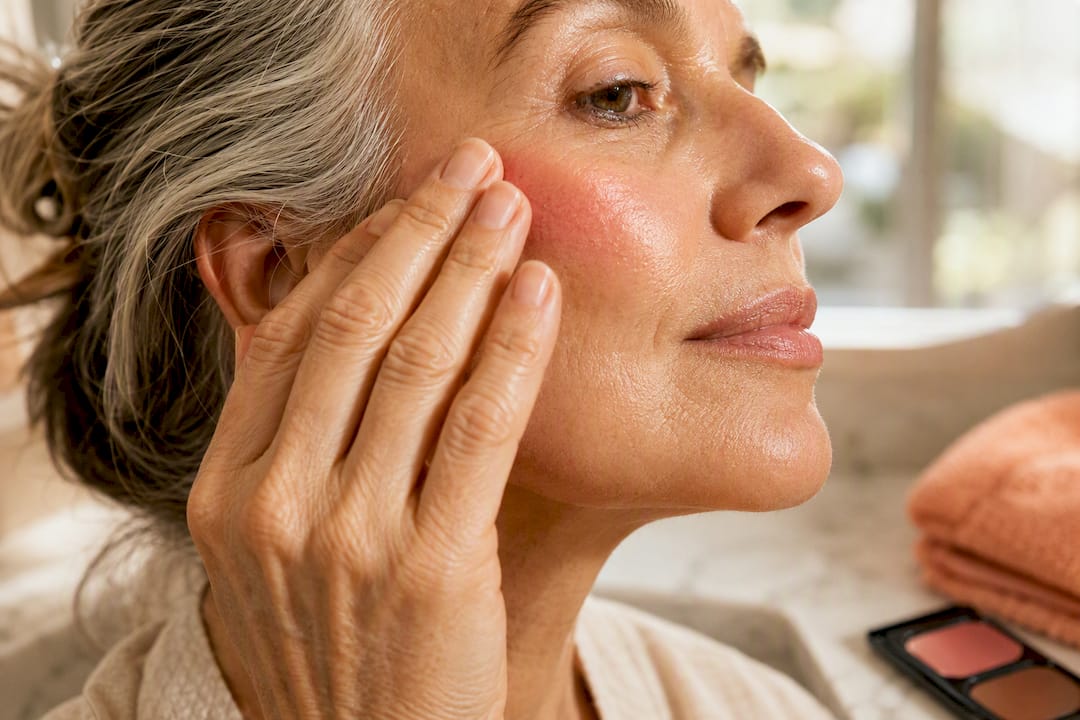
Cheeks. Cream blush placed slightly higher on the cheekbone, blended up toward the temple, creates a lifting effect that blush applied low and round on the apple of the cheek doesn't. Warm peach and soft rose tones tend to read as healthy rather than flushed, which is usually the goal.
Lips. Lip liner in a hydrating formula, not a dry, matte pencil, fills in the vertical lines around the mouth without settling into them further. Creamy balms and satin lipsticks restore fullness better than fully matte lipsticks, which can emphasize dryness and make lips look thinner rather than plumper.
Brows. Soft, natural-looking fill beats a hard, drawn-in shape almost every time on a mature face. Cream or pencil formulas, applied in short strokes that mimic real brow hair, look far more natural than a solid, penciled-in block. A light brushing with clear gel afterward keeps sparse areas looking groomed instead of drawn on.
The common thread across every one of these: soft edges, cream textures, and color placed to lift rather than to define with hard lines.
Common Makeup Mistakes on Mature Skin, and How to Fix Them Fast
Most makeup problems on mature skin trace back to one of four habits, and every one of them has a quick fix.
- Overpowdering. Too much powder flattens the skin and kills any glow the foundation was providing. Fix: mist the face lightly, then dot on a tiny amount of cream highlighter or illuminating balm to the high points of the cheeks and bridge of the nose.
- Heavy concealer that creases by noon. A thick layer under the eyes will find every fine line and sit in it. Fix: gently pat the creased area with a damp sponge to lift excess product, then reapply a much thinner layer and set with a whisper of powder, not a full redo.
- Full-matte foundation and glittery products. These formulas grab onto texture and fine lines instead of gliding over them. Fix: switch to a luminous or dewy formula, even if it means sizing down on coverage.
- Harsh, sharply drawn eyeliner. A hard line reads as severe against softer, mature features. Fix: smudge immediately with a cotton swab or angled brush before it sets.
Pro Tip: Keep a small hydrating mist and a single cream stick, in a shade close to your foundation, in your bag for touch-ups. A tiny dab restores luminosity far better than powder ever will, and it takes ten seconds.
VÉLOURA's Perspective: When It's Worth Booking a Pro
DIY works beautifully for a Tuesday. It gets harder to pull off when the stakes are higher, a wedding day, a headshot session, a hotel event, or when mobility makes standing at a mirror for forty-five minutes genuinely difficult.
That's the gap VÉLOURA Beauty On Demand exists to close. The professionals on the platform are experienced with hydrating, cream-forward techniques, including which formulas perform well on mature skin under photography lighting or a full day of wear. Through VÉLOURA Care, that same expertise extends to senior clients at home, where a fresh, flattering face isn't just about appearance. It's often the first real moment of feeling like yourself in a while.
A trained professional applies every technique in this guide faster than most people can solo, and with an eye for which specific formulas belong on your skin that day, not just in general. That's the value of experience: it's not doing more, it's knowing exactly where less is enough.
— VÉLOURA Beauty On Demand
Book a Pro to Apply Your Mature-Skin Makeup, or Do It Yourself
Reading a guide is one thing. Having a licensed professional actually apply hydrating, buildable makeup to your specific skin, using the exact techniques covered here, is another.

That's what VÉLOURA Beauty On Demand delivers: a vetted makeup artist arriving at your home, hotel room, or event, applying the same cream-forward, thin-layered techniques by hand, but calibrated to your skin instead of guessed at in a mirror. It's why bridal parties, hotel guests preparing for a big night, and people prepping for headshots book mobile makeup services instead of driving to a counter and hoping the lighting cooperates. For readers planning a wedding, the bridal beauty services page walks through what's included for the full party. For senior clients or anyone who prefers care at home, VÉLOURA's senior beauty services bring the same trained hand, along with the conversation and company that often means as much as the makeup itself.
Open the app, choose your occasion, and a licensed pro comes to you, ready with the right products already in hand.
Sources
The technique and product guidance in this article draws on testing and expert commentary from established beauty publications, along with professional makeup education resources.
- 9 Best Foundations for Mature Skin That Smooth Texture and Blur Lines | Allure
- The Best Makeup for Mature Skin, According to Makeup Artists | Byrdie
- 20 Best Makeup Products for Mature Skin in 2026 | Wirecutter
FAQ
What is the best foundation type for mature skin?
Hydrating, buildable liquid foundations or serum foundations with hyaluronic acid and glycerin tend to work best because they blur texture without settling into fine lines.
Should I use powder if I have mature skin?
Use powder sparingly and only in oily areas like the T-zone. Powdering the entire face flattens the skin and erases the glow a hydrating foundation provides.
How do I stop concealer from creasing under my eyes?
Apply a thin layer with a fingertip to warm and blend the product, then set only lightly. If creasing happens midday, blot with a damp sponge and reapply a thinner layer rather than starting over.
Is matte foundation bad for aging skin?
Full-matte formulas tend to grab onto texture and fine lines rather than gliding over them, so most makeup artists recommend dewy or luminous finishes instead for mature skin.
When should I book a professional instead of doing my own makeup?
Weddings, headshots, hotel events, or situations involving limited mobility are the times a licensed professional, like those available through VÉLOURA Beauty On Demand, typically deliver a more polished result than a DIY routine.