Keep them dry for the first 24 to 48 hours, then cleanse nightly with an oil-free lash cleanser. That single habit protects the adhesive bond and preserves most of your set between fills. Add a gentle morning brush-out, skip anything oil-based near your eyes, and you've covered the routine that keeps a set looking full for weeks. If you'd rather leave the application, fills, and removal to someone trained for it, mobile beauty services can connect you with licensed lash technicians who come to your location.
TL;DR:
- The adhesive bond remains vulnerable for the first 24 to 48 hours after application, making closeness to water, heat, and oils risky during this period.
- Consistent daily cleansing with an oil-free foaming lash cleanser and gentle brush work significantly improves retention beyond the initial curing window.
- Using oil-based products or micellar waters near the eyes causes early bond failure, so ingredient labels should be carefully checked for oil content.
- Natural lash shedding occurs regularly, so scheduling fills every 2 to 3 weeks prevents premature lash loss and maintains fullness effectively.
- Proper application by a licensed technician and adherence to daily cleansing routines are both critical to optimize retention and avoid complications.
Table of Contents
- Lash Extensions Aftercare: What Happens in the First 24 to 48 Hours
- Your Daily Lash Care Routine: Morning and Night
- How to Clean Lash Extensions the Right Way
- Which Products Help Your Lash Extensions Last (and Which Ones Ruin Them)
- Sleep, Sweat, and Swimming: Everyday Habits That Affect Retention
- Lash Fill Frequency: How Often to Schedule Touch-Ups
- Warning Signs: When Lash Extensions Need Professional Attention
- Why a Licensed Technician Makes Aftercare Easier
- What Most Lash Aftercare Advice Gets Backwards
- Book a Licensed Lash Technician Who Comes to You
- Where This Aftercare Advice Comes From
- Sources
- FAQ
Lash Extensions Aftercare: What Happens in the First 24 to 48 Hours
Lash adhesive doesn't set the moment your technician finishes your appointment. It reaches a functional cure in about one day but keeps strengthening for a couple of days, which means the bond is still vulnerable well after you've left the chair. Water, steam, and even the oil naturally on your fingertips can weaken that curing bond before it's had time to fully harden.
That's why the rules in this window are strict, even if they feel inconvenient for a day or two.
- No water on the lash line, including sweat or steam from a hot shower
- No sauna, steam room, or facial with heat exposure
- No eye makeup, especially mascara or liner along the base
- No rubbing, pulling, or sleeping face-down on your lashes
Wash your face by tilting your head back and using a washcloth below the eye area, avoiding the lash line entirely. Sleep on your back if you can manage it, and if you're booking around a trip or an event, scheduling your appointment earlier in the day gives the adhesive more cure time before you lie down for the night. It's a small scheduling detail that makes a real difference in early retention.
Adhesive types vary somewhat. LED-cured formulas tend to set faster than traditional cyanoacrylate glue, but treating the first two days as a protective window is the safer habit no matter which one your technician used.
Your Daily Lash Care Routine: Morning and Night
Once you're past the cure window, retention comes down to one thing more than any other: whether you cleanse every single day. Clients who skip this step consistently lose extensions faster than those who cleanse regularly.
Here's the three-minute version, morning and night.
- Wet your lashes with lukewarm water or use a lash cleansing brush.
- Apply an oil-free foaming lash cleanser and work it gently from base to tip.
- Rinse thoroughly, making sure no residue sits along the lash line.
- Pat dry with a lint-free towel, then let them air-dry the rest of the way.
- Brush through with a clean spoolie to separate and reshape the fan.
Cleanse more often than twice a day if you've been sweating, wearing makeup, or swimming. Sweat and oil buildup are the fastest way to loosen the bond, and regular cleansing is consistently linked to noticeably better retention between fills compared to skipping it.
The daily brush-out matters more than people expect. Extensions that clump together strain each other's bonds and tend to shed sooner, while lashes that get separated daily hold their shape and last longer.
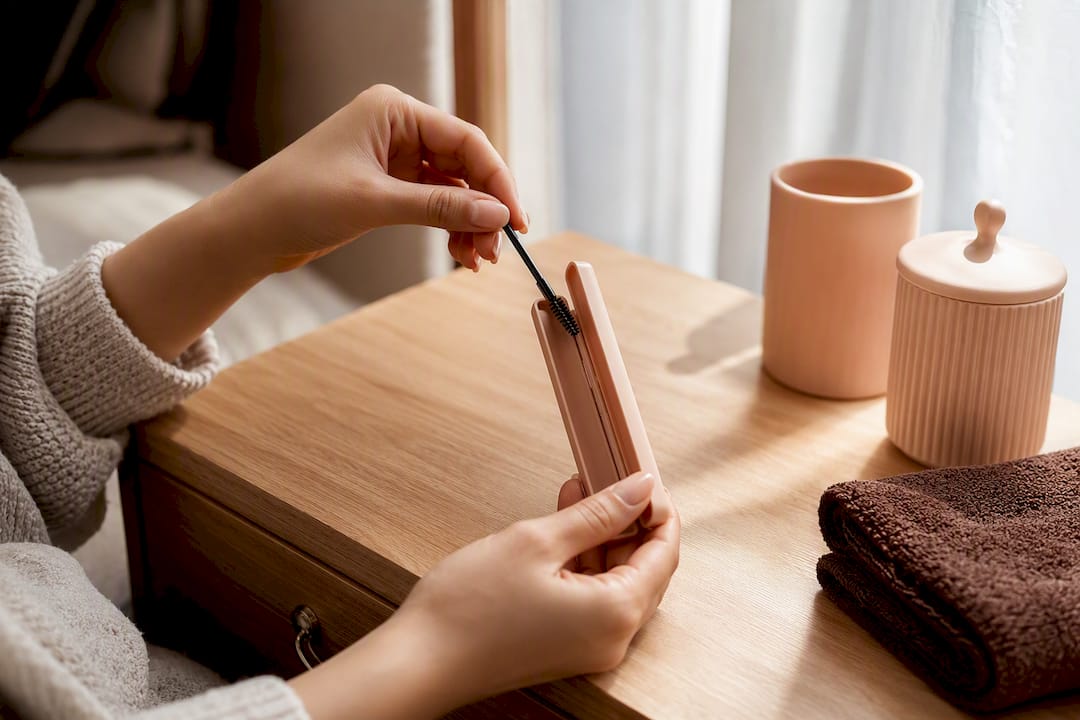
Pro Tip: Keep your spoolie clean and protected in a case rather than loose in a makeup bag. A spoolie that's picked up bacteria or old mascara residue can undo the good your cleansing routine is doing.
How to Clean Lash Extensions the Right Way
The technique matters almost as much as the frequency. Scrubbing too hard or using the wrong tools can do more damage than skipping a day entirely.
You need four things: an oil-free foaming lash cleanser, a soft cleansing brush, a spoolie, and a lint-free towel. Skip cotton pads and rounds. They shed fibers that catch on extensions and pull them loose.
- Wet lashes with lukewarm water, never hot.
- Apply a small amount of cleanser to the brush and sweep gently from base to tip, then along the underside of the lash line where oil and debris tend to collect.
- Rinse with a gentle stream of water, tilting your head back so it flows down and away from your eyes.
- Pat dry with the lint-free towel, don't rub.
- Let lashes finish air-drying, then brush through once dry with the spoolie.
The most common mistake is over-scrubbing in an attempt to feel "extra clean." That friction breaks down bonds faster than the dirt it's removing ever would. The second most common mistake is rinsing too quickly and leaving cleanser residue at the base, which attracts more buildup and irritation over time.
Which Products Help Your Lash Extensions Last (and Which Ones Ruin Them)
Reading the label on your skincare and makeup matters more with extensions than it ever did before. Oil is the main cause of early bond failure, and it hides in products you'd never suspect.
Safe to use:
- Oil-free, foaming lash cleansers made specifically for extensions
- Water-based makeup removers
- Mineral-based sunscreens, which sit on skin rather than breaking down adhesive
Avoid entirely:
- Oil-based makeup removers or micellar waters with oil listed in the first few ingredients
- Coconut, castor, or argan oil in any eye cream or serum applied near the lash line
- Heavy, balm-textured eye creams
- Waterproof mascara, which requires oil-based remover to take off
Scan ingredient lists for the word "oil" anywhere in the first five or six ingredients. If it's there, keep the product away from your lash line. A nourishing lash serum can be a safer alternative for supporting your natural lashes underneath the extensions, as long as it's formulated with extensions in mind.
Sleep, Sweat, and Swimming: Everyday Habits That Affect Retention
Small lifestyle choices add up faster than people expect.
- Sleep on your back when you can, and switch to a silk or satin pillowcase to cut down on friction if you're a side sleeper.
- A lash-safe sleep mask helps protect extensions further without pressing on the lash line.
- After workouts, blot sweat rather than wiping, and cleanse as soon as you can, since sweat carries the same oils that break down adhesive.
- Wait 24 to 48 hours before swimming, and rinse and cleanse immediately afterward whether it's a chlorinated pool or the ocean.
- If you wear goggles, look for a pair that seals against the orbital bone rather than pressing directly on the lash line.
Lash Fill Frequency: How Often to Schedule Touch-Ups
Natural lashes shed on a cycle, and the extensions attached to them go with them. That's normal, not a sign anything went wrong.
- Every 2 weeks: best for anyone who wants maximum fullness at all times or has an oilier skin type that speeds up natural shedding.
- Every 3 weeks: the most common interval for balancing appearance with cost and time.
- Every 4 weeks: works for people with excellent aftercare habits and slower natural lash cycles.
- Beyond 4 weeks: retention typically drops enough that a full new set is more practical than a fill, since too few original lashes remain to build on.
Warning Signs: When Lash Extensions Need Professional Attention
Most irritation after a fresh set is mild and temporary. Persistent problems are a different story.
- Redness, swelling, or discharge that doesn't ease up after a day or two
- Severe itching or pain, rather than a mild, passing sensitivity
- Extensions clumping together in a way that daily brushing won't fix, which often points to skipped cleansing or oil-based products getting onto the lash line
If you notice any of these, stop using all lash products immediately and cleanse gently with plain water only. Persistent symptoms call for a licensed professional, both to treat the issue and to remove the extensions safely without damaging your natural lashes underneath.
Why a Licensed Technician Makes Aftercare Easier
Aftercare only works as well as the application behind it. A rushed or poorly trained technician can set you up for early shedding no matter how carefully you cleanse afterward. Some beauty platforms connect clients with licensed, vetted lash technicians who come to your home, hotel, or office, and provide booking, secure payment, and review features so you can focus on keeping your fill schedule instead of chasing appointments.
What Most Lash Aftercare Advice Gets Backwards
Most lash extension guides treat aftercare like a list of restrictions: don't get them wet, don't use this product, don't sleep that way. That framing isn't wrong, but it misses the point. Aftercare isn't about avoidance. It's about one small, repeatable habit: a genuine daily cleanse.
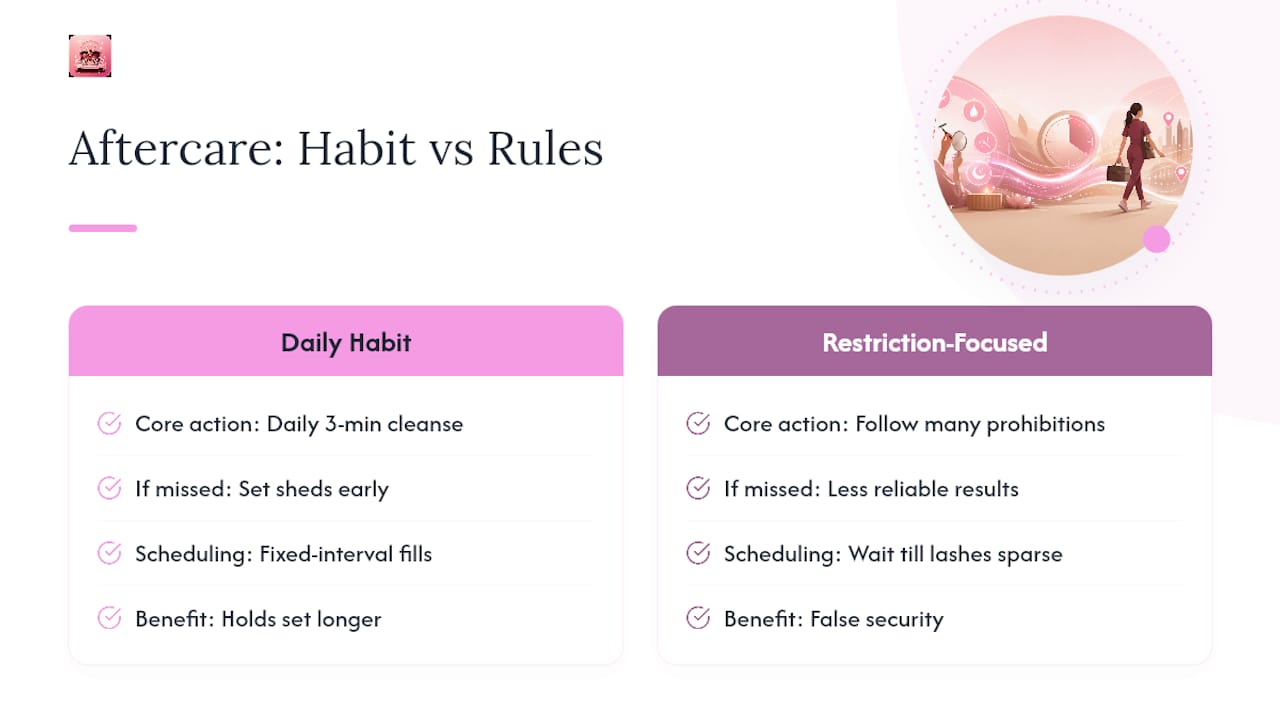
Skip the cleanse and follow every other rule perfectly, and your set will still shed early. Nail the cleanse and slip up occasionally on sleep position or an oily product, and most sets hold up fine. The daily ritual matters more than the long list of prohibitions people fixate on.
The other place conventional advice falls short is scheduling. People wait until lashes look sparse before booking a fill, by which point they're often looking at a new set instead of a touch-up. Booking on a fixed interval, before your lashes look like they need it, is what actually saves money and time. A three-minute daily routine paired with a predictable fill schedule beats any amount of careful product shopping.
— VÉLOURA Beauty On Demand
Book a Licensed Lash Technician Who Comes to You
Good aftercare only gets you so far without a solid application to begin with. Mobile beauty services offer an alternative to hunting for salon appointments around your schedule by connecting you with licensed, vetted lash technicians who come to your home, hotel, or office for fills, removals, and full sets at convenient times.

Whether you need a routine fill before a trip or a professional removal because something feels off, you can book a lash appointment through VÉLOURA's services page and get matched with a licensed pro near you.
Where This Aftercare Advice Comes From
The guidance here draws on practitioner-level sources covering adhesive curing times, daily cleansing routines, fill scheduling, and ingredient safety. Each one focuses on the technical side of retention, not just general beauty advice.
Sources
- Lash Extension Aftercare: Complete Guide | Urban Brows
- Eyelash Extension Aftercare: The Complete Guide to 14-Day Retention | LashLadyPro
- Lash Extension Aftercare Guide | Tips from LASHTOUCH NYC
- Eyelash Extension Aftercare: The Complete Australian Guide (2026) – Posh Deluxe
FAQ
Why do my lash extensions only last 2 weeks?
Extensions typically fall out early because of skipped daily cleansing, oil-based products near the lash line, or rubbing and sleeping face-down, all of which weaken the adhesive bond faster than normal shedding would.
How soon after lash extensions can I wash them?
Wait at least 24 to 48 hours before letting water touch the lash line, since the adhesive continues curing during that window and early moisture can weaken the bond.
What happens if I get my lashes wet before 24 hours?
Getting them wet too early can prevent the adhesive from curing properly, leading to weaker bonds and extensions that shed well before your first fill is due.
How long do lashes take to recover after extensions?
Natural lashes generally return to their normal growth cycle within a few weeks of proper removal, since extensions are bonded to individual hairs rather than the skin and shouldn't damage the follicle when removed correctly by a licensed professional.
How often should I get lash fills?
Most people schedule fills every 2 to 4 weeks depending on natural lash cycle speed and how consistent their daily cleansing routine is.