If you want soft, everyday fullness, pick hybrid. If you need serious density and drama, or your natural lashes are sparse, pick volume. Neither answer holds without a caveat: the artist's mapping and your natural-lash health usually shape the final look more than the style name on the price list.
TL;DR:
- Hybrid lashes provide a natural, textured look using a mix of single extensions and small fans, suitable for everyday fullness but less dramatic than volume.
- Volume lashes use ultra-fine fibers to create fuller, more uniform density, with fans typically ranging from 2D to 8D, and require longer and more skillful application.
- Application time for hybrid sets is generally shorter and less costly than volume, while both styles need regular fills every 2 to 3 weeks to maintain fullness.
- Lash health depends primarily on fan weight and proper isolation, not the style label, with oversize fans on fine natural lashes causing early shedding.
- Mapping and natural-lash assessment are more important than style labels, as well-applied hybrid can look softer than a poorly mapped volume set.
Table of Contents
- Hybrid vs Volume Lashes: What's the Actual Difference?
- Hybrid vs Volume: Look, Time, and Cost Side by Side
- Which Style Fits Your Lashes, Eyes, and Lifestyle?
- Pros, Cons, and Real Upkeep Costs
- Is It Safe? Adhesive Sensitivity and Lash Health
- Why Mapping Beats the Label Every Time
- Book a Hybrid or Volume Lash Appointment With VÉLOURA
- Sources
- FAQ
Hybrid vs Volume Lashes: What's the Actual Difference?
The difference comes down to how each fan is built and how many extensions attach to a single natural lash.
Hybrid lashes mix classic single extensions with small handmade fans, usually in a 60/40 or 50/50 ratio depending on the texture you want. Artists lean on singles for definition and fill in with light fans for softness. It's the technique most studios build for clients who want more than a classic set but aren't ready for full glam.
Volume lashes attach multiple ultra-fine extensions, typically 2D to 8D fans, to each natural lash. Push past 8D and you're in mega volume territory, where 10D or more creates near-opaque density. The math matters here: more strands per fan means a fuller line, but only if the fibers stay thin enough to keep total weight manageable.
The material contrast explains a lot:
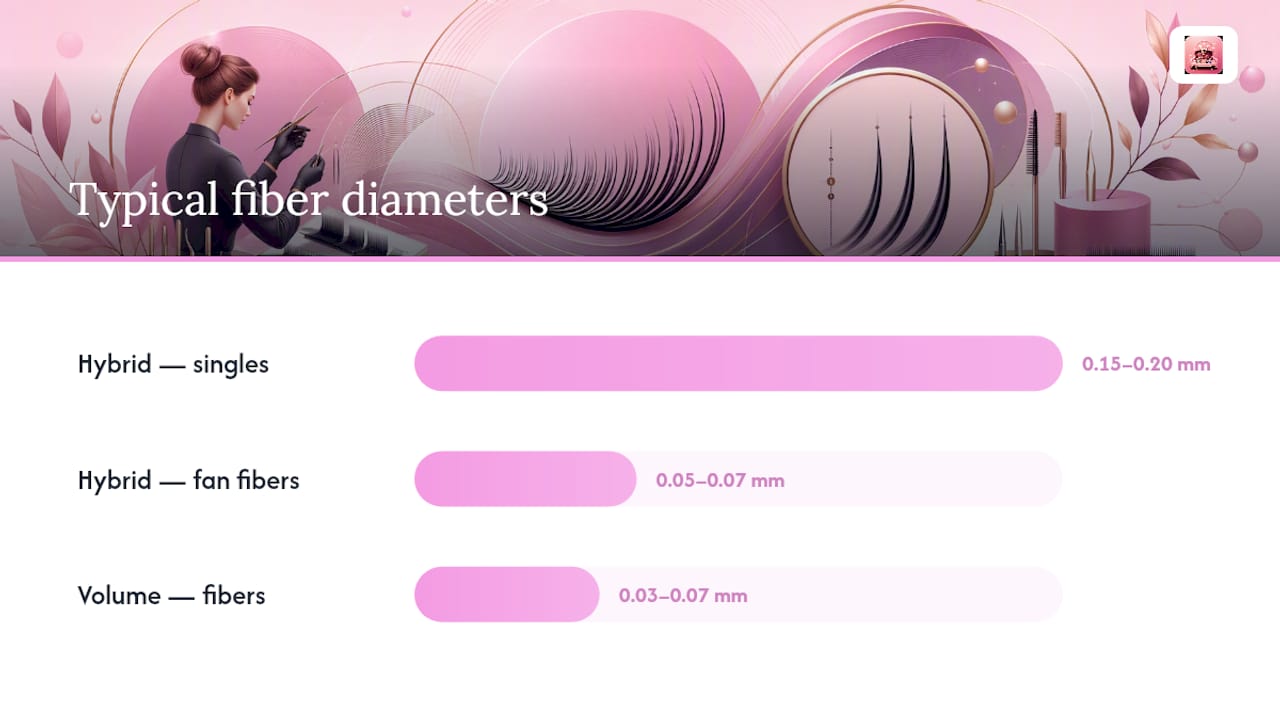
- Hybrid blends 0.15mm to 0.20mm singles with 0.05mm to 0.07mm fan fibers.
- Volume relies almost entirely on 0.03mm to 0.07mm ultra-fine fibers, per Swaniyalashes' technique guide.
- Thinner diameters allow more fibers per fan without adding excess weight to a single natural lash.
Hybrid vs Volume: Look, Time, and Cost Side by Side
Texture is where the two styles diverge most visibly. Hybrid photographs with a slightly textured, "lash but better" look, natural in daylight, with just enough density to read as done. Volume reads fuller and more uniform, since dozens of fine fibers per eye blend into one continuous line rather than distinct points.
Weight distribution works differently, too. A hybrid set balances a handful of thicker singles against lighter fans, so the load sits unevenly across your lash line. Volume spreads that load across many ultra-fine fibers per fan, and when an artist matches fan size correctly to your natural lash strength, a volume fan can actually rest lighter on an individual lash than one thick classic extension, according to Lash & Brow Studios.
Here's how the practical details stack up:
- Application time: hybrid full sets typically take a bit less time than volume sets, which usually require longer sessions; fills vary based on service complexity.
- Cost: hybrid sets are generally priced below full volume sets, with fills scaled proportionally lower too, per SENSELASHES' pricing comparison.
- Fill cadence: both styles need attention every 2 to 3 weeks to stay full.
- Regrowth pattern: hybrid shows gaps sooner since single extensions fall with the natural lash cycle; volume tends to mask early regrowth longer because the fan coverage disguises thinning at the base.
Retention ultimately tracks your natural lash cycle, which runs roughly 60 to 90 days from growth to shed, so no set outlasts biology no matter how it's built.
Which Style Fits Your Lashes, Eyes, and Lifestyle?
Density is the first filter. If your natural lashes are sparse or fine, volume gives coverage that a hybrid set can't fake since there's simply less natural lash to build on. Medium density suits hybrid well, since you already have enough natural texture that added fullness looks intentional rather than forced. If your lashes are naturally dense, either style works, and the decision becomes about how dramatic you actually want to look rather than what your lashes can support.
Eye shape matters just as much as density. A skilled artist maps fan placement to open hooded lids, taper density toward the inner corner, or emphasize an outer "cat eye" flick, per Swaniyalashes' mapping guidance. Round eyes often benefit from length concentrated at the center; almond eyes can carry drama across the whole line.
Before your appointment, bring these three questions:
- What's my natural-lash density and strength, and does that change which fan sizes are safe for me?
- How much daily maintenance am I realistically willing to do?
- Can we start conservative today and add volume at my next fill instead of over-committing now?
Pros, Cons, and Real Upkeep Costs
Hybrid pros: natural-leaning texture, gentler learning curve for first-timers, generally lower price point. Hybrid cons: less dramatic ceiling, gaps show a bit faster between fills.
Volume pros: maximum density, better disguise for sparse lashes, softer per-fiber weight when fans are sized correctly. Volume cons: longer appointment, higher cost, more skill-dependent execution.
Aftercare looks nearly identical for both styles:
- Cleanse daily with an oil-free lash cleanser to remove debris and buildup.
- Skip oil-based makeup removers and heavy creams near the lash line.
- Brush lashes each morning with a clean spoolie to keep fans separated.
- Book fills every 2 to 3 weeks rather than waiting for a near-bare lash line.
A full reset makes sense when more than half the set has shed or when you're switching styles entirely, according to SENSELASHES' maintenance notes.
Pro Tip: Ask your artist about sensitive-formula adhesive up front if you have any history of watery eyes after past lash appointments. It costs little and prevents a mid-set removal.
Is It Safe? Adhesive Sensitivity and Lash Health
Watery eyes, redness, or persistent itching within the first 48 hours usually points to adhesive sensitivity rather than a bad application. If that happens, ask for a sensitive-formula adhesive on your next visit or stop wearing extensions until symptoms clear, a point echoed in general eye-health guidance from Mount Sinai's health library.
Damage risk comes down to fan weight relative to your natural-lash strength and how carefully the artist isolates each lash, not whether the label says hybrid or volume. Oversized fans on fine lashes cause premature shedding regardless of category.
- Never remove extensions yourself with tweezers or oil-based products; professional soak-off is safer and faster.
- Wait for your natural-lash cycle to renew before switching to a dramatically heavier style.
- A lash lift works on your own lashes rather than adding extensions, and it's worth discussing with your artist if you're deciding between a lift and a full set.
Why Mapping Beats the Label Every Time
A well-mapped volume set can look softer than a poorly mapped hybrid set. That single fact should reshape how you book: focus your consultation on natural-lash assessment, allergy history, inspo photos, and how often you'll realistically get fills, not just on which category to request.
Mapping, meaning where fans and singles land across your lash line, decides whether the final look reads natural or dramatic far more than the style name does. If you're unsure, start with hybrid. Adding volume at your next fill is simple. Removing it once it's already glued in place is not.
Book a Hybrid or Volume Lash Appointment With VÉLOURA
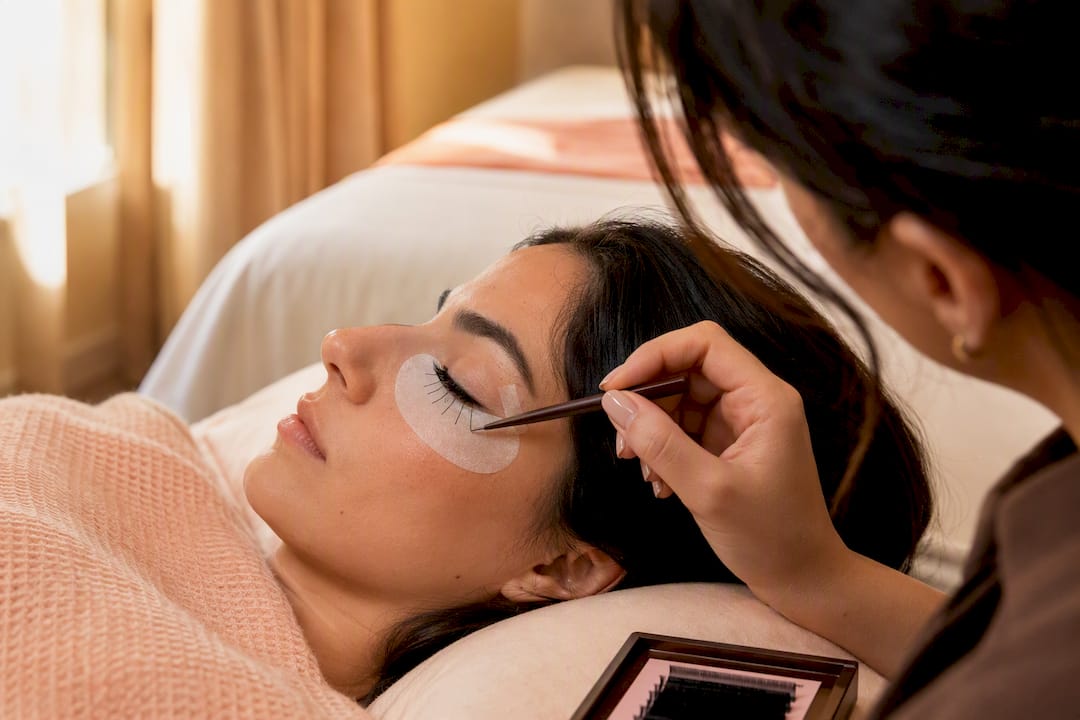
Beauty On Demand services skip the studio commute entirely: a licensed, vetted lash artist comes to your home, hotel, or office, so the mapping consultation happens on your schedule instead of a salon's.
Before booking, have a few inspo photos ready, note any past adhesive sensitivity, and pick your appointment length based on the style you're leaning toward, roughly 90 to 150 minutes for hybrid or 120 to 180 minutes for volume. Your artist will still walk through natural-lash density and mapping preferences on-site, so nothing is locked in until you've had that conversation. Explore lash and beauty services to see what's available in your area, or check out wedding beauty services if you're planning a full bridal glam appointment around your lash set. Book the time that fits your calendar, and let the consultation, not a category label, decide the final look.
Sources
- Volume vs Hybrid Lashes: Which Set Fits | Lash & Brow Studios
- Hybrid vs Volume Lashes: Which Eyelash Extensions Are Right for You? – SENSELASHES
- Hybrid vs Volume Lashes: Which Style Is Right for Your Client? – Swaniyalashes
- Mount Sinai health library (general eye/health resource)
FAQ
Do Hybrid Lashes Look Fake?
No, hybrid is generally the least likely style to look fake because it mixes single extensions with small fans for a textured, natural finish. A skilled artist can still push hybrid toward a fuller look with denser mapping, but the default effect reads as enhanced natural lashes rather than an obvious extension set.
Do Volume Lashes Last Longer Than Hybrid?
Not really. Retention depends on your natural-lash growth cycle, roughly 60 to 90 days, and both styles need fills every 2 to 3 weeks regardless of category. Volume can mask early regrowth a bit longer since the fan coverage hides thinning at the base, but it isn't a longevity advantage in the strict sense.
What Are the Most Popular Lash Extension Styles?
Classic, hybrid, and volume are the three styles most studios offer, moving from single extensions per natural lash (classic) to multi-fiber fans (volume), with hybrid landing in between. Hybrid and volume dominate current bookings because they offer more customization than classic alone.
What Are the Pros and Cons of a Hybrid Set?
Hybrid sets give you a natural-leaning texture, an easier learning curve for first-timers, and typically a lower price point than full volume, per SENSELASHES' pricing data. The tradeoffs are a lower drama ceiling and slightly faster visible gaps between fills compared to volume.