The fastest ways to make more money as a makeup artist are raising your rates on booked-out weekends, packaging bridal and event work into tiers instead of hourly time, and adding one scalable revenue stream like education or product sales. Rate increases and packaging pay off within weeks. Education, teams, and products take months to build but raise your income ceiling far higher than any single booking ever could.
TL;DR:
- Increasing rates on open dates and offering tiered bridal packages boosts revenue without needing more clients, often paying off within weeks.
- Adding a single new scalable revenue stream, such as education or product sales, can significantly expand income over time, but requires patience to build.
- Price services based on actual costs and desired annual income, not competitor rates, and implement non-refundable deposits to prevent cancellations.
- Diversify income through group bridal pricing, online courses, digital products, or brand partnerships to generate passive or semi-passive revenue streams.
- Optimizing marketing and business systems, like updating portfolios and enforcing clear contracts, helps convert inquiries faster and maintain profit margins.
Table of Contents
- High-Impact Tactics You Can Start This Week
- How to Price Your Services and Set Defensible Rates
- Diversify Income: Revenue That Scales Beyond One-to-One Bookings
- Marketing and Client Acquisition That Actually Converts
- Business Systems That Protect Your Margin
- Paths to Scale: Team, Education, or Product
- What Marketplace Bookings Look Like in Practice
- What This Guide Gets Right That Most Advice Skips
- Get More Bookings Without More Marketing Work
- Sources
- FAQ
High-Impact Tactics You Can Start This Week
You don't need a rebrand to earn more this month. You need three specific moves, done in order.
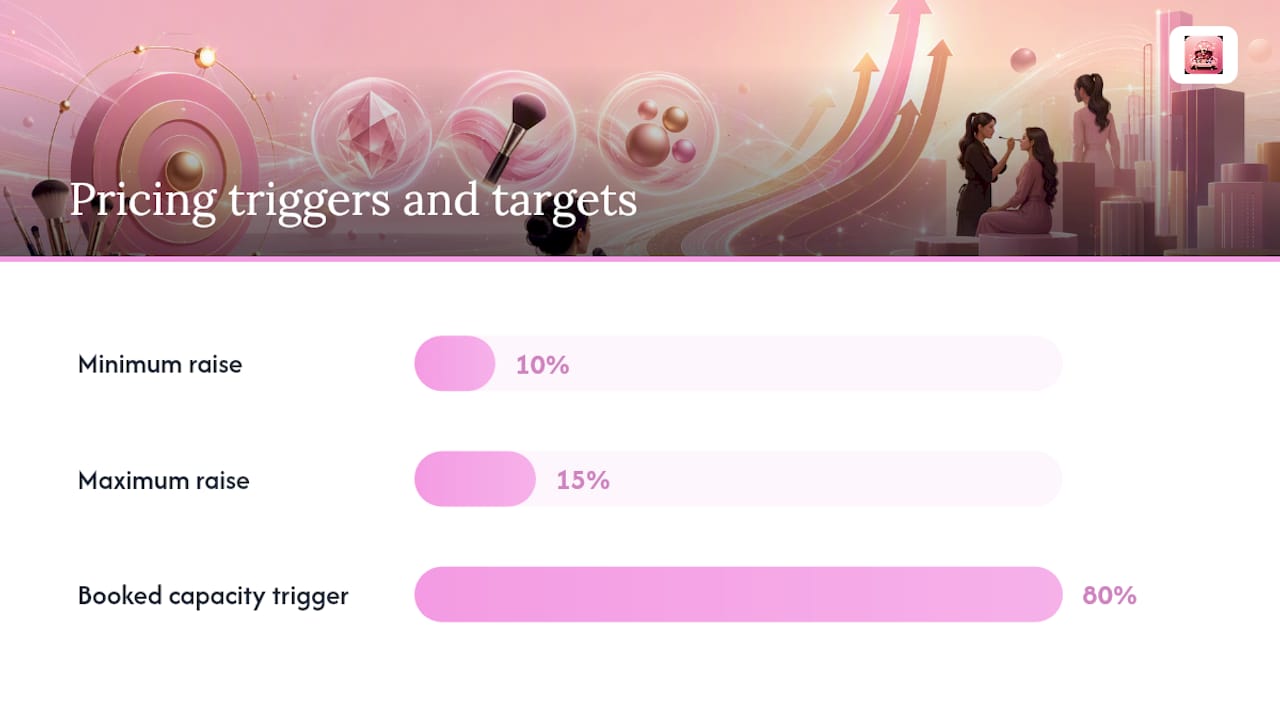
- Raise your rate by 10 to 15% on your next open date. Announce it as a calendar change, not an apology: "Starting [month], my rate for new bookings is $X." Existing clients on the books stay at their quoted price.
- Build a three-tier bridal package (bride only, bride plus party, full-day coverage) and bill the trial separately. This mirrors how top-performing MUAs structure bridal pricing, where bride-only services in major metros commonly run within a typical range, with bridesmaids and trials priced as add-ons rather than folded into one flat number.
- Add one new revenue stream this quarter. A single lash lift add-on, a monthly retainer with a content creator, or a two-hour glam workshop is enough. Don't launch three things at once.
- Fix your deposit policy and contract template. A generic PDF you reuse for every client saves hours of admin and protects your calendar from cancellations.
- Respond to inquiries within an hour when possible. Brides and event planners book the first artist who answers clearly, not the one who takes three days to reply.
Pro Tip: If you're consistently booked at 80% capacity or higher, that's your signal to raise rates, not to take on more low-margin jobs. Scarcity is the only leverage a freelancer has.
None of this requires new clients. It requires charging what your calendar already tells you you're worth.
How to Price Your Services and Set Defensible Rates
Most new artists underprice because they price off competitors instead of costs. Before you set a number, add up what a booking actually costs you:
- Kit replenishment and product depreciation
- Liability insurance and business licensing
- Software subscriptions (booking, invoicing, portfolio hosting)
- Travel time and mileage to on-location jobs
- Non-billable hours: emails, consultations, social content, restocking
Billable hours typically make up only 50 to 65% of a working artist's total time, so your hourly rate needs to cover the hours you're not getting paid for, not just the hours you are. Take your target annual income, add your overhead, divide by realistic billable hours (not a 40 hour week), and that's your floor rate, not your goal rate.
Hourly pricing works for single sessions. Day rates fit editorial or film work with call times. Package pricing wins for bridal and events because it removes the client's ability to negotiate you down hour by hour.
A defensible deposit is 30% to 50% non-refundable at booking, with weekend and holiday surcharges built in since those dates are the ones clients fight over. New artists frequently skip this and absorb cancellation losses that a signed contract would have prevented, according to the same MUA business guide.
Diversify Income: Revenue That Scales Beyond One-to-One Bookings
A single booking pays once. A packaged service, a course, or a product sale can pay repeatedly as passive or semi-passive income streams.
- Bridal and event expansion. Sell the whole party, not just the bride. Group pricing for bridesmaids, plus an add-on menu (lashes, touch-up kits, extended hours) increases per-event revenue without adding new clients.
- Education. Live workshops and one-on-one coaching monetize skills you already have. Online courses take longer to build but earn while you sleep once launched.
- Digital products and affiliates. Start with one low-cost item, like a downloadable client consultation guide or a curated product list, and track which platform actually drives sales before building more.
- Brand partnerships. Pitch once you have a following worth a brand's attention. Sponsored content and affiliate income become meaningful once artists cross a modest, engaged audience threshold, not before, according to industry scaling research.
Explore occasion-based service ideas if you're short on inspiration for what to package next.
Marketing and Client Acquisition That Actually Converts
Your portfolio is your storefront, so treat it like one. Feature consistent lighting, real client work (not just competition looks), and a visible range of skin tones. Clients skip portfolios that only show one complexion.
- Post short-form video weekly: transformation clips, product breakdowns, and quick tutorials outperform static photos for reach.
- Build referral partnerships with photographers, wedding planners, salons, and hotel concierge teams. These relationships send warmer, higher-budget leads than cold social traffic ever will.
- Create a short qualifying questionnaire (date, location, party size, budget range) so you filter serious inquiries before you spend time on a call.
Pro Tip: Ask every referral partner what they need from you in return, whether it's a commission, a reciprocal tag, or simply reliability on tight timelines. Partnerships that only benefit you don't last.
Business Systems That Protect Your Margin
Rate increases don't stick if your operations leak money underneath them.
- Use a written contract for every bridal or commercial job, with clear cancellation terms and travel fee clauses.
- Carry a certificate of insurance (COI), since many venues and hotels now require one before allowing vendors on-site.
- Adopt bookkeeping tools like QuickBooks Self-Employed, Wave, or HoneyBook to track income, expenses, and deposits without manual spreadsheets.
- Run a simple profit-and-loss statement monthly. If your margin is shrinking while bookings grow, your pricing hasn't kept pace with your costs.
An in-home makeup artist cost breakdown is worth reviewing if you're unsure how your own pricing compares to what clients already expect to pay.
Paths to Scale: Team, Education, or Product
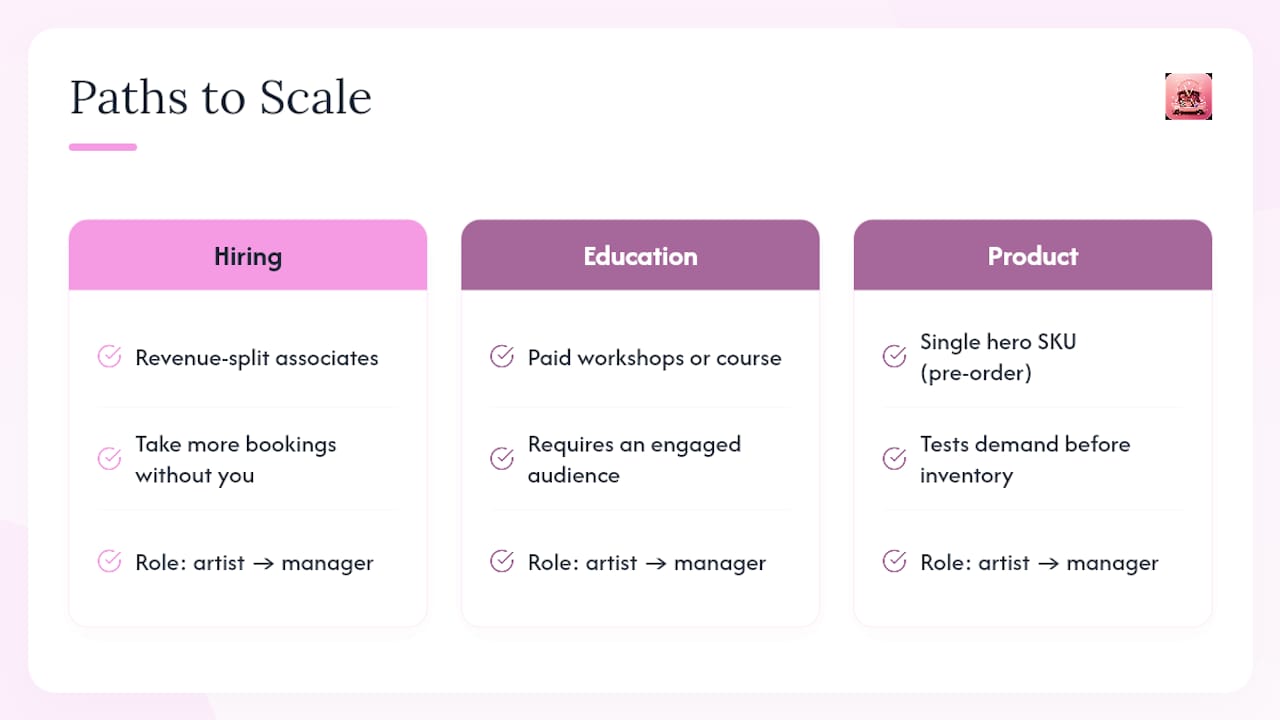
Once your calendar is full and your rates are maxed for your market, three routes exist. Hiring associates on a revenue-split model lets you take on more bookings without doing every face yourself. Launching paid education (workshops or a course) requires an engaged audience, not a huge one, but it does require one. Building a product, starting with a single hero SKU sold on pre-order, tests demand before you sink capital into inventory. Each path shifts your role from artist to manager, and that shift is the real cost of scaling.
What Marketplace Bookings Look Like in Practice
Freelance income is often lumpy: slow Tuesdays, packed Saturdays. Marketplace platforms fill the gaps with clients who wouldn't have found you otherwise, from busy professionals to hotel guests booking last-minute glam. Before joining one, check the commission structure, payout timing, onboarding process, and client mix. VÉLOURA Beauty On Demand's makeup services pay providers 80% of every booking, which makes platform income a workable complement to direct bookings and education revenue rather than a replacement for either.
What This Guide Gets Right That Most Advice Skips
Most "make more money as a makeup artist" advice stops at "raise your rates" and calls it a strategy. That's incomplete. Rate increases only work if your calendar is already full enough to survive fewer, higher-paying clients, and plenty of artists raise prices too early, then panic when bookings slow and drop the price right back down.
The conventional wisdom also oversells content creation as a fast income lever. It isn't. Sponsorships and affiliate income only become real money once you've built an audience worth a brand's attention, and that takes longer than most artists want to hear.
What the evidence actually supports is sequencing: fix your pricing math first, package your highest-demand service second, and only then layer in diversification. Artists who skip straight to launching a course or chasing brand deals before their core bookings are priced correctly are building a business on top of a shaky foundation. Steady demand, whether from direct clients or a marketplace, buys you the time to build the rest properly.
— VÉLOURA Beauty On Demand
Get More Bookings Without More Marketing Work
Every tactic above still depends on one thing: enough client volume to make higher rates and packages worth offering. Some marketplace platforms fill that gap by sending vetted, ready-to-book clients directly to your calendar, whether that's a busy professional squeezing in a touch-up before a flight, a hotel guest requesting glam for an event, or a bridal party booking through an app.
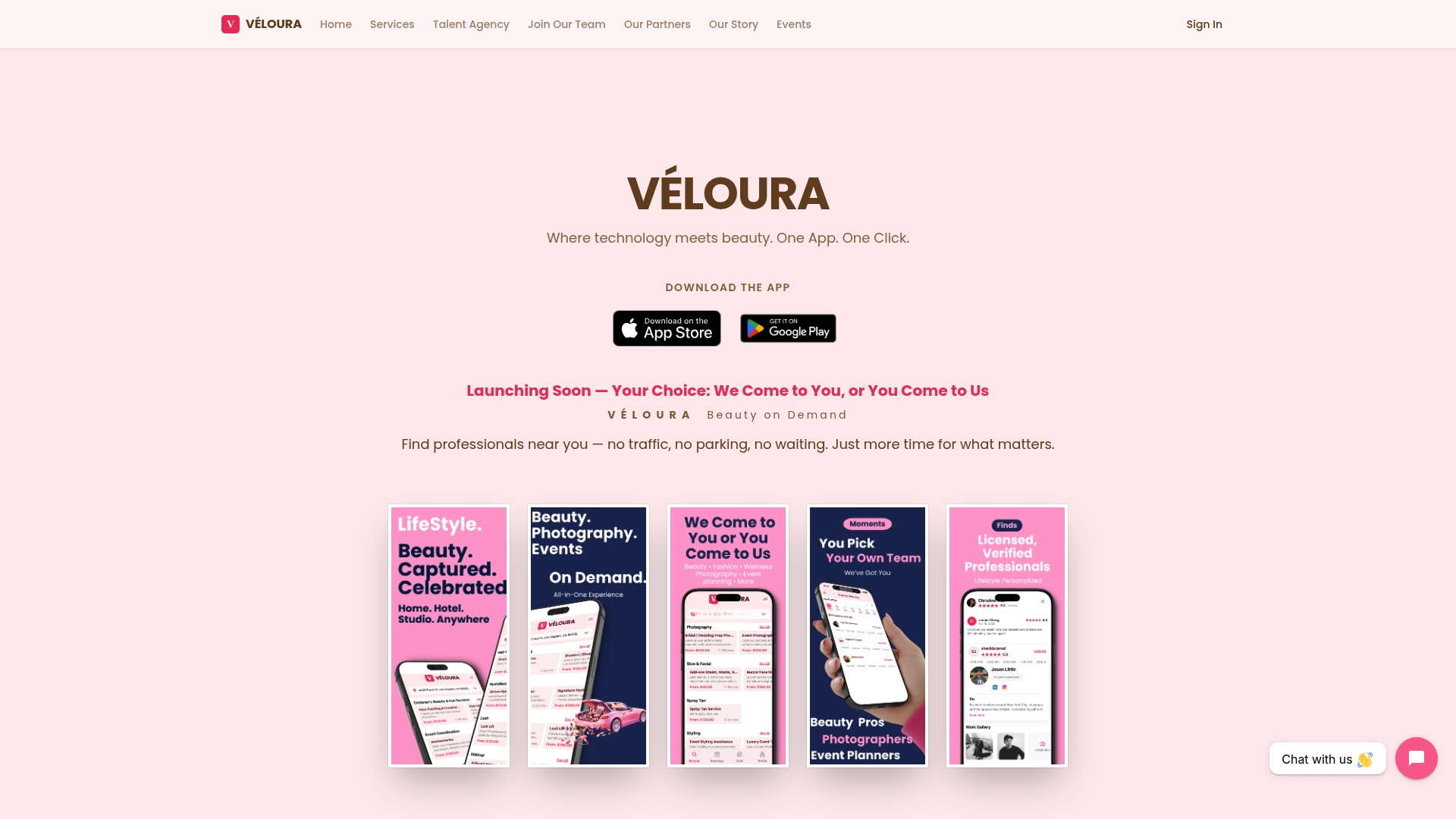
This works best for artists who already have their pricing dialed in and simply want steadier demand between direct clients, especially bridal specialists and mobile artists comfortable traveling to homes and hotels. If you're in a major metro, check out the makeup services page to see what's available in your area, or head straight to the provider application to start onboarding this week.
Sources
This guide draws on bridal pricing benchmarks and deposit norms from the MUA business guide, freelance earnings data from the freelance makeup artist guide, and scaling frameworks from Entrepreneur Coaching's breakdown of six-figure beauty brands.
- Makeup Artist and Business Guide: ✍🏼 Start Your MUA Brand 2026 August
- From Brush to Business: How Makeup Artists Build 6-Figure Beauty Brands in 2026 - Entrepreneur Coaching
FAQ
Can you actually live off being a makeup artist?
Yes, but freelance MUAs in the U.S. commonly earn between roughly $30,000 and $75,000 annually depending on whether they work part-time or full-time, their niche, and their market, so transitioning to full freelance usually requires savings and a validated client pipeline first.
How much do Sephora makeup artists make?
Sephora artists are typically paid an hourly retail wage rather than freelance session rates, which is why most experienced MUAs use retail roles as a training ground before moving into higher-paying freelance or bridal work.
What is the highest salary for a makeup artist?
The highest earners are usually artists who've scaled beyond one-to-one bookings through associate teams, paid education, or product lines, since these routes remove the ceiling that comes with trading hours for dollars one client at a time.
How much does Kim Kardashian's makeup artist get paid?
Celebrity personal artists at that level typically negotiate custom day rates or retainers well above standard freelance pricing, reflecting exclusivity and demand rather than a published industry standard.
How do I make more money as a makeup artist without losing existing clients?
Raise rates only on new bookings, keep current clients at their quoted price, and pair the increase with a packaged service or add-on so the price change reads as added value, not just a higher number.