At-home beauty pricing is a transparent combination of base service fees, travel costs, product markups, and scheduling factors that together determine what you pay for mobile beauty treatments. The industry term for this model is "mobile beauty service pricing," and understanding it removes the guesswork from every booking. Standard at-home nail services cost $45–$75 for a manicure and $60–$100 for a pedicure, while mobile makeup sessions run $100–$250 depending on travel and complexity. VÉLOURA Beauty On Demand builds every quote from these same components, so you always know exactly what you are paying for before a professional arrives at your door.
How at-home beauty pricing works: the core components
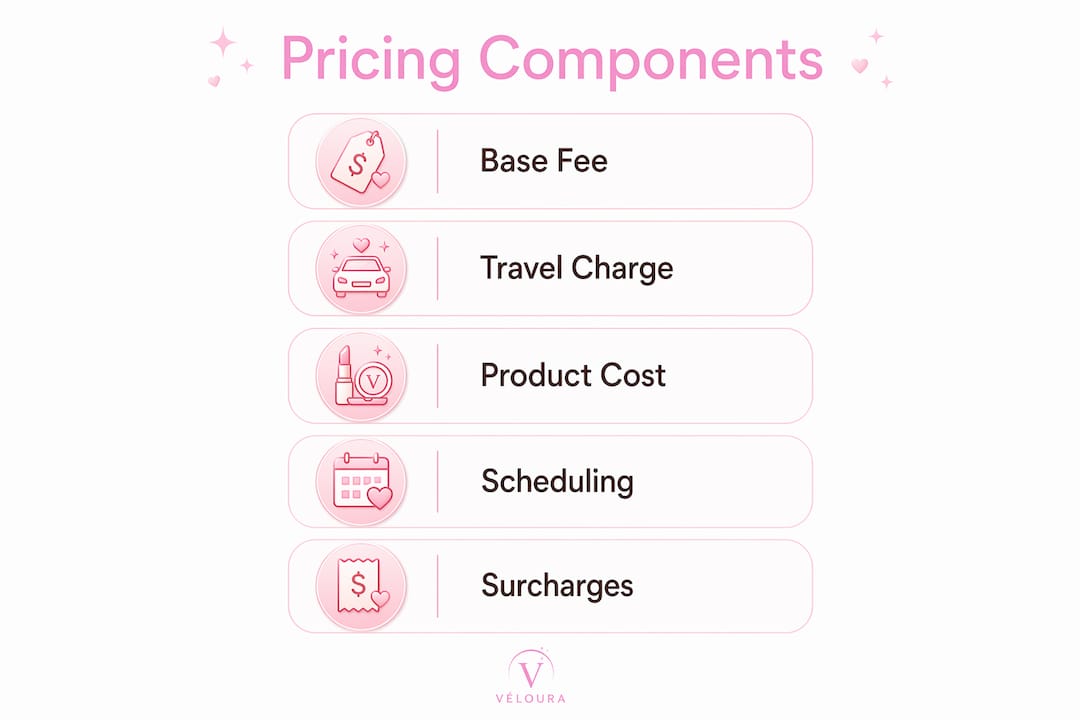
Mobile beauty service pricing breaks down into four building blocks: the base service fee, travel charges, product costs, and timing surcharges. Each one is predictable once you know what to look for.
Base service fees
The base fee covers the professional's time and skill for the treatment itself. A standard manicure runs $45–$75, a gel manicure $60–$95, and a full set of acrylics $80–$150. Pedicures start at $60 for a standard service and reach $120 for a gel finish. These ranges reflect licensed labor, not a random markup.
Travel fees and product costs
Travel fees compensate professionals for fuel and drive time. Professionals commonly offer free travel within a 5-mile radius, then apply a flat fee beyond that zone. That structure keeps pricing clear and avoids surprise charges at checkout. Product costs add another layer: premium cosmetics carry an average markup of 78%, which flows into service pricing whenever a professional supplies the products used during your appointment.
What factors determine the cost of at-home beauty services?
Several variables move the final price up or down. Knowing them helps you compare quotes accurately.
- Skill level and licensing. A licensed cosmetologist with advanced certifications charges more than a newly licensed technician. The premium reflects training, insurance, and consistent results.
- Distance and travel model. Radius-based fees are the industry standard. Free travel within a defined zone, then a flat rate per additional mile, keeps both sides accountable.
- Product supply. If you supply your own polish or skincare products, the service fee drops. If the professional brings everything, expect product costs built into the quote.
- Appointment timing. Same-day or last-minute bookings cost 20–25% more. That premium compensates the professional for compressed scheduling and lost booking opportunities.
- Group and event rates. Bridal parties and corporate bookings often unlock per-person discounts. Mobile makeup group rates average around $50 per person, compared to $100–$250 for a solo session.
Pro Tip: Always ask for a written breakdown of travel fees before confirming a booking. A transparent provider lists the radius, the flat fee beyond it, and any fuel surcharge as separate line items. If a quote bundles everything into one number with no explanation, ask for the breakdown before you commit.
Price transparency builds trust in mobile beauty, especially when travel fees are clearly structured and communicated upfront. That clarity is what separates a professional service from an unpredictable one.
How do at-home beauty prices compare to salon and DIY options?
The honest answer is that each option wins in a different category. At-home professional services cost more per session than DIY, but less in total annual spend than most people expect.
Service cost comparison
| Service | At-home professional | Typical salon | DIY estimate |
|---|---|---|---|
| Standard manicure | $45–$75 | $25–$45 | $5–$15 per kit |
| Gel manicure | $60–$95 | $35–$65 | $20–$40 per kit |
| Full set acrylics | $80–$150 | $45–$85 | $30–$60 per kit |
| Makeup application | $100–$250 | $60–$150 | $10–$50 per session |
| Pedicure | $60–$100 | $35–$65 | $10–$25 per kit |
At-home professional rates run roughly 30–50% above salon prices for the same service. That gap reflects travel costs and the convenience of having a licensed pro come to you. It does not reflect lower quality.
The DIY math problem
DIY looks cheaper per session, but the annual totals tell a different story. DIY beauty users spend $378 more per year than clients who rely exclusively on professional services, largely because kit and consumable costs accumulate fast. A $40 gel kit sounds affordable until you factor in lamp replacements, top coats, and the learning curve that produces uneven results. At-home devices deliver convenience and cost-effectiveness for maintenance, but they provide shallower treatment depth than professional-grade tools. For special occasions or complex services, the professional result justifies the price difference.
How does pricing impact consumer budgeting for beauty services at home?
Understanding at-home beauty fees changes how you plan your spending. The shift happening in 2026 is not about spending less. It is about spending differently.
Consumers are moving away from monthly subscription-style beauty spending toward one-time device investments and fewer, higher-value professional appointments. That shift reflects a math-based approach to beauty budgets, not a retreat from quality. Clients who once booked a salon every three weeks now book a mobile professional for events and handle maintenance at home between visits.
Key patterns shaping beauty budgets right now:
- Fewer visits, higher investment per visit. Clients prioritize quality over frequency, choosing mobile professionals for events and milestones.
- Blending premium and budget. Consumers mix high-end professional treatments with affordable at-home maintenance. This is recognized as smart shopping, not compromise.
- Annual spend awareness. Knowing that DIY users spend $6,430 annually versus $6,052 for professional-only clients reframes the value calculation entirely.
Pro Tip: Budget for two to four mobile professional appointments per month for high-priority services, and fill the gaps with quality at-home products. That hybrid approach delivers the best results at a predictable monthly cost. VÉLOURA Beauty On Demand makes this easy with upfront pricing on every booking.
The future of on-demand beauty points toward clients who treat professional mobile services as a curated investment rather than a routine expense. That mindset produces better results and fewer budget surprises.
What logistical factors influence mobile beauty service pricing?
Behind every mobile beauty quote is a set of operational decisions that directly affect what you pay. Professionals who manage these well charge fair prices. Those who do not often add hidden fees to cover inefficiencies.
The biggest factor is appointment clustering. Mobile professionals optimize earnings by grouping client appointments within the same neighborhood on the same day. That approach minimizes drive time and keeps travel fees reasonable for everyone on the route. When you book through a platform like VÉLOURA Beauty On Demand, that routing efficiency is built into the system.
- Platform commissions. Mobile beauty platforms charge professionals a commission on each booking. VÉLOURA Beauty On Demand keeps this fair: professionals retain 80% of every booking, which means they do not need to inflate prices to cover excessive platform fees.
- Same-day booking premiums. Last-minute appointments command a 20–25% premium. Book 48–72 hours in advance to avoid that surcharge.
- Scheduling density. A professional with back-to-back appointments in one area charges less per client than one driving across the city for a single booking. Asking about a provider's typical schedule in your area is a legitimate question.
Pro Tip: Book during mid-week windows when demand is lower and professionals have more scheduling flexibility. You are more likely to land a clustered route slot, which often means a lower travel fee and a more relaxed appointment.
Choosing a mobile beauty service with efficient routing and transparent platform fees protects your budget and supports fair pay for the professional serving you.
Key Takeaways
At-home beauty pricing is most affordable when you understand all four cost components: base service fees, travel charges, product markups, and timing surcharges.
| Point | Details |
|---|---|
| Base fees reflect licensed labor | Standard manicures run $45–$75; gel and acrylic services cost more based on skill and time. |
| Travel fees follow a radius model | Free travel within a set zone, then flat fees beyond it, is the industry standard for transparent pricing. |
| DIY costs more annually than expected | DIY beauty users spend $378 more per year than professional-only clients due to kit and consumable accumulation. |
| Last-minute bookings cost 20–25% more | Book 48–72 hours ahead to avoid same-day surcharges and secure better scheduling slots. |
| Clustering reduces your travel fee | Professionals who group neighborhood appointments charge lower travel costs per client. |
What I have learned about reading a mobile beauty quote
Pricing in mobile beauty is not complicated. Most clients who feel confused are simply missing one piece of information: the travel fee structure. Once that is clear, everything else falls into place.
At VÉLOURA Beauty On Demand, we see the same pattern repeatedly. A client receives a quote, sees a number higher than their local salon, and assumes they are being overcharged. When we walk through the breakdown, the reaction changes. The base fee is competitive. The travel fee is reasonable. The product quality is higher. The time saved is real. The math works.
What I have found is that the clients who feel most confident about their spending are the ones who asked one simple question before booking: "Can you show me the breakdown?" A professional who cannot answer that question clearly is not worth booking. A platform that does not display it automatically is not worth using.
The other misconception worth addressing is the DIY savings myth. Spending $40 on a gel kit feels like a win until you factor in the lamp, the remover, the top coat, the learning curve, and the three ruined sets before you get it right. Professional mobile services cost more per session. They cost less in frustration, wasted product, and redone work.
Consumer attitudes toward at-home beauty in 2026 are maturing. Clients are not just asking "how much?" They are asking "what am I getting?" That is a better question. And it is one that transparent mobile beauty pricing is built to answer.
— VÉLOURA
VÉLOURA Beauty On Demand: clear pricing, licensed professionals
VÉLOURA Beauty On Demand was built around one principle: you should know exactly what you are paying before a professional walks through your door.
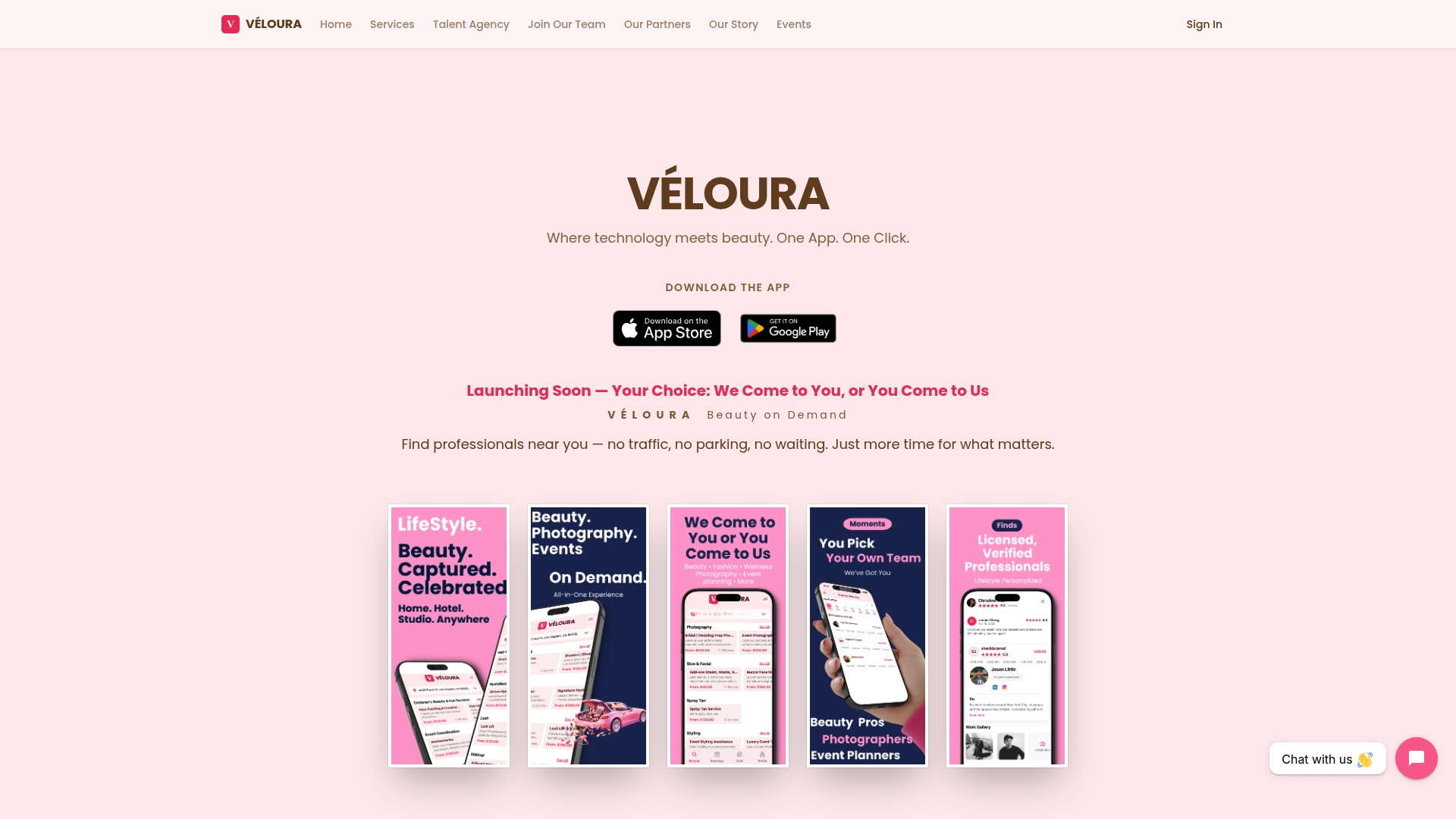
Every booking on the VÉLOURA platform shows the base service fee, travel charge, and any applicable surcharges as separate line items. No bundled mystery totals. No surprise fees at checkout. Licensed, vetted professionals come to your home, office, or hotel in Los Angeles, New York City, and Miami. Services range from mobile manicures and gel nails to lash extensions, blowouts, balayage, and bridal makeup. Book through the VÉLOURA app and get a confirmed price before you confirm your appointment. That is how at-home beauty should work.
FAQ
How much do at-home beauty services cost on average?
At-home manicures run $45–$75, pedicures $60–$100, and mobile makeup sessions $100–$250. Prices vary based on service type, travel distance, and booking timing.
Why do at-home beauty services cost more than salon visits?
Mobile beauty pricing includes travel fees and product costs that salon prices do not carry. The premium also reflects the convenience of a licensed professional coming directly to you.
What is a travel fee in mobile beauty pricing?
A travel fee compensates the professional for fuel and drive time. The standard model offers free travel within a 5-mile radius, then applies a flat fee for each additional mile beyond that zone.
Do last-minute bookings cost more for at-home beauty?
Yes. Same-day and last-minute mobile appointments typically cost 20–25% more than advance bookings. Scheduling 48–72 hours ahead avoids that surcharge.
Is DIY beauty actually cheaper than booking a mobile professional?
Not always. DIY beauty users spend an average of $378 more per year than clients who use professional services exclusively, once kit costs, consumables, and product waste are factored in.