Choose a mobile stylist for event-day styling, group prep, and privacy. Choose a hotel spa or salon for technical color work and clinical skincare that needs real equipment. Mobile services typically save you time by cutting out the commute and waiting room. Whichever you pick, confirm the pro's license and insurance before you book.
TL;DR:
- Mobile stylists charge a 20 to 40% premium over salon rates to cover travel, setup, and personalized service, making total costs higher but more convenient.
- Services like blowouts, simple updos, makeup, nails, and basic skincare travel well, while complex color work, keratin treatments, and chemical peels require salon-grade infrastructure.
- Hotel spas offer amenities such as steam rooms and pools but lack portability and personalized attention, ideal for full wellness experiences or group bookings.
- Proper hotel coordination, license verification, insurance, and reviews are essential to avoid delays and ensure provider reliability.
- A hybrid approach, using mobile services for quick or morning preparations and salons for technical treatments, often provides the best value and experience.
Table of Contents
- Quick comparison: convenience, amenities, equipment, and price
- Service-by-service suitability: what travels well and what doesn't
- Costs, fees, and tipping: what to actually budget
- Logistics and hotel coordination: your prebooking checklist
- How to choose: verification checklist and red flags
- VÉLOURA's perspective and operational proofs
- Why a hybrid approach often wins
- VÉLOURA: mobile hair, makeup, and event services you can book
- Sources
- FAQ
Quick comparison: convenience, amenities, equipment, and price
The right choice depends on what you actually need that day: a full wellness experience, or a stress-free way to get ready without leaving the room.
A luxury hotel spa often bundles amenity access like steam rooms, saunas, and pools with the treatment itself. You're not just getting a service, you're getting a whole afternoon. That bundle is hard to replicate anywhere else, and it's the reason spa loyalists keep coming back even when a mobile option would save them time.

A mobile stylist trades that amenity access for something else entirely: privacy and personalization. Your hotel room becomes the studio. Your living room becomes the salon chair. There's no waiting area, no other clients, no small talk with a stranger under the dryer next to you.
Here's how the two stack up on the factors that matter most:
- Amenities: Hotel spas offer steam rooms, lounges, and multi-service menus; mobile stylists offer none of that but bring the full session to your space.
- Equipment: Salon chairs, professional lighting rigs, and ventilation systems stay in the building; mobile kits are built for portability, not for every chemical process.
- Group staging: A bridal party of six can get ready together in one hotel room with a mobile team rotating through, while a spa visit means staggered appointments and separate rooms.
- Personalization: One-on-one attention is the default with a mobile booking, since there's no one else on the schedule but you.
For color chemistry and multi-step treatments, salon-grade ventilation, lighting, and inventory of color formulas aren't optional extras. Attempting a full balayage in a hotel room without proper airflow or the right formula stock raises the odds of a result you didn't ask for.
Mobile spa operators often charge a 20 to 40% premium over standard salon rates to cover travel, setup, and the convenience of coming to you. That premium buys back your morning, but it's worth knowing upfront so you're comparing total cost, not just the sticker price on a menu.
Service-by-service suitability: what travels well and what doesn't
The smartest way to decide isn't spa versus mobile in the abstract. It's matching the specific service to where it can actually be done well.
Some services are built for a mobile setup because they don't depend on fixed plumbing, ventilation systems, or a wall of color inventory:
- Blowouts and simple updos need a stylist, a chair, and an outlet, all of which travel easily.
- Event and bridal makeup relies on a kit and a skilled hand, rather than a studio.
- Lash extensions require a flat surface, good lighting, and time, all portable.
- Manicures and gel sets travel well with a compact kit and a portable table.
- Single-process touch-ups like a root refresh can often work mobile if the formula and timing are simple.
Other services usually need the infrastructure a salon or hotel spa is built around. Balayage and color correction demand a deep inventory of formulas, proper ventilation, and often a sink setup that a hotel bathroom can't replace. Keratin treatments involve heat processing and fumes that call for professional ventilation. Chemical peels and microcurrent facials sit closer to clinical treatment than beauty service, and medical or clinical aesthetic procedures often carry legal, insurance, and safety constraints that favor a fixed, licensed location over a mobile setup.
Borderline cases are common: a gel manicure with a light multi-tone effect, or a glaze that isn't a full color change. When you're unsure, ask the provider directly whether the treatment requires ventilation, sink access, or specialized equipment they can't bring. A pro who does this regularly will tell you plainly whether your request travels or stays put.
Costs, fees, and tipping: what to actually budget
Comparing base prices alone will mislead you. The real comparison is total cost, and that includes fees neither side always advertises upfront.
Mobile services often add a travel or convenience fee on top of the service price, reflecting the time and logistics of coming to you. Hotel spas often add their own line items, typically a service charge or amenity fee baked into the menu price, which is common enough that luxury hotel salon menus list these charges as standard practice rather than an add-on surprise.
Group pricing shifts the math further. Bridal parties booking a spa often pay per person with no group discount, while some mobile providers offer event packages that lower per-person cost by consolidating travel into a single visit. Mobile spa operators often charge a 20 to 40% premium over standard rates, and event packages can offset part of that premium for larger groups even as they raise the total invoice.
A few rules of thumb make the tipping question simpler:
- Tip the individual pro directly for mobile bookings, since the travel fee covers logistics, not gratuity.
- Tip hotel spa staff according to the venue's own guidance, often included or suggested on the invoice.
- Fifteen to 20% of the service price is a common range for both formats when a set gratuity isn't already added.
- Round up for exceptional work, especially for early morning or last-minute bookings that required real flexibility.
Logistics and hotel coordination: your prebooking checklist
Nothing derails a mobile booking faster than a hotel that wasn't expecting a vendor at the door. A little coordination up front prevents almost every last-minute scramble.
Before the day arrives, confirm the hotel's vendor registration and front-desk policies. Some properties require pros to check in with ID, get a temporary badge, or use a service elevator, and finding this out mid-morning wastes time you don't have.
- Confirm vendor policy with the front desk a day or two ahead, not the morning of.
- Build in a 15 to 20 minute buffer for elevator waits, check-in, and setup before the actual service starts.
- Set up the room in advance: clear a chair near an outlet and natural light, and move luggage out of the way.
- Coordinate timing with your photographer if photos are part of the day, so hair and makeup wrap with room to spare.
- Ask for license and insurance documentation before booking, and keep a copy on your phone in case the hotel asks.
Pro Tip: Text the front desk your provider's name and arrival window the night before. It turns a potential holdup into a two-minute check-in.
If access becomes a problem on the day, a quick call from the room to the front desk with your booking confirmation usually resolves it faster than arguing at the elevator bank.
How to choose: verification checklist and red flags
Whichever format you pick, the vetting process should look the same. Convenience never excuses skipping the basics.
- Confirm the state-required license. Every state has its own cosmetology or esthetician licensing rules, and mobile environments are less controlled than a salon, which makes this step more important, not less.
- Ask about insurance and background checks. A legitimate provider or platform should answer this without hesitation.
- Check reviews and references. Consistent, specific feedback tells you more than a star rating alone.
- Ask what products they use. Vague answers about ingredients or sanitation are a warning sign, not a technicality.
- Clarify staffing for groups. A bridal party of six needs to know if one pro is rotating through or if a team is coming.
- Get travel fees and cancellation policies in writing before you commit, especially for early or event-day bookings.
Pro Tip: If a provider can't clearly explain their sanitation process or won't show proof of licensing, treat that as a full stop, not a negotiation point.
Red flags cluster around the same behaviors: reluctance to show credentials, unclear pricing that shifts after booking, and an inability to coordinate with hotel staff when you ask them to.
VÉLOURA's perspective and operational proofs
VÉLOURA connects clients with licensed, background-checked beauty professionals for in-home, hotel, office, and event bookings, which puts us in the middle of exactly this decision every day. Every pro on the platform carries the credentials this article recommends you verify, and every booking runs through the app rather than a phone call and a guess.
Two scenarios play out constantly. A bridal party of five needs hair and makeup done in one hotel suite before an 11 a.m. ceremony: mobile wins outright, since staggering five separate spa appointments would blow the timeline. A traveler lands with three hours before a client dinner and needs a blowout and a touch-up: mobile again, because there's no time to commute to a salon and back.
For readers weighing a longer trip or a multi-city itinerary, our guide on mobile beauty services for travelers walks through booking timing city by city.
Why a hybrid approach often wins
The smartest routine isn't loyalty to one format. It's using each for what it does best: mobile for event mornings and quick touch-ups, salon or hotel spa for color, keratin, or anything that needs a sink and real ventilation.
A frequent traveler might book a salon visit for color every six weeks at home, then rely on a mobile blowout the morning of every work trip. A bride might get color corrected at a salon a month out, then bring in a mobile team for the wedding morning itself, with the buffers and hotel coordination from earlier in mind. The split isn't complicated. It just requires knowing which task belongs where.
— VÉLOURA Beauty On Demand
VÉLOURA: mobile hair, makeup, and event services you can book
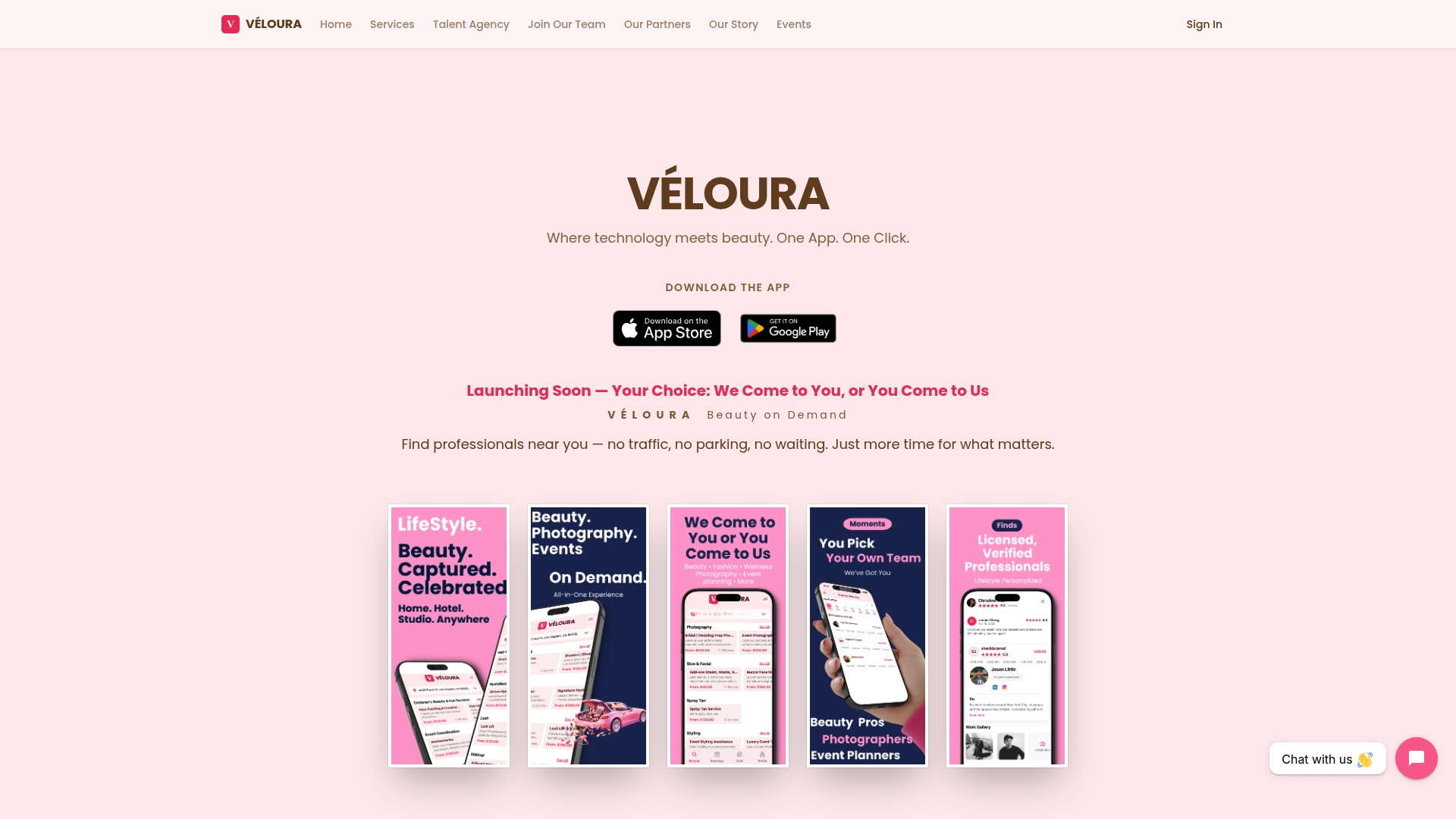
You already know which services travel well. VÉLOURA brings those services to your door, your hotel room, or your office, booked through an app instead of a phone tag with a salon that may not even take walk-ins that week.
Our network covers the services this guide points to as mobile-friendly: hair styling and blowouts, event and bridal makeup, nail services, and skincare treatments suited to an on-site setting.
- Hair and blowouts, booked for a single guest or a full bridal party in one room.
- Makeup artistry, including bridal glam and engagement shoot styling.
- Nail services, from a quick manicure to a full gel set.
- Skincare and facials, suited to the treatments that travel without a clinical setup.
If your next event calls for a room full of people getting ready at once, start with our services page to see what's available for your dates, or go straight to wedding beauty services if you're planning a bridal morning.
Sources
- The ultimate guide to starting a mobile beauty salon
- How to Start a Mobile Spa Business in 2026 (Complete Guide)
FAQ
How much should a mobile hairdresser charge?
Mobile hairstylists typically price at a premium above standard salon rates to account for travel time and setup, with mobile spa operators commonly adding 20 to 40% on top of comparable in-salon pricing. The exact amount depends on the service, location, and whether it's a single client or a group booking.
Is a mobile hairdresser as good as a salon?
For services like blowouts, event styling, and simple updos, a licensed mobile stylist can deliver results just as good as a salon visit. For technical work like color correction or keratin treatments, salon-grade equipment and ventilation give the salon setting a real advantage.
How much do you tip a hair stylist?
For mobile bookings, that tip goes directly to the individual pro rather than to venue staff.
What are the downsides of being a mobile hairdresser?
Working mobile means carrying limited equipment, which rules out services that need fixed ventilation, sinks, or a full inventory of color formulas. It also means managing travel time, hotel or building access policies, and setup in spaces that weren't designed for salon work.
Should I choose a hotel spa or a mobile stylist for a wedding morning?
For a wedding morning with a full bridal party, a mobile stylist usually makes more sense because everyone can get ready together in one room instead of running separate spa appointments. Save the hotel spa or salon for technical work like color correction done well before the big day.