For most people who want durable nails without wrecking the nail bed underneath, gel wins. Acrylic still earns its place when you need extreme length or a lower price at the salon chair. The real difference comes down to how each system leaves your natural nail once it's removed. Keep reading for the full breakdown, or skip straight to booking a vetted pro who does it right.
TL;DR:
- Proper removal technique is more important for nail health than whether the system is gel or acrylic, with soak-off gels requiring less aggressive filing.
- In-home services offering ventilated, professional removal prevent damage caused by improper peeling or rushing, regardless of the product used.
- Gel nails tend to last 3 to 4 weeks, while acrylics often show signs of growth sooner due to their rigidity, but longevity depends more on pre-existing nail prep.
- Soft gel or BIAB options are generally gentler on natural nails because they are easier to remove without heavy filing or drilling.
- Cost differences are notable, with acrylic sets typically costing less upfront but requiring more maintenance or replacement if damaged or lifting occurs.
Table of Contents
- Gel vs Acrylic Nails: The Basic Chemistry
- Gel or Acrylic: Comparing Durability, Cost, and Feel
- Which Is Gentler on Your Natural Nail?
- How Long Each Set Lasts and How to Stretch It
- What Application and Removal Actually Look Like
- Which Should You Choose: A Quick Decision Guide
- VÉLOURA's Take: What Actually Matters When You Book
- Why the "Which Lasts Longer" Question Misses the Point
- Book a Vetted Nail Tech at Home With VÉLOURA
- Sources
- FAQ
Gel vs Acrylic Nails: The Basic Chemistry
Acrylic nails are built from a powder and liquid monomer that you mix and shape on the nail, then let air-cure into a hard shell. Gel nails use a different process entirely: photo-initiated formulas that only harden under UV or LED light. That single distinction, air-cured versus light-cured, shapes almost everything else in this comparison, from odor in the salon to how the product eventually comes off.
"Gel" isn't one product, though. It's a category with real differences inside it:
- Soft gel (gel polish): thin, flexible, soaks off in acetone. Best for a natural look with color.
- Hard gel / builder gel: thicker, structural, used for overlays and light extensions.
- BIAB (Builder in a Bottle): a soak-off version of hard gel, prized for strengthening weak natural nails.
- Gel-X: pre-formed soft gel tips glued on and cured, popular for fast, damage-conscious length.
Acrylic has fewer subtypes but more range in strength, which is why nail artists still reach for it on extreme lengths and sculpted art. Gel systems generally have less fume smell in the salon since there's no liquid monomer being brushed on, and most soak off in 10 to 20 minutes, while hard gel and acrylic typically require filing.
Gel or Acrylic: Comparing Durability, Cost, and Feel
Neither system is automatically "better" on paper. What decides the winner for you is which trade-offs you can live with.
Wear time depends more on your habits and how well the tech prepped your nail than on the product label. That said, both systems commonly run 2 to 3 weeks before lifting becomes noticeable, with heavy hand use (dishwashing, gym chalk, gardening) shortening that window for either one.
Cost is where acrylic still has a real edge. A full acrylic set typically runs $40 to $70, while gel sets, especially BIAB or Gel-X, run $60 to $150 or more depending on region and salon tier. Some salons even price BIAB and Gel-X as premium services because they take less drilling time and clients are willing to pay for the lower-odor experience.
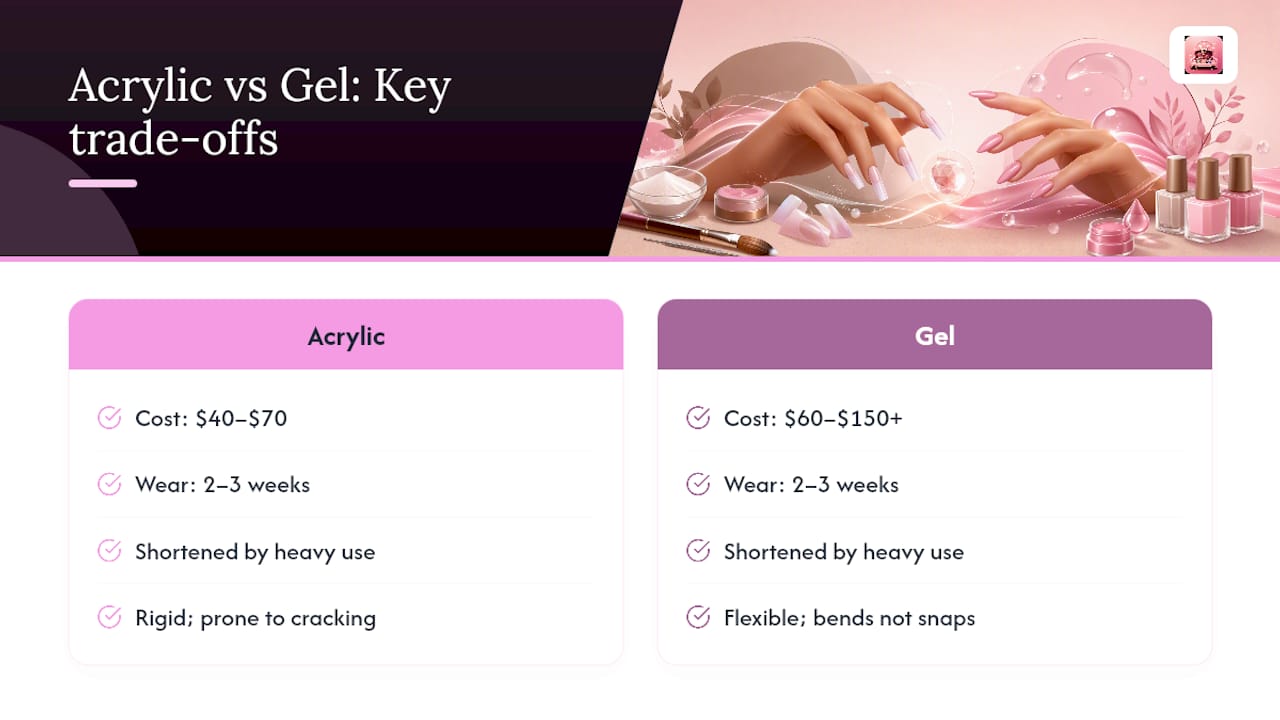
Feel and flexibility split the two systems clearly. Acrylic is rigid, which makes it excellent for sculpted length but prone to cracking on impact rather than bending. Gel has more give, so it tends to flex with your nail instead of snapping, though soft gel can wear thin faster under heavy use.
Removal is the biggest gap. Soak-off gel comes off with an acetone wrap in under 20 minutes when done right. Acrylic removal usually means a longer soak, filing, or an e-file, all of which carry more risk if the technician rushes.
Soak-off gel removal takes roughly 10 to 20 minutes in acetone, compared to the longer soak-and-file process typical acrylic removal requires.
Which Is Gentler on Your Natural Nail?
Nail damage almost never comes from the product itself. It comes from removal and over-filing, regardless of whether you had gel or acrylic on. Peeling off product yourself, or letting a tech drill too aggressively into the nail plate, strips away layers of keratin that took months to grow. That is the real story behind most horror-story nail photos, not the chemistry in the bottle.
Allergic reactions matter too. HEMA and EMA are common ingredients in gel and acrylic systems, and sensitization can build over repeated exposure, showing up as redness, itching, or swelling around the nail fold. The bigger red flag is MMA, a banned monomer still found in some cut-rate acrylic kits. If a salon's acrylic station makes your eyes water, that's not just an unpleasant smell. It's a sign the product may be one you should avoid entirely.
Soak-off gels and BIAB are usually the gentler pick because removal drives most of the damage, and a proper soak avoids the aggressive filing that hard gel or acrylic sometimes requires.
A few habits protect your nails no matter which system you choose:
- Ask your tech what brand and formula they're using before they start.
- Check that the workspace has visible ventilation, not just a candle masking the smell.
- Never peel or pick at lifted product. Book a removal appointment instead.
Pro Tip: If your cuticles sting or your eyes water the moment the tech opens the acrylic liquid, ask for a gel alternative on the spot. A trained pro won't push back on that request.
How Long Each Set Lasts and How to Stretch It
A full gel set commonly lasts 3 to 4 weeks before you need a fill or redo, with BIAB sometimes stretching further since it grows out with less visible lifting. Acrylic sets run on a similar timeline but tend to show grow-out lines faster because the product doesn't flex with the nail bed.
Three habits make either system last longer:
- Refresh your topcoat weekly. A thin layer seals against everyday chipping without a full redo.
- Use cuticle oil daily. Hydrated skin around the nail slows lifting at the edges, where most failures start.
- Skip the acetone hand sanitizer routine. Repeated alcohol and acetone exposure from cleaning products dries out the seal faster than normal wear.
A fill makes sense when regrowth is under a quarter inch and the product is still intact. Once you see cracking, major lifting, or a gap you can catch a fingernail on, it's time for a full new set instead of a patch job.
What Application and Removal Actually Look Like
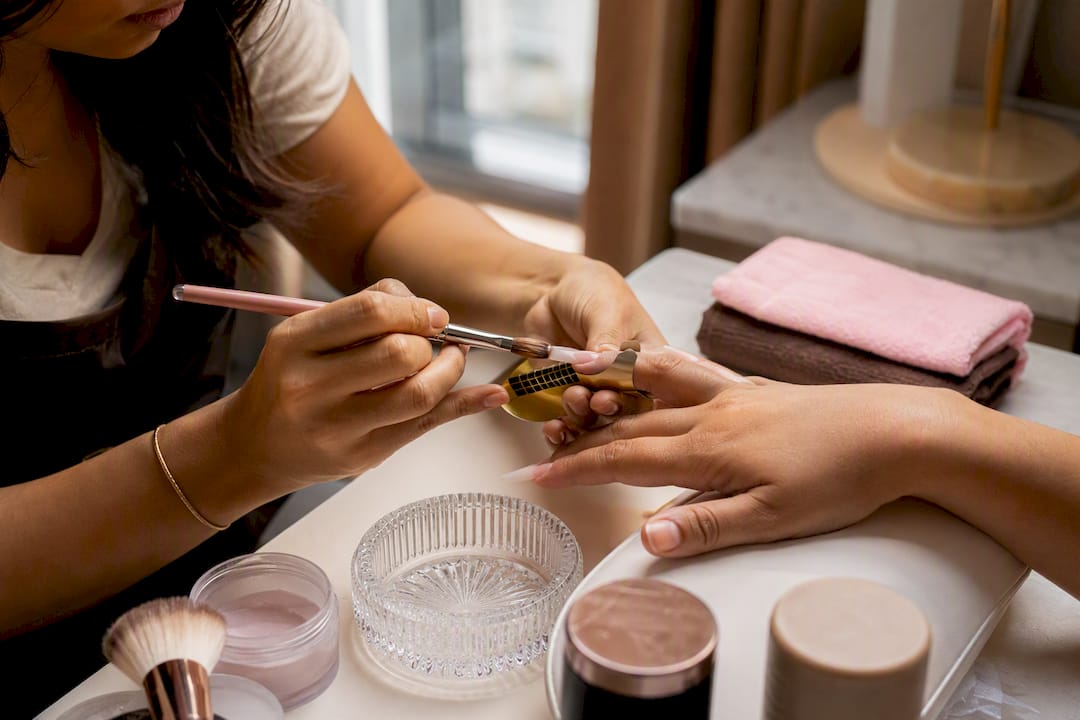
Acrylic application starts with nail prep, a primer, then layers of powder-and-liquid sculpted over a form or tip. Watch for excessive filing on the natural nail itself, not just the product, and a strong chemical smell that lingers past the first few minutes. Both are signs of a rushed or lower-quality process.
Gel application varies by subtype. Soft gel gets brushed on in thin layers and cured under a lamp between coats. Hard gel and BIAB go on thicker for structure, and Gel-X tips get glued and cured rather than sculpted freehand.
Removal is where technique matters most:
- Soak-off gel: buff the top seal, wrap in acetone for 10 to 20 minutes, gently push off softened product.
- Hard gel: typically file-off only, best left to a professional e-file rather than a DIY attempt.
- Acrylic: longer acetone soak followed by careful filing, never aggressive drilling straight into the nail plate.
If a tech reaches for pliers to pry off lifted product, or if the room fills with an eye-watering chemical smell, those are your cues to speak up or walk out.
Which Should You Choose: A Quick Decision Guide
Match your lifestyle to the system before you match your color choice.
- Everyday low-damage wear: choose soft gel or BIAB. Easiest removal, least stress on the natural nail.
- Extreme length or sculpted nail art: choose acrylic or hard gel. Better rigidity for dramatic shapes.
- Budget-conscious and infrequent visits: acrylic often costs less per set, even with fill visits factored in.
- Sensitive skin or fragrance sensitivity: ask specifically for HEMA-free gel formulas and skip strong-smelling acrylic stations.
Before you book, ask your tech three things: what brand they use, how they remove product, and how they've handled the length or style you want before. If the answers are vague, or the smell in the room makes your eyes sting, that's reason enough to book elsewhere.
VÉLOURA's Take: What Actually Matters When You Book
Most clients ask "gel or acrylic" when the better question is "who's doing my nails, and how are they removing the last set." VÉLOURA Beauty On Demand works only with licensed, vetted nail professionals, and our internal guidance leans toward gel, especially soak-off builder gel, for the majority of at-home appointments because it holds up well without the aggressive removal that damages the nail bed over time.
Acrylic still has a place for clients requesting dramatic length or sculpted work, and our pros are trained in both systems. Mobile service adds one more safety layer: technicians bring their own ventilated setup and walk you through product choice before anything touches your nail, so you're never guessing what's in the bottle.
Why the "Which Lasts Longer" Question Misses the Point
Ask any experienced tech which system lasts longer, and you'll get a shrug. The honest answer is that lifespan depends far more on how your nail was prepped and how the last set was removed than on whether the label said gel or acrylic. That's the piece most comparison articles skip, because "gel wins" or "acrylic wins" makes for a cleaner headline than "it depends on who's holding the file."
The conventional wisdom oversells gel as universally safer, and it oversells acrylic as universally more damaging. Neither claim survives contact with a badly trained technician. A soak-off gel service done by someone who peels it off with a cuticle pusher will hurt your nail bed worse than a careful acrylic removal done by someone who takes their time.
If you take one thing from this comparison, prioritize the technician's removal process over the product name on the bottle. Ask how they take product off before you ask what they're putting on. That single question tells you more about your nail health outcome than any gel-versus-acrylic debate ever will.
— VÉLOURA Beauty On Demand
Book a Vetted Nail Tech at Home With VÉLOURA
You don't have to choose between convenience and safe technique. You can connect with licensed, background-checked nail professionals who come to your home, hotel room, or office, equipped to do gel, BIAB, or acrylic with proper ventilation and a removal process that respects your natural nail.

When you book, you can request soak-off gel specifically if nail health is your top priority, or ask for a pro experienced in acrylic sculpting if you want dramatic length. Appointments can be booked, paid, and confirmed via an app, avoiding waiting rooms and uncertainty about the technician. Browse At-Home Nail Services to see what's available near you, or check mobile nail services for hotel guests if you're traveling. Ready to see it in action? Book a nail tech at home and pick your system, your schedule, and your space.
Sources
- Acrylic vs Gel Nails: Which Lasts Longer, Damages Less? | NailAtlas
- Builder Gel vs Acrylic in 2026: 5 Lifestyle Profiles That Pick One Over the Other | Builder Gel Nails
FAQ
What is the healthiest nail option at a salon?
Soak-off gel and BIAB are generally the healthiest choices because they remove without heavy filing or drilling, which is where most nail damage actually happens.
Are acrylic nails healthier than gel?
Not typically. Acrylic removal usually requires longer soaking or filing, which raises the risk of thinning the natural nail if a technician rushes or files too aggressively.
Why are acrylic nails not popular anymore?
Many nail artists have shifted toward gel extensions like Gel-X and BIAB because they deliver similar length and strength with less dust, less odor, and gentler removal.
What are the downsides of using gel nails?
Gel sets can cost more per visit than acrylic, hard gel requires a professional e-file for removal rather than a simple soak, and UV or LED curing means brief light exposure with each session.
Which lasts longer, gel or dip?
Both gel and dip powder manicures typically last 2 to 3 weeks with proper care; longevity depends more on nail prep and daily habits than on which system you pick.
How much does an at-home gel manicure cost?
Pricing varies by service and location, but mobile gel manicures generally fall in a similar range to salon pricing once you factor in the convenience of skipping the commute, and VÉLOURA's At-Home Nail Services page lists current options by city.