The most reliable business travel beauty kit is a single carry-on pouch built around multiuse cream and stick formulas, a travel SPF, and a clear organizer, done in five minutes flat. Skip the full-size bottles and the seven-step routine. Pack for function, not habit, and you'll clear security faster and look meeting-ready before the plane even lands.
TL;DR:
- A travel beauty kit should prioritize multifunctional cream and stick formulas that survive altitude and temperature changes better than liquids.
- Pack only the essentials based on the trip's demands, focusing on one product per function and testing durability at home before traveling.
- Choose high-quality, TSA-compliant products like stick or cream SPF, solid blush, and powder to avoid leaks and meet security rules.
- Use a clear, organized pouch for liquids and a separate case for solids to streamline security checks and maintain hygiene during travel.
- For days requiring more effort, book a professional service instead of trying to cram extra products into a minimalist kit.
Table of Contents
- What Goes in a Compact Business Travel Beauty Kit?
- How Do You Build a Kit That's Actually Business Ready?
- What Products Actually Perform Best for Travel?
- What Are the TSA Rules for a Travel Beauty Kit?
- When Should You Book a Beauty Pro Instead of DIY?
- Does Climate and Time Zone Change What You Should Pack?
- How Do You Keep a Travel Beauty Kit Sanitary?
- What's the Best Way to Refill Travel-Size Containers?
- The Real Trade-Off Behind Every Travel Beauty Kit
- Sources
- FAQ
What Goes in a Compact Business Travel Beauty Kit?
A good business travel beauty kit is organized by function, not by brand. Once you group products by what they do, packing takes minutes instead of a frantic bathroom-counter scramble the night before a flight.
Skin essentials:
- A travel-size cleanser (foaming or micellar water works in tight quarters)
- Moisturizer with SPF, or a mini SPF you layer separately
- A hydrating mist or a few single-use sheet masks for the plane
Makeup essentials:
- A quality color stick for cheeks and lips
- A concealer stick that also works as a spot corrector
- Compact powder or a cream-to-powder foundation suitable for travel
- A small setting spray to lock everything in before back-to-back meetings
Eyes and brows:
- A neutral shadow stick easy to apply with a fingertip
- Mascara in a travel-sized container
- A brow gel effective at taming flyaways without a mirror
Tools and extras:
- A dual-ended brush that handles both base and eye work
- A slim, unbreakable mirror
- Tweezers and a few cotton swabs
- A small clear pouch reserved for anything liquid
That's the entire kit. Everything else is optional weight.
How Do You Build a Kit That's Actually Business Ready?
Building a compact kit isn't about cramming fewer things into a bag. It's about deciding what your trip actually demands before you touch a single product.
- Define the trip. A one-day meeting needs less than a three-city trip with an evening event. Match volume to itinerary, not habit.
- Choose multifunctional products first. A cream blush that works on lips, a stick foundation that also conceals. Editors who pack for travel professionally lean hard on multiuse sticks and cream formulas precisely because they save space and skip the liquid-volume headache entirely.
- Add one high-performance single-use item. A sheet mask or under-eye patch for the flight itself.
- Favor stick, solid, and cream textures over liquid. They survive altitude changes and never count against your liquids allowance.
- Test the kit at home first. Try the full look under normal lighting before you travel, since a trial run catches shade or wear-time problems that are far harder to fix in a hotel bathroom at 6 a.m.
Pro Tip: Apply your entire kit once at home and observe its durability to ensure it lasts through your travel day.
The rule of thumb: one product per function, one tool per task. If two items do the same job, one of them stays home.
What Products Actually Perform Best for Travel?
Not every "travel size" product is built for travel. Some are just smaller bottles of the same fragile formula. The difference between a kit that survives a connecting flight and one that leaks into your laptop bag comes down to a few specific choices.
Skincare that earns its spot: A lightweight SPF is close to non-negotiable. Editor roundups repeatedly flag sunscreen as a must-pack item because it protects skin during daytime travel and works as a makeup base underneath everything else. Pair it with a hydrator light enough to wear under makeup, and add single-use sheet masks for overnight flights rather than a jar of night cream you'll use twice.
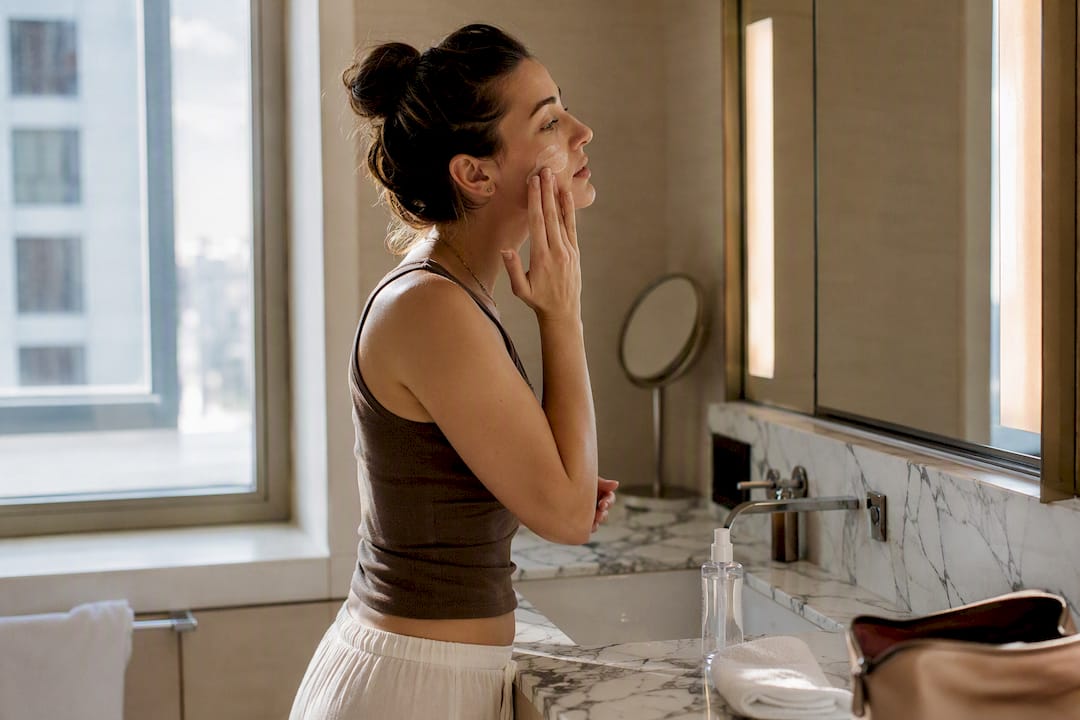
Multiuse makeup, chosen for the right traits: A good travel stick blends with a fingertip, resists transfer onto collars and phone screens, and comes in a shade range that works whether you land tan or pale. If a stick needs a brush to look natural, it's not doing its job.
Powder versus cream, and when each wins: Cream and stick formulas outperform powder in dry cabin air and cold climates, where powder can look flat and settle into fine lines. Powder earns its place in humid destinations, where it controls shine that cream formulas can't manage past noon.
Tools and organizers that hold up: A dual-ended brush that performs multiple functions. A slim, structured case that protects fragile powders and sticks. Tested packing guides consistently favor structured, low-profile cases and dual-ended tools over soft pouches that let fragile compacts get crushed between a laptop and a phone charger.
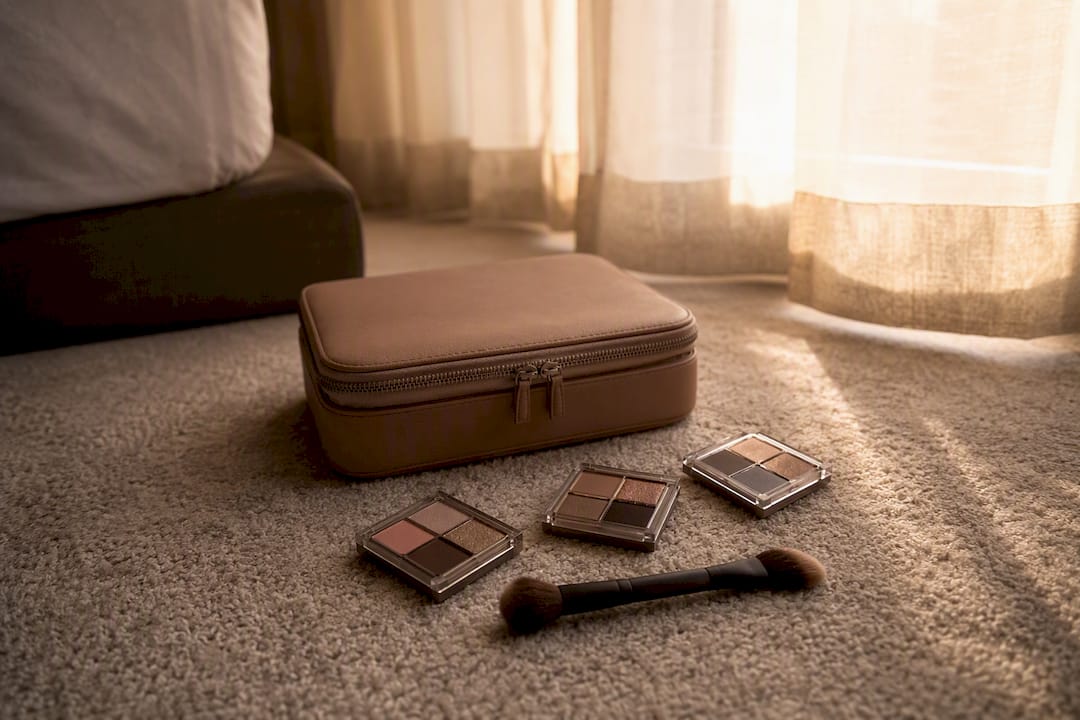
Skip glass jars, pump bottles, and anything with a lid that isn't a screw top. Tubes, sticks, and minis are the only formats worth packing.
What Are the TSA Rules for a Travel Beauty Kit?
The TSA's liquids rule, commonly called 3-1-1, allows containers of 3.4 ounces (100 ml) or less, one quart-size clear bag per traveler, one bag per person. Anything over that limit gets left at security, along with your morning.
The easiest way around this isn't fighting for space in a quart bag. It's avoiding liquids altogether:
- Swap liquid foundation for stick or cream-to-powder versions
- Replace toner with a hydrating mist under 3.4 ounces, or skip it for single-use sheet masks
- Use solid or stick sunscreen formulas that perform well
- Pack a color stick instead of liquid blush and lipstick separately
For organization, a clear quart bag keeps liquids TSA-visible, while a second zip pouch (color-coded if you travel often) holds solids and tools. That split means you're not digging through mascara to find your badge at the checkpoint.
For the flight itself, keep the routine to three moves: mist your face when the cabin air gets dry, swipe on lip balm, and touch up with your color stick before landing. That's the entire in-flight kit, and it takes under two minutes.
When Should You Book a Beauty Pro Instead of DIY?
A compact kit is built for maintenance, not miracles. It keeps you looking sharp between meetings, but it was never designed to replace a full glam session before a keynote, a client dinner, or a headshot session in a hotel conference room.
That's the gap VÉLOURA Beauty On Demand fills. A few situations where booking a pro beats packing more product:
- Prepping for a client event or conference the morning you land, with zero time to find a salon
- A team offsite where multiple colleagues want hair or makeup done before a group photo
- Headshots or media appearances where lighting and camera exposure demand a professional finish
- Long-haul arrivals where jet lag makes a steady hand for eyeliner optimistic at best
VÉLOURA connects travelers with licensed, background-checked beauty professionals who come to the hotel room or office, book through the app, and handle hair, makeup, skincare, or nails on your schedule. Use your carry-on kit for daily touch-ups between meetings, and reserve the pro for the day that actually matters. If you're staying in Los Angeles, New York, or Miami, checking the mobile beauty options available in your hotel room takes less time than repacking a makeup bag.
Does Climate and Time Zone Change What You Should Pack?
Skin doesn't travel the same way you do. It reacts to humidity, altitude, and disrupted sleep faster than most travelers expect, and packing the same kit for Phoenix in July and Seattle in January is a mistake that shows up on your face by day two.
Dry, cold, or high-altitude destinations pull moisture from skin fast. Lean toward richer creams, skip mattifying powders that emphasize flakiness, and add a hydrating mist you can use midday, not just on the plane. Humid destinations flip the priority: lightweight, oil-free formulas and powder finishes hold up far better than heavy creams that slide by afternoon.
Time zone shifts matter just as much as climate. Jet lag disrupts the skin's overnight repair cycle, which is part of why editor testing for 2026 travel products emphasizes formulas that hold up across climates rather than a single "best" product for every trip. A hydrating serum or overnight mask timed to your destination's night, not your body's confused internal clock, helps skin recover faster than makeup ever will.
The practical fix: pack one climate-flexible base layer (a lightweight, buildable moisturizer with SPF) and one climate-specific add-on you swap depending on where you're landing. That's two products doing the work of four.
How Do You Keep a Travel Beauty Kit Sanitary?
A beauty kit that lives in a carry-on for a week picks up more bacteria than one that stays on a bathroom shelf, mostly because it gets handled in airport bathrooms, hotel gyms, and rideshares.
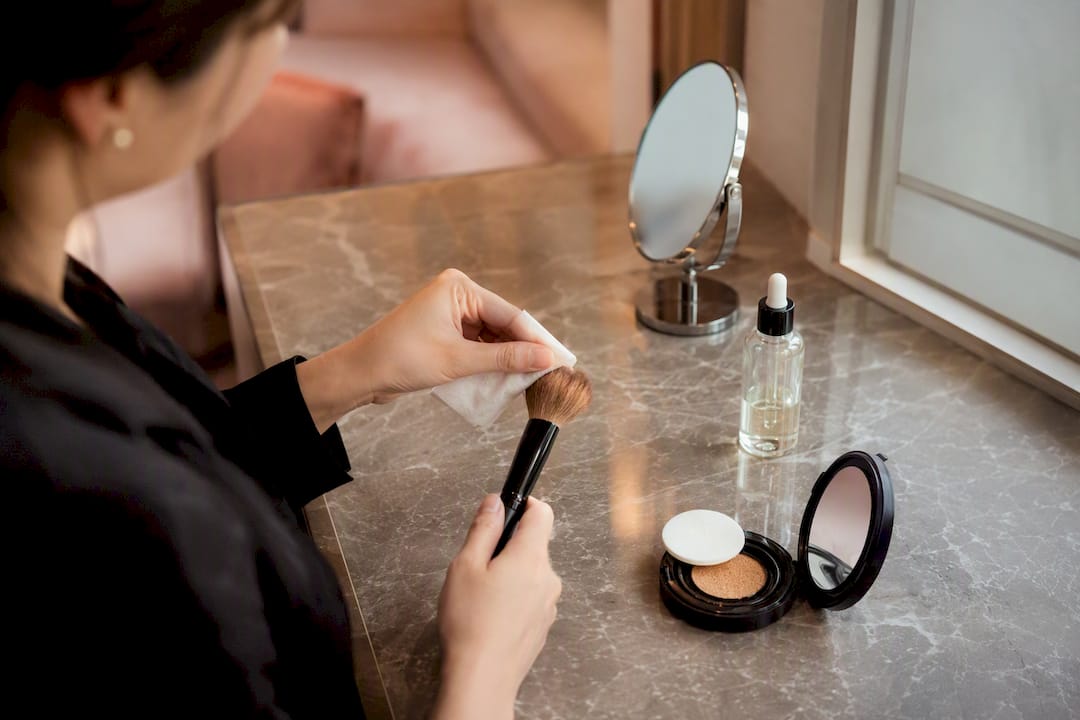
A few habits keep that risk in check. Wipe brush handles and compact lids with an alcohol wipe after landing, since they pick up whatever surface they last touched. Avoid dipping fingers directly into cream products when a spatula or the product's own applicator is available. Replace mascara every three months regardless of how much is left in the tube, since travel heat and repeated cap removal speed up bacterial growth. Keep any sheet masks and single-use items sealed until the moment you use them, not loose in a pouch where friction can break the packaging.
Skip sharing products, even temporarily, with a colleague on a work trip. Pink eye and cold sores travel faster through a shared lip balm than most people assume. Wash your clear TSA bag every few trips, since it collects residue that shifts to whatever's packed inside it next.
What's the Best Way to Refill Travel-Size Containers?
Buying new minis every trip adds up in cost and plastic waste. Refilling your own travel-sized containers from full-size products at home solves both problems, as long as you do it with a bit of care.
Choose containers with a screw-tight seal, not a snap lid, since altitude changes in cargo holds can pop loose lids open mid-flight. Silicone travel tubes handle thicker creams and cleansers better than rigid plastic, which cracks under pressure. Label each container with a strip of tape rather than trusting memory. Every clear gel and white cream looks identical after a week of travel.
Fill containers to about 90 percent capacity, leaving room for expansion during altitude shifts. Wash and fully dry containers between refills to avoid mixing old and new product, which shortens shelf life and can introduce bacteria. Reuse the same set of containers for years rather than buying disposable minis every trip. It's the simplest way to trim both spending and waste from a routine you're already running lean.
The Real Trade-Off Behind Every Travel Beauty Kit
Most travel beauty advice treats packing light as the whole problem. It isn't. The harder problem is packing light without looking like you packed light, and that's where a lot of well-meaning checklists fall short. A kit stuffed with ten travel minis isn't actually compact. It's just a smaller version of a routine that never needed ten steps in the first place.
The professionals who travel constantly, not the ones who travel twice a year, tend to land on the same conclusion: fewer products, chosen for range rather than specificity, beat a large kit every time. A stick that works on lips, cheeks, and lids isn't a compromise. It's usually the better product.
Where most advice underestimates the traveler is the honest acknowledgment that some days call for more than a five-minute routine can deliver. A kit gets you through a normal Tuesday of meetings. It won't get you through a keynote or a client dinner the same way a professional would. Knowing the difference, and having a pro on standby for the days that matter, is the part most packing guides skip entirely.
— VÉLOURA Beauty On Demand
Sources
Product testing and packing guidance in this article draws on editor-tested roundups from ELLE, Byrdie, and The Zoe Report. For hotel-room service logistics, see VÉLOURA's guide on what to expect from in-room beauty service.
- 24 Travel Beauty Products Byrdie Editors Always Pack
- The 57 Best Travel Beauty Products of 2026, Tested and Reviewed by ELLE Editors
- Best makeup bags for travel, tested by editors
FAQ
What is the best makeup kit for traveling?
The best travel makeup kit fits in a clear pouch and centers on multiuse cream or stick formulas: a color stick, a concealer stick, compact powder, and travel SPF. Editors consistently favor these formats because they reduce liquid volume and pull double duty across your face.
What are some must-haves for travel beauty?
Non-negotiables include a travel SPF, a hydrating mist or sheet mask for flights, a multiuse color stick, mascara, and a slim, structured organizer to keep everything protected and TSA-accessible.
How much does a full professional makeup kit cost?
Costs vary widely by product quality and category, so there's no single reliable figure. A better comparison for business travelers is booking a licensed pro through a service like VÉLOURA for a specific event, which delivers a full professional result without the ongoing cost of building and maintaining a complete kit yourself.
What is a good travel makeup kit?
A good travel makeup kit is organized by function rather than brand, TSA-compliant by design, and tested at home before the trip. It should cover skin, color, eyes, and tools in five products or fewer, with one clear pouch reserved for anything liquid.