Balayage wins for soft, blended color that grows out gracefully and needs fewer salon visits. Highlights win when you want defined, high-contrast strands and don't mind touching up more often. The right call still depends on your colorist's skill and how much lift you're after, and plenty of clients land on a hybrid instead of picking a side entirely.
TL;DR:
- Balayage typically requires fewer touch-ups, lasting around three to four months, whereas highlights need refreshing every six to twelve weeks.
- Achieving a natural, blended look depends heavily on the skill of the colorist, especially with balayage, which can produce varied results.
- Foil highlights are more precise and predictable, making them ideal for clients seeking high-contrast or uniform shades with higher lift.
- Balayage is better suited for longer, textured hair and those wanting low-maintenance, subtle brightness, while highlights suit shorter hair and clients who prefer frequent updates.
- Costs and session durations vary based on stylist experience, hair length, and desired lift, emphasizing the importance of in-person consultations for accurate estimates.
Table of Contents
- Balayage vs Highlights at a Glance
- What Is Balayage and How Is It Applied?
- What Are Highlights and How Do Foils or Caps Work?
- Balayage vs Highlights: Side-by-Side on What Matters
- Which Hair Type and Goal Fits Each Technique?
- What Should You Expect for Maintenance and Cost?
- How Do You Choose the Right Technique for You?
- How Do You Care for Color Between Appointments?
- What Are Foilyage, Babylights, and Reverse Balayage?
- What Mobile Beauty Professionals Have Learned About In-Home Color
- Ready to Book Your Balayage or Highlights at Home?
- Sources
- FAQ
Balayage vs Highlights at a Glance
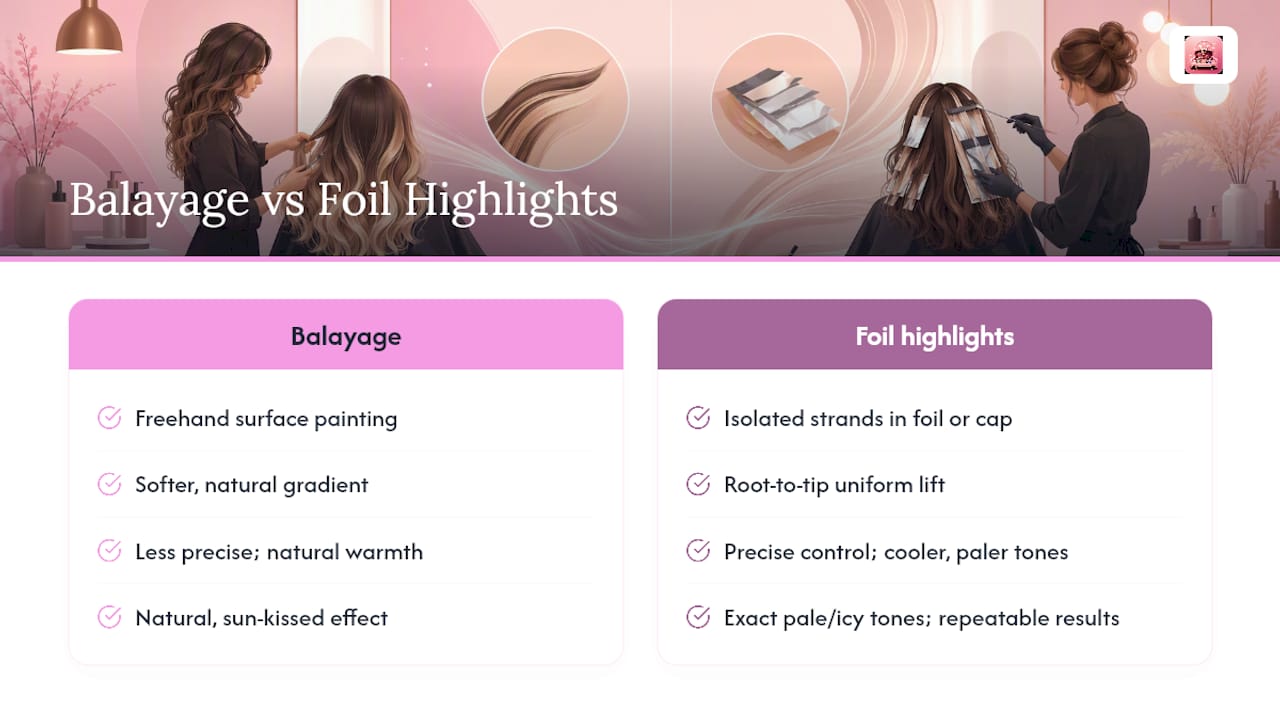
Before you book anything, it helps to see the two techniques side by side. Balayage is painted on freehand, usually starting mid-shaft, which is why it fades so gently at the roots. Highlights go in through foil or a cap, isolating individual strands from root to tip for a crisper, more uniform result.
Here's how the two stack up on the factors that actually change your day-to-day experience:
- Application: Balayage is hand-painted onto the surface of the hair; highlights are sectioned into foils or pulled through a cap.
- Appearance: Balayage gives a soft, sun-kissed gradient; highlights create distinct, more uniform streaks.
- Grow-out: Balayage blends into your natural root; highlights show a visible line as new growth comes in.
- Maintenance frequency: Balayage touch-ups typically require less frequent visits than highlight touch-ups.
- Appointment time: Highlights with heavy foil work often take longer per session than a balayage refresh.
- Cost drivers: Both scale with stylist seniority, hair length, and how much lift you're chasing.
One caveat worth remembering: balayage results vary more by artist than highlights do, since so much depends on the colorist's hand and eye for placement.
What Is Balayage and How Is It Applied?
Balayage comes from the French word for "to sweep," and that's a literal description of the technique. A colorist paints lightener directly onto sections of hair, usually starting mid-shaft rather than at the root, and sweeps it down toward the ends in a freehand motion. There's no foil sealing the color in unless the stylist is running a hybrid method. The lightener just sits on the surface, which is exactly why the result looks soft instead of stripe-like.
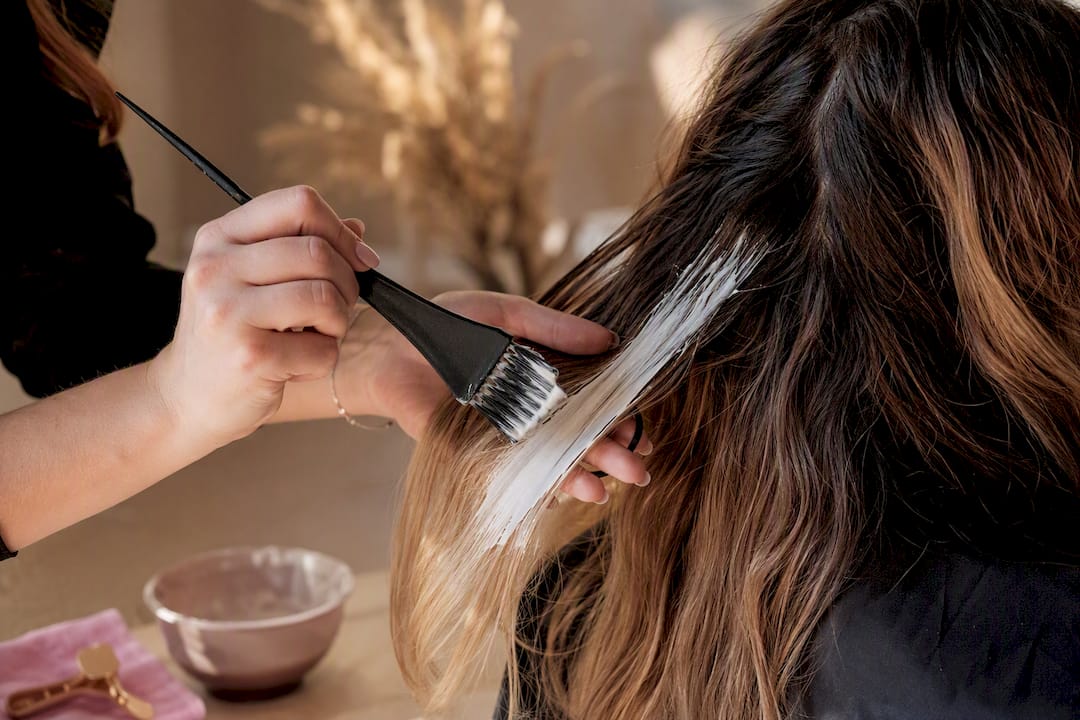
Colorists control the effect almost entirely through placement. Want subtle face-framing brightness? They'll concentrate the painting near your part and temples. Want an all-over sun-kissed look? That calls for a full balayage across more sections. Partial balayage, which focuses on the top layers and face frame, costs less and takes less time, while full balayage covers the entire head for a more noticeable shift in overall tone.
Here's the part most people don't expect: balayage is a technique, not a guaranteed look. Two colorists using the same method can produce very different results depending on how they angle the brush, how much product they use, and how they read your natural color. That's why reference photos and a real consultation matter more here than with almost any other color service. If you walk in and just say "balayage" without discussing tone, contrast, and placement, you're leaving a lot up to chance.
What Are Highlights and How Do Foils or Caps Work?
Highlights isolate individual sections of hair with foil (or, less commonly today, a perforated cap) and saturate them with lightener from root to tip. Because each strand is sealed off, the color processes more evenly and predictably than balayage does, which is exactly why highlights remain the go-to for clients chasing precise, repeatable results.
The range within "highlights" is wider than most people realize. Babylights use fine, hair-thin foils for a barely-there brightness that mimics natural childhood sun streaks. Traditional highlights use medium sections for classic, noticeable dimension. Chunky highlights, popular again in recent seasons, use thick sections for maximum contrast and a bolder statement. Each variation changes the visual outcome dramatically while using the same core foil method.
Foils get chosen over balayage when a client wants cooler, paler blonde tones or needs significant lift in fewer sessions. Isolating each section lets the colorist control heat and saturation with more precision, which matters when you're trying to hit an icy or ash tone that's easy to overshoot. If your goal is a specific, uniform shade rather than a natural gradient, foils are usually the more reliable path there.
Balayage vs Highlights: Side-by-Side on What Matters
The core difference comes down to placement. Balayage lightens the mid-shaft and ends in a loose gradient; highlights run color from root to tip in defined sections. That single structural choice drives almost every other difference on this list.
- Grow-out: Balayage fades into your natural root, so regrowth looks intentional for months. Highlights create a visible demarcation line as roots grow in, since the color starts right at the scalp.
- Maintenance: Balayage generally holds up for around three to four months between visits, while highlights typically need refreshing every six to twelve weeks depending on how much contrast you're maintaining.
- Time and cost: Hand-painting balayage takes real time and skill, which shows up in the price for experienced colorists. Foiling a full head of highlights can also run long, especially with fine babylight sections, and heavier foil work often costs more per visit due to product volume and processing stages.
- Damage and lift: Foils combined with strong lighteners can achieve higher lift in fewer sessions, but that intensity carries more risk to hair integrity if it's not staged properly. Hybrid techniques split the difference, offering brightness without pushing the same processing intensity everywhere at once.
Pro Tip: Ask your colorist to show you the lift level they're planning on a hair swatch or previous client photo before they start. "Blonde" means wildly different things to different stylists, and this five-minute step prevents most consultation disasters.
Which Hair Type and Goal Fits Each Technique?
Balayage tends to favor longer hair, since there's more length for the gradient to breathe into. It also reads beautifully on textured waves and curls, where the hand-painted placement catches light naturally along the hair's movement. Brunettes who want subtle brightness without committing to full blonde maintenance are some of the best candidates, and anyone who dreads frequent salon visits will appreciate the longer stretch between appointments.
Highlights make more sense when you're after high contrast or a specific, uniform blonde. Shorter hair often looks better with highlights too, since there's less length for a soft gradient to develop and foiled sections show up more clearly on a bob or lob. Clients who genuinely enjoy frequent salon visits, or who want to adjust their look often, tend to gravitate toward highlights simply because the upkeep rhythm suits them.
A few cautions apply either way. Very coarse or resistant hair may lift unevenly under foil without careful sectioning. Very dark hair aiming for pale blonde tips will likely need staged sessions regardless of technique, since going from deep brunette to platinum in one sitting risks serious damage. Chemically processed or previously colored hair should always get flagged to your colorist before either service.
What Should You Expect for Maintenance and Cost?
Realistic timelines save you money and disappointment. Balayage typically holds its blended look for about three to four months, while highlights usually need attention every six to twelve weeks depending on how much contrast you're keeping up. Both windows shift based on how fast your hair grows, how dramatic the color change was, and how well you care for it between visits.
Cost is harder to pin down with a flat number, and any guide that gives you one is oversimplifying. Pricing depends on:
- Stylist seniority and experience level (master colorists charge more than junior stylists)
- Hair length and thickness (more hair means more product and time)
- The amount of lift required (going several shades lighter costs more than a subtle brightening)
A real consultation is the only way to get an accurate quote, since a colorist needs to see your hair in person to judge density, current color, and condition.
Most experienced stylists will also recommend a few add-ons to protect the finished result. A gloss treatment refreshes tone and shine between full color sessions without the cost or damage of a full lightening appointment. Bond-repair treatments, similar to Olaplex-style formulas, help rebuild the hair's internal structure after heavy lifting. Toning services keep blonde from drifting brassy between full appointments.
At home, stretch your results with sulfate-free, color-safe shampoo, and avoid over-washing, since every wash accelerates color fade regardless of technique.
How Do You Choose the Right Technique for You?
A good consultation should feel like a conversation, not an order form. Bring these questions with you:
- What level of lift are you targeting, and can you show me a photo of the closest result?
- What's my color history, including any past bleaching, box dye, or keratin treatments?
- How do you expect this color to grow out, and how soon will it need a touch-up?
- What's a realistic timeline to reach my ideal brightness if we need multiple sessions?
- What aftercare or products do you recommend for this specific service?
Beyond the questions, weigh your own priorities honestly: how much contrast do you actually want, what's your realistic maintenance budget, and how healthy is your hair right now? Reviewing a stylist's recent, unretouched portfolio photos on hair similar to yours in texture and starting color tells you more than any price list. If a colorist won't show you real work or brushes past your color history, that's a red flag worth taking seriously. When in doubt, ask about a partial or trial service before committing to a full head of color.
How Do You Care for Color Between Appointments?
Protecting your investment between visits comes down to a short, consistent routine. Switch to sulfate-free, color-safe shampoo and conditioner, and add a purple or blue shampoo into your rotation once or twice a week if you're blonde and fighting brassiness. A color-protecting formula designed for treated hair makes a bigger difference than most people expect.
Book a gloss or toner mid-cycle to refresh shine and correct any warmth creeping in, rather than waiting for a full color appointment. Weekly deep-conditioning masks and a bond-repair treatment help offset cumulative damage from lightening, and heat protectant before any hot tool use reduces breakage that makes color look duller over time.
What Are Foilyage, Babylights, and Reverse Balayage?
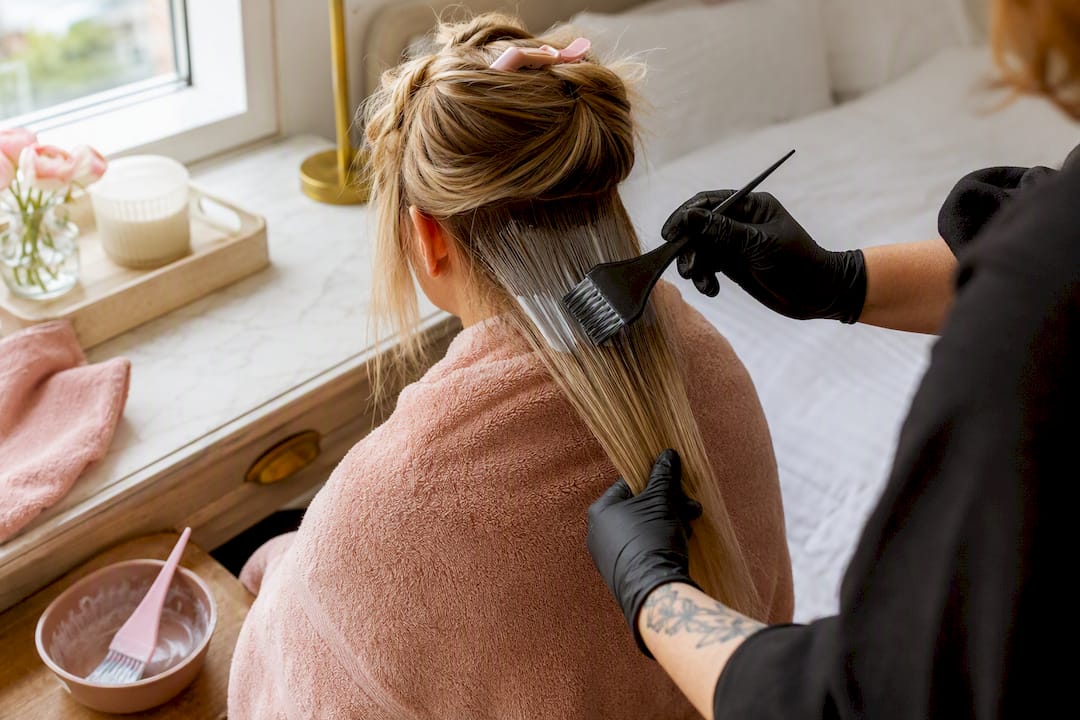
Foilyage blends painted balayage sections with foil accents, giving you soft blending with pockets of stronger lift where you want it most. Babylights use extremely fine highlight sections for a delicate, natural brightness, often layered on top of a balayage base. Reverse balayage does the opposite of a typical lightening service. It deposits deeper tone into over-lightened ends to soften harsh contrast or correct a previous color mistake.
Stylists often combine these methods when a client wants targeted brightness without an all-over commitment. Expect hybrid appointments to run longer than a single technique alone, since the colorist is essentially performing two processes in one visit, though maintenance often lands somewhere between the two originals.
What Mobile Beauty Professionals Have Learned About In-Home Color
Delivering balayage or highlights inside a client's home takes more prep than a salon chair, not less. Licensed mobile beauty professionals arrive with portable lighting to judge tone accurately, sanitary setups for mixing and application, and a kit built around the lift level discussed during booking.
Clients booking mobile hair color should confirm a time estimate upfront, since foiling runs longer than painting, and share reference photos and prior color history in advance so the professional arrives ready rather than guessing at your goals.
Ready to Book Your Balayage or Highlights at Home?
Skipping the salon commute doesn't mean skipping quality. Mobile beauty services connect you with licensed, background-checked colorists who bring the full balayage or highlight service to your home, hotel room, or office, so you get the same technique and the same finished look without blocking off a whole afternoon.
When you book, drop your reference photos, prior color history, and how often you're realistically willing to touch up your color into the appointment notes. That small detail helps your colorist plan the right technique, whether that's a soft balayage for low upkeep or full foils for maximum contrast, before they ever set foot in your space. Browse in-home hair color and styling services to see what's available near you, or check current openings if you're in Los Angeles, New York, or Miami and get on the calendar for your next color session.
Sources
- Balayage vs. highlights: key differences — MasterClass
- Balayage vs. highlights — John Frieda
- Balayage vs. highlights: Which hair color technique is right for you? — Glamour
- Should you get balayage or foil highlights? — Byrdie
FAQ
Is Balayage More Expensive Than Highlights?
Not necessarily. Cost depends more on stylist seniority, hair length, and how much lift you're requesting than on the technique itself, though heavy foil work with fine sectioning can sometimes run longer, and pricier, than a partial balayage.
What Are the Disadvantages of Balayage?
Results vary significantly by colorist skill since balayage relies on freehand placement, and reaching very light blonde tips from dark hair often requires multiple staged sessions rather than one appointment.
Can I Switch From Highlights to Balayage or Vice Versa?
Yes, though switching from highlights to balayage usually blends more easily, while moving from balayage to highlights may require your colorist to even out previous placement first.
How Long Does a Balayage or Highlight Appointment Take?
Balayage sessions often run one and a half to three hours depending on hair length and density, while full-head foil highlights can take similarly long or longer due to sectioning and processing time.
Should I Ask for Balayage or Just Describe the Look I Want?
Describe the look, contrast level, and maintenance schedule you want rather than just naming a technique, since colorists interpret "balayage" differently and a clear goal gets you a more predictable result.