Beauty App Review System: What You Need to Know

A beauty app review system is a platform that aggregates user feedback, star ratings, ingredient scoring, and visual proof to help you choose beauty products and services with confidence. These systems power apps like Yuka and TruHue, and they sit at the center of how millions of people now decide what to put on their skin. Nearly every beauty consumer reads reviews before purchase, making this technology one of the most influential forces in the $248B professional beauty market. Understanding how these systems work, and where they fall short, puts you in control.
What is a beauty app review system and how does it work?
A beauty app review system is a structured framework that collects, verifies, and displays user feedback alongside ingredient or service ratings. The best platforms combine three layers: user-generated content (photos, videos, written reviews), algorithmic scoring of ingredients or service quality, and personalization filters like skin tone or skin type. Together, these layers give you a fuller picture than any single star rating can. Platforms like Yuka, TruHue, and Loox each approach this framework differently, but all three rely on the same core logic: more data points equal better decisions.
The standard industry term for this framework is a user review and rating system, though in the beauty category it often extends into ingredient analysis and skin analysis tools. Knowing that distinction matters. A review system that only collects star ratings tells you far less than one that also scans ingredient lists or tracks results over time.

How beauty app review systems collect and verify user reviews
Review collection is only as good as its authenticity controls. The best platforms use several methods to keep their databases credible.
- Photo and video uploads. Visual UGC is the highest-converting review format in beauty apps. A photo of someone’s skin after six weeks of product use tells you more than a written paragraph. Platforms that offer one-click photo uploads in review requests see significantly more visual contributions.
- Incentivized reviews with guardrails. Some apps offer discounts or loyalty points for photo or video submissions. This boosts volume, but it also raises authenticity questions. Credible platforms disclose incentives clearly and flag incentivized reviews separately.
- Fake review detection. High volumes of generic 5-star ratings with no specific feedback are a reliable signal of fake or incentivized reviews. Authentic reviews name specific issues: a product that pilled under foundation, a service provider who arrived late, a shade that photographed differently than expected.
- Verified purchase or booking tags. Platforms that tie reviews to confirmed transactions add a meaningful layer of trust. You know the reviewer actually used the product or service.
Pro Tip: When reading reviews on any beauty app, sort by “most recent” and look for reviews that mention specific outcomes, timelines, or complaints. Generic praise tells you almost nothing.
The review process for beauty apps also depends heavily on UX design. A clunky upload flow kills participation. Platforms that make photo submission as fast as sending a text message consistently build richer, more useful review databases. Products from brands like Jeffi Inc show how photo-forward product pages can set the standard consumers now expect from review systems.
How do beauty app rating systems score ingredients?
Rating methodologies vary widely, and that variation matters more than most people realize.
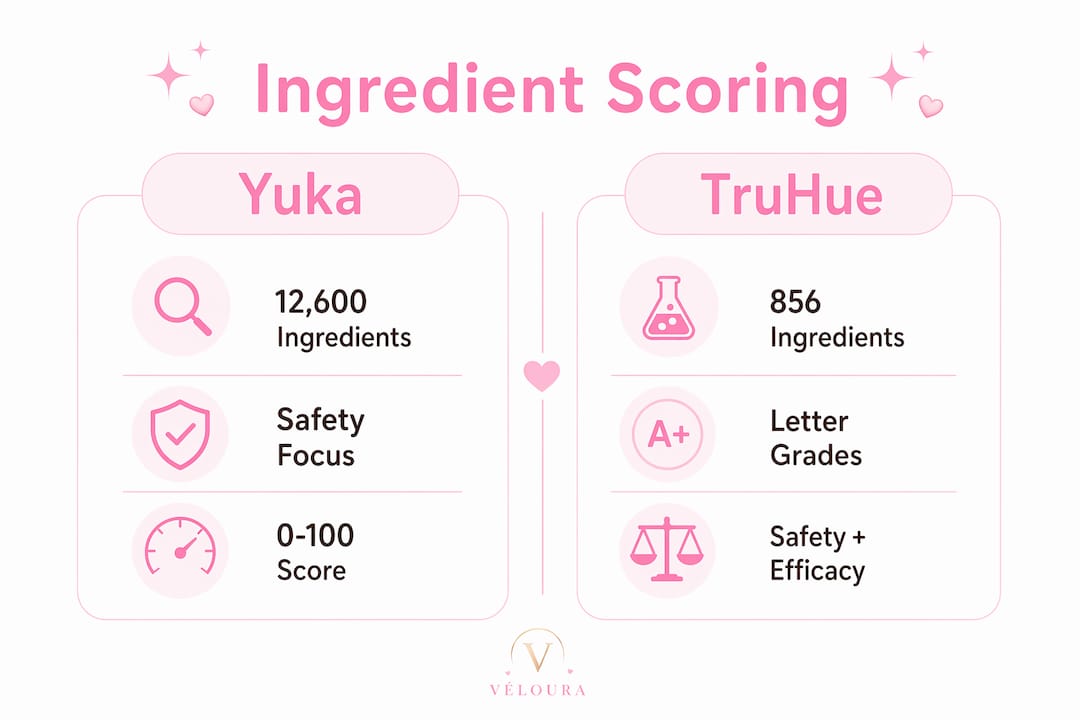
Yuka uses a proprietary algorithm that scores products 0–100 based on 12,600 cosmetic ingredients, flagging carcinogens, allergens, and pollutants. A score of 75–100 is rated excellent. Anything below 50 is rated poor. The scale is easy to read, which is a large part of why Yuka has attracted millions of users.
TruHue takes a different approach. It grades product safety using an 856-ingredient database and assigns letter grades from A to F. Its focus areas include comedogenicity, irritation potential, fragrance load, and silicone occlusion. TruHue specifically targets acne-prone skin, running what it calls an “acne audit” rather than a broad safety score.
| Feature | Yuka | TruHue |
|---|---|---|
| Ingredient database size | 12,600 ingredients | 856 ingredients |
| Scoring format | Numeric 0–100 | Letter grades A–F |
| Primary focus | General safety risks | Acne and skin sensitivity |
| Risk axes covered | Carcinogens, allergens, pollutants | Comedogenicity, irritation, fragrance, silicone |
| Efficacy assessment | No | No |
One critical detail: Yuka does not evaluate product efficacy. Its scores measure ingredient safety flags, not how well a product actually works. That distinction is easy to miss when you see a bold numeric score on your screen.
Pro Tip: Use ingredient scoring apps as one input, not the final word. Cross-reference a low score with a dermatologist’s perspective before discarding a product entirely.
What are the credibility challenges in beauty app review systems?
The biggest credibility problem in beauty app rating systems is the gap between precautionary algorithms and real toxicology. Many ingredient-scanning apps rely on watchlists that flag ingredients without accounting for concentration levels. An ingredient that is harmful at high doses may be perfectly safe at the trace amounts used in a formula. Apps that ignore this context can mislead you into avoiding products that are actually fine for your skin.
“Ingredient safety apps often apply a precautionary logic that sounds protective but lacks the toxicological nuance that actual safety assessments require. A red flag in an app is not the same as a red flag from a cosmetic chemist.” — Beauty Independent
Paywalls are another friction point. Apps with paywall-heavy models frustrate users and reduce long-term adoption, even when the underlying analysis is strong. If an app hides its core ingredient data behind a subscription, you are paying for access to information that may still carry the algorithmic limitations described above.
Privacy is a third concern. Apps that request access to your camera, contacts, and location for basic review functions are asking for more than they need. Legitimate beauty apps require camera access for photo uploads and barcode scanning. They do not need your contacts or precise location to score a moisturizer.
Watch for these signals when evaluating any beauty app review platform:
- Overly generic 5-star reviews with no specific detail
- No disclosure of incentivized or sponsored reviews
- Ingredient scores with no explanation of the scoring methodology
- Subscription walls blocking basic product information
- Permission requests that go beyond camera and storage access
Practical tips for using beauty app review systems effectively
Getting real value from user reviews for beauty applications requires a specific approach. Here is what actually works.
- Filter by skin type and tone. The best beauty app review platforms let you filter reviews by skin tone, skin type, and age. A foundation review from someone with dry, fair skin tells you almost nothing if you have oily, deep skin. Apps that offer shade and skin-type filters make large review databases personally relevant.
- Prioritize time-tracked reviews. Reviews that document results over a set timeframe, such as “after 6 weeks of daily use,” give you predictive power that a single-use review cannot. Consistent lighting in before-and-after photos adds another layer of reliability.
- Watch video reviews for texture and application. Written reviews describe; video reviews show. A 60-second clip of someone applying a foundation tells you about coverage, finish, and blendability in ways that words rarely capture.
- Test the app itself in the first 24 hours. The first 24-hour test is a practical heuristic: download the app, use it immediately, and check recent reviews for complaints about ads, crashes, and invasive permissions. If recent reviews are full of usability complaints, the app’s review data is likely unreliable too.
- Combine data sources. No single app gives you the complete picture. Use ingredient scores from Yuka or TruHue alongside user reviews and, when relevant, a dermatologist’s input. The combination of these data points is far more reliable than any one source alone.
Pro Tip: Skin analysis technology has real limitations. Tools like those explored in the Cocomera lookbook show how visual skin assessment can be powerful, but always pair it with professional advice for medical concerns.
Key Takeaways
A beauty app review system is only as trustworthy as its data collection methods, scoring transparency, and authenticity controls combined.
| Point | Details |
|---|---|
| Definition matters | A beauty app review system combines user reviews, ratings, and ingredient scoring into one credibility framework. |
| Ingredient scores have limits | Yuka and TruHue score safety risks, not efficacy. Never use a score alone to accept or reject a product. |
| Visual reviews convert trust | Photos and videos with documented timelines are the most reliable review formats in beauty apps. |
| Fake reviews are detectable | Generic 5-star clusters with no specific feedback signal incentivized or fabricated reviews. |
| Test the app, not just the product | Evaluate any beauty app’s credibility through its first 24-hour user complaints, permission requests, and paywall behavior. |
VÉLOURA’s perspective on beauty app review systems
The review system conversation has shifted dramatically in the past few years. Clients no longer just want a star rating. They want to see the actual result on someone who looks like them, with the same skin tone and the same lifestyle. That shift has forced every serious platform in the beauty space to rethink what a review actually means.
What I find most telling is how quickly consumers have learned to read between the lines of a review database. They know that a wall of identical 5-star reviews is a red flag. They know that an ingredient score without concentration context is incomplete. That level of consumer literacy is genuinely new, and it raises the bar for every platform that wants to earn trust.
At Velourabeautyondemand, we see this play out in real time. Clients booking mobile beauty services want to know exactly who is coming to their door, what results that professional has delivered, and what other clients with similar needs have experienced. A review system that captures that specificity, with verified bookings, visual proof, and honest feedback, is the only kind worth building. The future of on-demand beauty depends on platforms that treat review integrity as a core product feature, not an afterthought.
— VÉLOURA
Book a vetted beauty pro with Velourabeautyondemand
Velourabeautyondemand is a mobile beauty marketplace connecting you with licensed, vetted professionals for in-home and in-office services across Los Angeles, New York City, and Miami. Every booking on the platform generates a verified review, so you always know what to expect before your pro arrives.

No commute. No waiting room. Just real results from real professionals, backed by a review system built on verified appointments. Whether you need a blowout, lash extensions, balayage, or event makeup, you can book beauty services near you and read honest reviews from clients just like you. Explore the full VÉLOURA service menu and see why on-demand beauty is the new standard.
FAQ
What is a beauty app review system?
A beauty app review system is a platform framework that collects user ratings, written feedback, photos, and ingredient scores to help consumers evaluate beauty products or services. It combines user-generated content with algorithmic analysis to support informed purchasing decisions.
How do beauty app rating systems verify reviews?
Credible platforms tie reviews to verified purchases or confirmed bookings and flag incentivized submissions. Generic 5-star reviews with no specific detail are a common signal of fake or incentivized content.
What is the difference between Yuka and TruHue scoring?
Yuka scores products 0–100 across 12,600 ingredients focused on general safety risks, while TruHue assigns letter grades A–F using an 856-ingredient database focused on acne and skin sensitivity. Neither platform evaluates product efficacy.
How can I tell if a beauty app review platform is credible?
Check recent reviews for usability complaints, ads, and privacy concerns within the first 24 hours of downloading. Credible apps disclose their scoring methodology, require only necessary permissions, and show reviews with specific, time-tracked feedback.
Why do ingredient scoring apps sometimes give misleading ratings?
Many ingredient-scanning apps use precautionary watchlists that flag ingredients without accounting for the concentration levels used in actual formulas. This can result in a low score for a product that is safe at its real-world dosage.
Recommended

Comments ()